A powerful Mediterranean cyclone known as Harry has unleashed a wave of destruction across Sicily, bringing hurricane-force winds, relentless rain, and a storm surge that pushed seawater deep into coastal towns.
What began as a distant weather system quickly intensified, transforming into a force that overwhelmed streets, paralyzed transport, and forced entire neighborhoods into emergency evacuation.
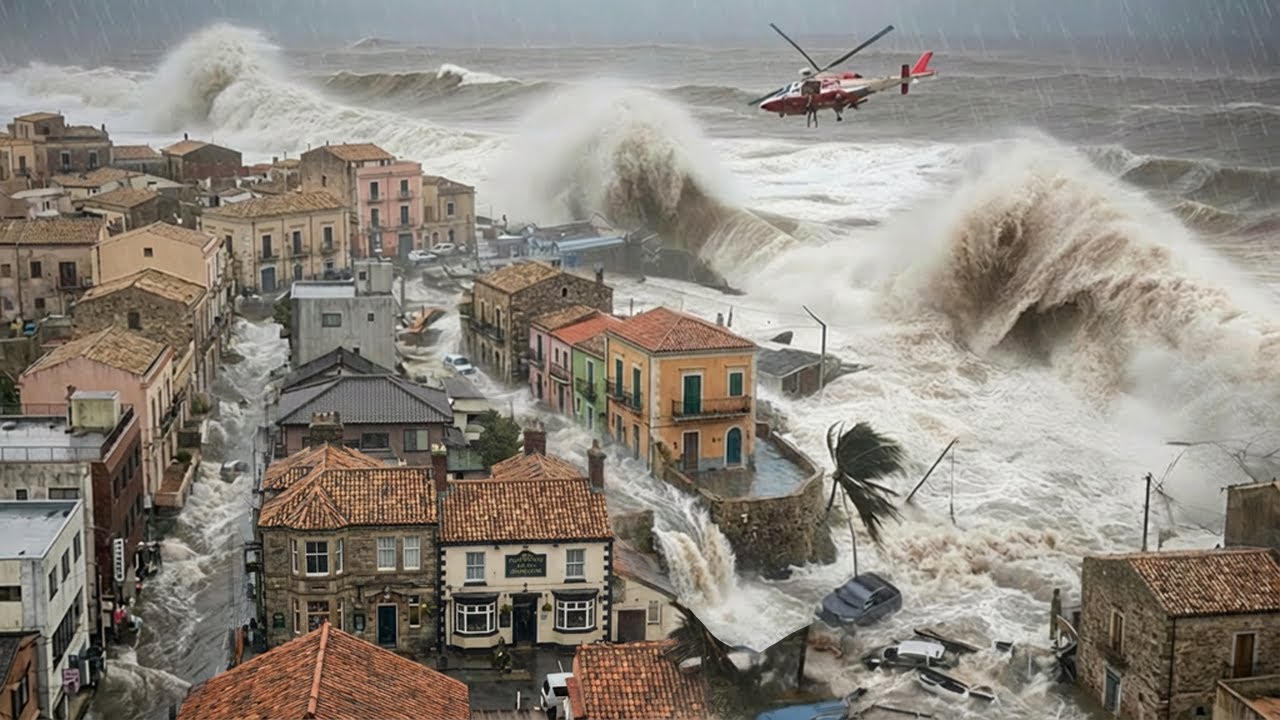
Residents in low-lying coastal areas watched in disbelief as the sea advanced beyond its usual boundary.
Waves crashed over barriers, water surged through harbors, and roads disappeared beneath fast-rising floodwaters.
Vehicles stalled.
Shops flooded.
Homes near the shoreline were left surrounded by churning water mixed with debris carried inland by the surge.
Meteorologists had warned of severe conditions, but the scale and speed of the flooding caught many off guard.
Wind gusts battered buildings, tore at rooftops, and sent loose objects flying.
Sheets of rain reduced visibility, complicating rescue efforts and travel.
Authorities moved swiftly to close schools, suspend public transportation, and urge residents to remain indoors where possible.
Emergency services across the island shifted into crisis mode.
Firefighters and rescue teams deployed boats and high-clearance vehicles to reach stranded residents.
Calls for ᴀssistance poured in as water levels rose in residential streets and coastal highways.
In some areas, electrical outages added to the chaos, plunging neighborhoods into darkness as crews worked to stabilize infrastructure.
The storm surge proved particularly dangerous.
Unlike rainfall alone, a surge combines wind-driven waves with elevated sea levels, pushing water inland with tremendous force.
Coastal defenses designed for routine tides can be overwhelmed when this combination occurs.
In several towns, seawater breached promenades and sea walls, carving new channels through streets and public spaces.
Transportation networks suffered immediate impacts.
Key roads were submerged or blocked by debris.
Rail services faced delays and cancellations as tracks near the coast flooded.
Airports monitored conditions closely, with some flights delayed due to strong crosswinds and poor visibility.
For residents, the experience was both physical and emotional.
Families hurried to move belongings to higher floors.
Sandbags appeared at doorways.
Neighbors helped each other navigate waterlogged streets.
For many, the sound of wind and waves pounding through the night served as a reminder of nature’s raw power.
Authorities emphasized that the situation remained dynamic.
With rainfall continuing and drainage systems under pressure, floodwaters in some areas were slow to recede.
Emergency planners warned that even after winds subside, saturated ground and high water levels could maintain hazardous conditions.
Scientists note that Mediterranean storms can intensify rapidly when sea surface temperatures and atmospheric patterns align.
Though different from tropical hurricanes, these systems can still produce destructive winds and significant storm surge.
Coastal regions with dense populations and historic infrastructure face particular vulnerability.

Recovery efforts began even as the storm moved through.
Crews cleared debris from major routes, ᴀssessed structural damage, and worked to restore essential services.
Engineers inspected bridges, seawalls, and drainage channels for signs of stress.
Hospitals remained on alert for weather-related injuries, though early evacuations likely prevented more severe outcomes.
The storm’s impact extended beyond immediate flooding.
Agricultural areas faced potential crop damage from saltwater intrusion and waterlogging.
Businesses along the coast braced for economic losses as cleanup costs mounted and tourism activities paused.
Yet amid the disruption, stories of coordination and resilience emerged.
Emergency responders worked around the clock.
Volunteers distributed supplies.
Community centers opened as temporary shelters.
These efforts underscored the importance of preparedness and rapid response in minimizing harm during extreme events.
As conditions gradually stabilize, attention will turn to long-term questions.
How can coastal defenses be strengthened? Are early warning systems sufficient? What adjustments are needed as weather patterns evolve? Each storm adds urgency to these discussions.
For now, Sicily’s focus remains on safety and recovery.
The cyclone has moved on, but its mark remains visible in water-stained walls, scattered debris, and the shared memory of a night when sea and sky converged with overwhelming force.


