Tropical Storm Penha swept across the southern Philippines with relentless force, unleashing torrential rains that transformed quiet neighborhoods into scenes of destruction within hours.
What began as a steady downpour quickly escalated into a life-threatening disaster as rivers burst their banks, hillsides collapsed, and entire communities were swallowed by rising floodwaters.
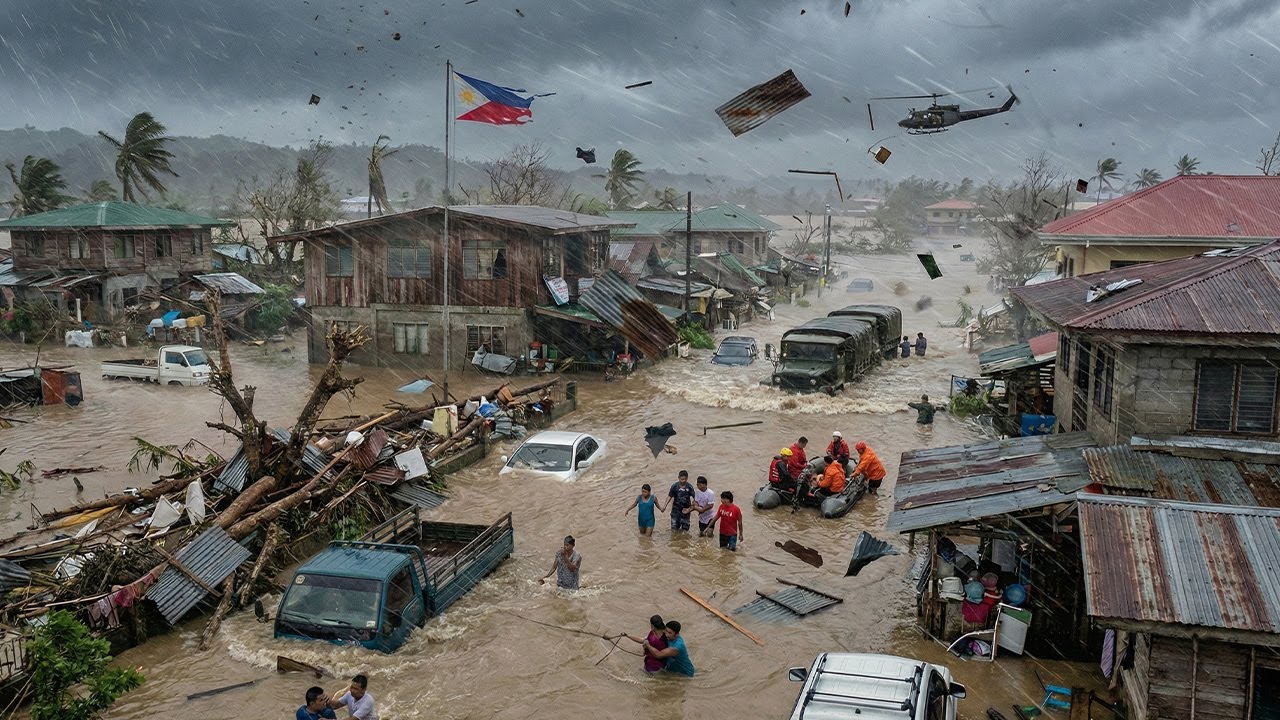
In Iligan City and surrounding areas, residents woke to the sound of heavy rain pounding rooftops and streets.
At first, many believed it was just another storm pᴀssing through the region.
But as the rainfall intensified, the water levels began to rise at an alarming pace.
Drainage systems were overwhelmed, small streams turned into raging currents, and roads quickly disappeared beneath muddy floodwaters.
Within a matter of hours, neighborhoods were submerged.
Families scrambled to gather their belongings as water rushed into their homes.
Furniture floated, appliances tipped over, and personal possessions were swept away.
Some residents climbed onto rooftops, waving for help as the water continued to rise around them.
The storm’s impact was not limited to flooding.
In hilly areas near Cagayan de Oro, saturated soil gave way under the weight of the relentless rain.
A devastating landslide struck a residential area, burying homes and claiming lives.
Among the victims was an entire family, whose deaths underscored the severity of the disaster.
Authorities confirmed at least four fatalities as rescue teams searched for others who might still be trapped.
Across the region, rivers surged beyond their limits.
Bridges that once connected communities were closed or damaged, cutting off vital transportation routes.
In some areas, the force of the water undermined bridge supports, leaving them unsafe for vehicles.
With key roads blocked or washed out, emergency responders faced enormous challenges reaching those in need.
Thousands of residents were forced to evacuate as the situation worsened.
Evacuation centers quickly filled with families carrying whatever they could salvage.
Schools, gymnasiums, and community halls were converted into temporary shelters.
Volunteers worked to distribute food, water, and blankets, while medical teams treated those suffering from injuries, exhaustion, or illness.
Emergency responders moved through flooded streets using boats and high-clearance vehicles.
They knocked on doors, searched submerged homes, and helped residents reach safer ground.
In some cases, they carried elderly individuals and small children through chest-deep water.
Helicopters were deployed to survey the hardest-hit areas, identifying pockets of people still stranded by the floods.
Authorities warned that the danger was far from over.
Although Tropical Storm Penha was expected to weaken, heavy rainfall continued to fall across large parts of Mindanao and the Visayas.
The saturated ground and swollen rivers meant that even moderate rain could trigger additional flooding or landslides.
Search and rescue operations continued around the clock.

Teams worked to clear debris from critical roadways, allowing emergency vehicles to pᴀss.
Bulldozers pushed aside fallen trees and mudslides, while engineers inspected damaged infrastructure to determine whether it could still be used safely.
The humanitarian impact of the storm grew more severe with each pᴀssing hour.
Thousands of displaced residents crowded into shelters, uncertain when they would be able to return home.
Some had lost everything, their houses destroyed or rendered uninhabitable by floodwaters and mud.
Local officials declared states of emergency in several affected areas, unlocking additional resources for relief efforts.
Government agencies coordinated with humanitarian organizations to deliver supplies and support to those in need.
Trucks carrying food, bottled water, and medical equipment began arriving at evacuation centers.
Communication proved to be another challenge.
In some areas, power outages knocked out cell towers, leaving residents unable to contact loved ones.
Emergency broadcasts urged people to remain in safe locations and follow official instructions.
Social media became a lifeline, with residents sharing information about flooded areas, missing relatives, and available shelters.
As the storm moved across the region, its effects rippled through multiple provinces.
Coastal communities dealt with strong winds and rising tides, while inland areas faced relentless rain and overflowing rivers.
The widespread nature of the disaster stretched emergency resources thin.
In the aftermath of the heaviest rains, the full scale of the destruction began to emerge.
Streets were buried under thick layers of mud and debris.
Vehicles were left stranded or overturned.
Homes showed signs of water damage, with walls stained and floors coated in sludge.
For many families, the emotional toll was as heavy as the physical damage.
Some had lost relatives in the floods or landslides.
Others faced the daunting task of rebuilding their lives from scratch.
The uncertainty of when it would be safe to return home weighed heavily on those in evacuation centers.
Rescue workers continued their efforts despite difficult conditions.
Long hours, hazardous terrain, and unpredictable weather tested their endurance.
Yet many pressed on, driven by the hope of finding survivors and helping those in need.
International attention began to focus on the disaster as reports of the damage spread.

Humanitarian organizations prepared to send additional aid, while neighboring countries offered support.
Relief efforts were expected to continue for weeks as authorities worked to restore basic services and rebuild infrastructure.
Officials urged residents to remain vigilant, warning that additional rainfall could worsen conditions.
The saturated ground and weakened slopes posed ongoing risks, especially in areas already affected by landslides.
Emergency teams continued to monitor river levels and weather forecasts closely.
As the days pᴀssed, some floodwaters began to recede, revealing the extent of the destruction.
What had once been busy streets were now coated in mud and debris.
Homes stood damaged or destroyed.
The sight left many residents stunned by the scale of the disaster.
Despite the devastation, stories of resilience emerged.
Neighbors helped each other clean up homes.
Volunteers distributed food and clothing.
Communities came together to support those who had lost everything.
The storm’s impact on Mindanao and the Visayas will be felt for a long time.
Rebuilding homes, repairing infrastructure, and restoring livelihoods will require significant resources and effort.
For now, the focus remains on rescue, relief, and recovery.
Tropical Storm Penha may weaken as it moves away, but its effects have already left a lasting mark on the southern Philippines.
Lives have been lost, communities disrupted, and thousands displaced.
The disaster serves as a stark reminder of the power of nature and the importance of preparedness in the face of extreme weather.


