🔥 31 eruptions.6 hours.One volcano — What is Semeru trying to warn us about? 🌋
For six hours, the sky above East Java did not rest.
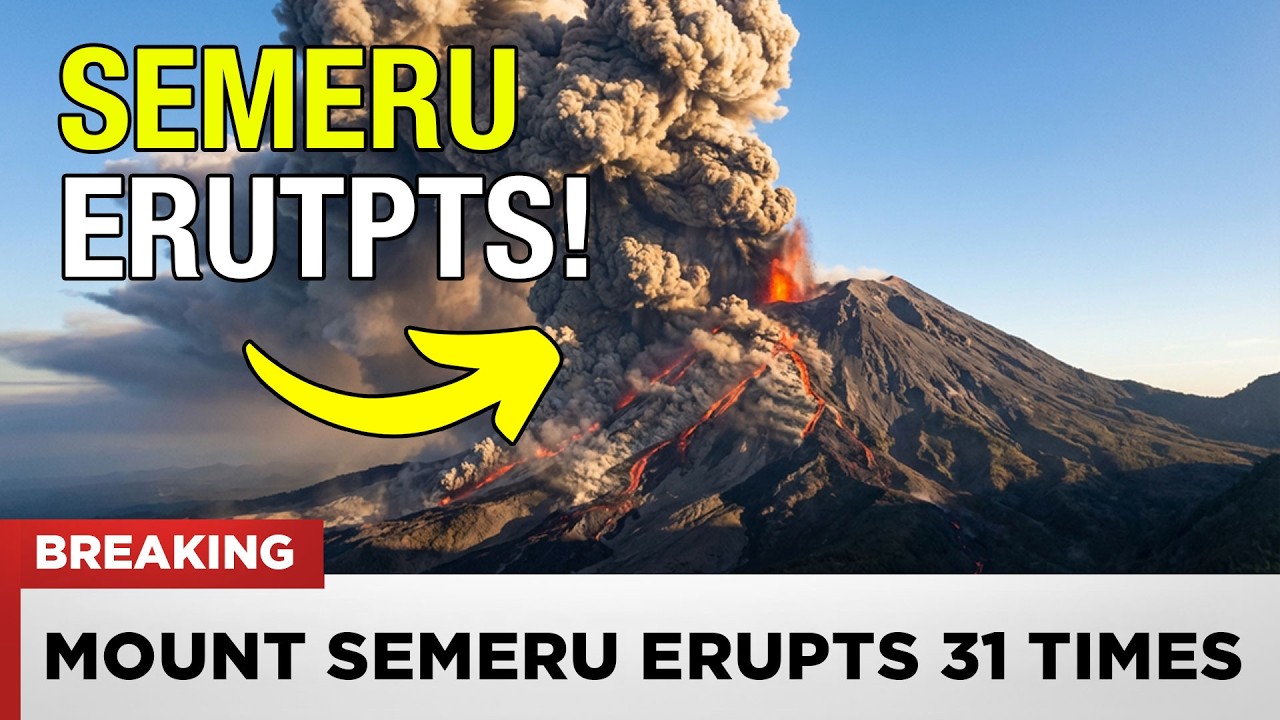
It began with a low, guttural rumble that rolled across the villages before sunrise, subtle enough to be mistaken for distant thunder.
Then came the first column of ash — thick, gray, and rising with unsettling speed.
Within minutes, it became clear that this was not a single outburst.
It was the opening note in a sequence that would repeat itself 31 times before the day was done.
By the time authorities confirmed the count, Mount Semeru had already altered the mood of an entire region.
Thirty-one eruptions in six hours.
Not spread across days.
Not scattered through a week.
Six hours.
Numbers can be clinical.
But on the ground, nothing felt clinical about it.
Residents described windows trembling in their frames.
Motorcycles left idling as owners looked up at a sky that darkened in pulses.
Each eruption followed a pattern that was similar — yet not identical — to the one before it.
A roar.
A plume.
A shower of ash drifting like unnatural snowfall.
Then, a pause.
A silence that felt too deliberate.
And then another eruption.
Geologists monitoring the volcano were quick to note that Semeru is one of the most active volcanoes in Indonesia.
Activity, they reminded the public, is not unusual.
The country sits along the volatile Pacific Ring of Fire, a region defined by tectonic friction and restless earth.
But even among active volcanoes, sequences like this attract attention.
Not panic — attention.
What unsettled some observers was not just the frequency, but the rhythm.
The eruptions came in waves, some minutes apart, others separated by longer intervals.
Seismic graphs showed tremor lines rising and falling in a pattern that, according to one analyst, “deserves careful interpretation.”
Careful interpretation is often the language of restraint.
Indonesia is no stranger to volcanic power.
With more active volcanoes than any other nation, it lives with a constant negotiation between beauty and threat.
And yet, when a mountain erupts 31 times in less than half a day, questions emerge that cannot be smoothed over by familiarity.
Officials maintained that alert levels remained within expected parameters.
Evacuation zones were monitored.
Ash advisories were issued.
Flights were reviewed.
The system worked, as it has before.
But systems are designed for known behavior.
Semeru’s history is layered with eruptions that have reshaped landscapes and lives.
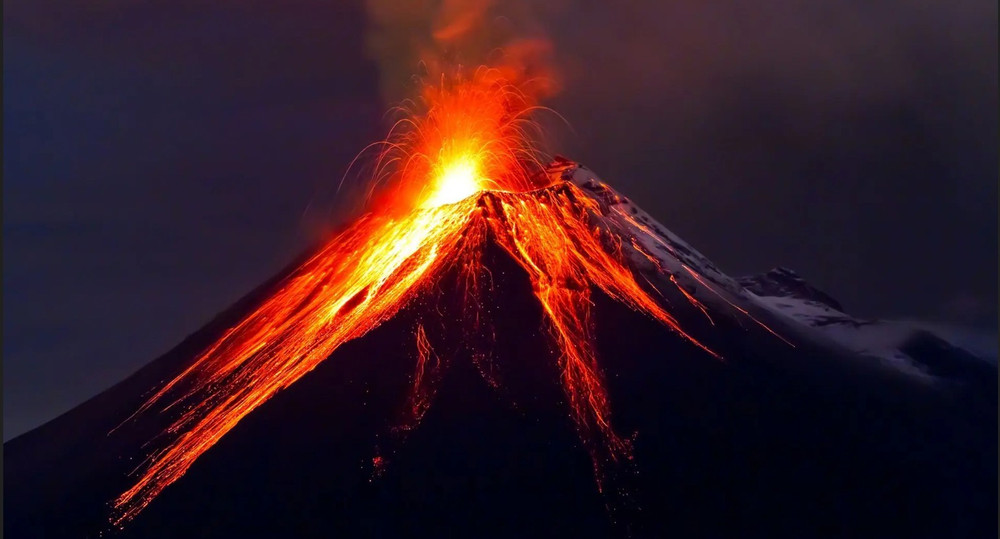
Lava flows have carved new paths through valleys.
Ash has blanketed farms in both destructive and paradoxically fertile layers.
The mountain has long been regarded as a living presence — revered, feared, and respected in equal measure.
This latest sequence did not produce the kind of catastrophic imagery that defines global headlines.
There were no immediate reports of mᴀssive pyroclastic flows racing down slopes.
No cities swallowed in flame.
Instead, there was something arguably more unsettling: repeтιтion.
Thirty-one times.
Seismologists observed the amplitude of tremors and the duration of eruptive phases.
Satellite imagery tracked ash dispersion patterns.
Each data point added to a growing picture that is still, at this moment, incomplete.
Some experts privately acknowledged that clustered eruptions can signal pressure redistribution within a volcanic system.
In simple terms, magma does not move randomly.
It follows fractures, builds in chambers, shifts in response to forces deep below the crust.
When activity accelerates, it can mean that the volcano is releasing built-up energy in manageable bursts.
It can also mean something else.
There is a theory — not universally accepted, but not dismissed either — that rapid, repeтιтive eruptions may indicate that a volcanic conduit is clearing itself.
Removing blockages.
Widening pathways.
Preparing for a more sustained phase of activity.
No one has said this publicly in definitive terms.
The language remains cautious.
Measured.
Yet in the hours after the 31st eruption, monitoring teams did not scale back observation.
They intensified it.
Across Indonesia, seismic stations remain on alert not only for Semeru but for the broader chain of volcanoes that arc across the archipelago.
Tectonic plates do not operate in isolation.
Stress released in one location can, in certain circumstances, alter conditions elsewhere.
The science is complex.
The margins of uncertainty are real.
What makes this moment different, according to regional observers, is timing.
The eruptions occurred within a narrow window, under atmospheric conditions that allowed ash to drift visibly across populated areas.
Social media amplified the imagery.
Videos of rising plumes spread within minutes.
Each new eruption felt like a countdown — though to what, no one could say.
Local authorities reᴀssured communities that exclusion zones were respected.
Emergency response teams remained prepared.
The narrative emphasized readiness, not alarm.
Still, markets in nearby towns reported unusual buying patterns.
Bottled water disappeared from shelves faster than usual.
Face masks — once a symbol of another crisis — returned as practical protection against ash.
Fear does not always announce itself loudly.
Sometimes it moves quietly, through small decisions.
International volcanic monitoring organizations took note of the sequence.
While no immediate global aviation threat was declared, flight paths were reviewed.
Ash at high alтιтudes can pose significant hazards to aircraft engines, and even moderate plumes require vigilance.
As of the latest ᴀssessments, the eruptions have not escalated into a larger explosive event.
But experts emphasize that volcanic systems can evolve quickly.
Six hours is a snapsH๏τ in geological time — yet in human time, it is long enough to shift perception.
There is also the psychological dimension.
When a volcano erupts once, it is an event.
When it erupts 31 times in succession, it becomes a narrative.
A story people begin to interpret.
Speculation fills the spaces where official statements are cautious.
Is this a prelude? A warning? A release valve?
Within Indonesia’s long volcanic history, patterns have varied widely.
Some intense sequences have subsided without escalation.
Others have preceded larger events days or weeks later.
Retrospective clarity is a luxury of the past.
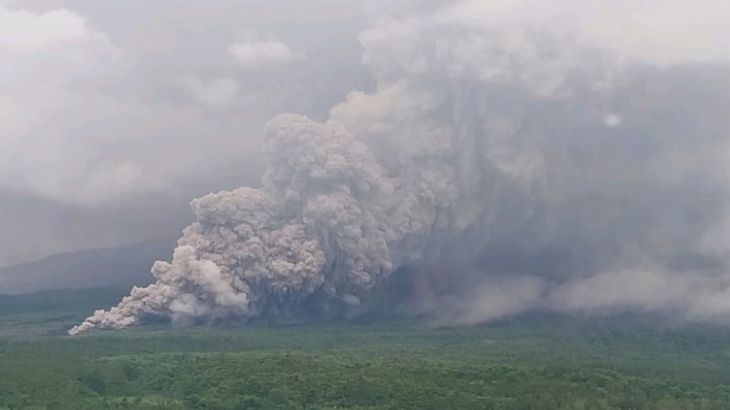
In the present, ambiguity reigns.
Semeru stands over 3,600 meters tall, its peak often shrouded in cloud even in calm weather.
Now, ash has joined the mist.
The mountain’s silhouette remains — but its temperament feels altered.
In villages closest to its slopes, routines continue with adjustments.
Children stay indoors during ashfall.
Farmers inspect crops for damage.
The sound of distant rumbling, once background noise, now commands attention.
Government agencies emphasize that preparedness plans are robust.
Evacuation drills have been conducted before.
Communication channels are open.
Yet preparedness does not eliminate uncertainty.
It manages it.
Some geologists have pointed out that volcanoes often communicate through incremental signals.
Increased seismicity.
Gas emissions.
Ground deformation measurable only by sensitive instruments.
The 31 eruptions are not isolated phenomena; they exist within a web of data that scientists are parsing in real time.
What that data ultimately reveals may not be known for days.
Or weeks.

For now, the official stance remains steady: activity is elevated but within anticipated behavior for an active stratovolcano.
Residents are urged to follow guidance and avoid restricted areas.
Aviation authorities maintain watchful coordination.
And yet, the memory of those six hours lingers.
Thirty-one eruptions are difficult to forget.
The rhythm of explosion and pause leaves an imprint not just on seismographs but on human consciousness.
It invites interpretation, invites speculation — invites, perhaps, unease.
Because in a region defined by fire beneath the surface, the question is never only about what has happened.
It is about what might be building.
Deep below Mount Semeru, magma continues to move in darkness, guided by forces measured in pressure and heat beyond ordinary comprehension.
Above ground, communities watch the mountain with a familiarity that borders on intimacy.
They know its moods.
But they also know that familiarity does not equal control.
Indonesia’s volcanic chain has always been a reminder that stability here is negotiated, not guaranteed.
The events of these six hours may ultimately be recorded as a contained episode — a dramatic but manageable surge.
Or they may be remembered as the moment the mountain cleared its throat before speaking louder.
For now, the ash settles.
The instruments continue their quiet recording.
The sky slowly regains its color.
And the count — 31 eruptions in six hours — remains a stark figure suspended in public memory, waiting for what comes next.


