ᴅᴇᴀᴅly Floods in the Philippines: A Crisis Unfolding
In a shocking turn of events, the Philippines has been struck by catastrophic flooding that has left 740,000 people displaced and entire communities devastated.
Over the course of just five days, landslides buried families across three provinces, with nearly 200,000 families forced to flee their homes.
In a particularly distressing situation, the coastal city of Mati in Davao Oriental saw 22 of its 24 neighborhoods go underwater for the first time in living memory, impacting 91,000 residents.
The economic toll has been staggering, with 376 million pesos in agricultural losses reported in a single province, as crops rotted in the fields.
Infrastructure has also taken a hit, with six roads collapsing and three bridges failing under the pressure of the floods.

In response, the Philippine Army deployed over 60 disaster response teams to ᴀssist with rescue and recovery efforts.
However, the national government had just redirected 225 billion pesos away from flood control projects after investigators discovered that hundreds of them were never built, raising serious concerns about the effectiveness of disaster management in the region.
Among the tragic stories emerging from this disaster is that of the Aunting family in Mati.
On Friday morning, Abibola Aunting, his pregnant wife Jessa, and their two daughters, Norhabiba and Tahani, returned to bed after dawn prayers.
Between 5 and 7 a.m., a wall of boulders and mud broke loose from the hillside above their home, burying the house entirely.
Rescuers found all four family members ᴅᴇᴀᴅ when they arrived on the scene.

The region’s top disaster official later revealed that he had spent six months studying the drainage systems intended to prevent such tragedies, concluding that they were incomplete and unconnected.
The events leading up to the flooding began on February 19, when a shear line stalled over eastern Mindanao.
This phenomenon occurs when cold air from the northeast monsoon collides with warm, moist trade winds from the Pacific, creating a situation where rain continues to fall until the atmosphere runs out of fuel.
By Wednesday evening, the state weather bureau, PAGASA, issued orange rainfall warnings for Davao Oriental, Davao de Oro, and Surigao del Sur.
In Tandog City, Mayor Roxan Pimeontel activated the emergency operations center and ordered evacuations, warning that the weather posed a clear and present danger to life and property.
However, the rain did not let up.

At 11:40 p.m. that night, a hillside in Barangay Rizal in the gold mining town of Moncao collapsed onto a house, trapping a father and his two sons inside.
Rescuers managed to recover two bodies by 2 a.m., but the severe weather forced the operation to be halted until daybreak.
At 8 a.m., the third body, that of a child, was recovered from the mud.
The situation escalated rapidly.
By Friday afternoon, PAGASA issued a red rainfall warning for sections of Surigao del Sur and Agusan del Sur, as 11 landslides and 53 flooding incidents were reported across four provinces.
In New Baton, a bridge approach on Panag Konin Road collapsed, isolating the town.
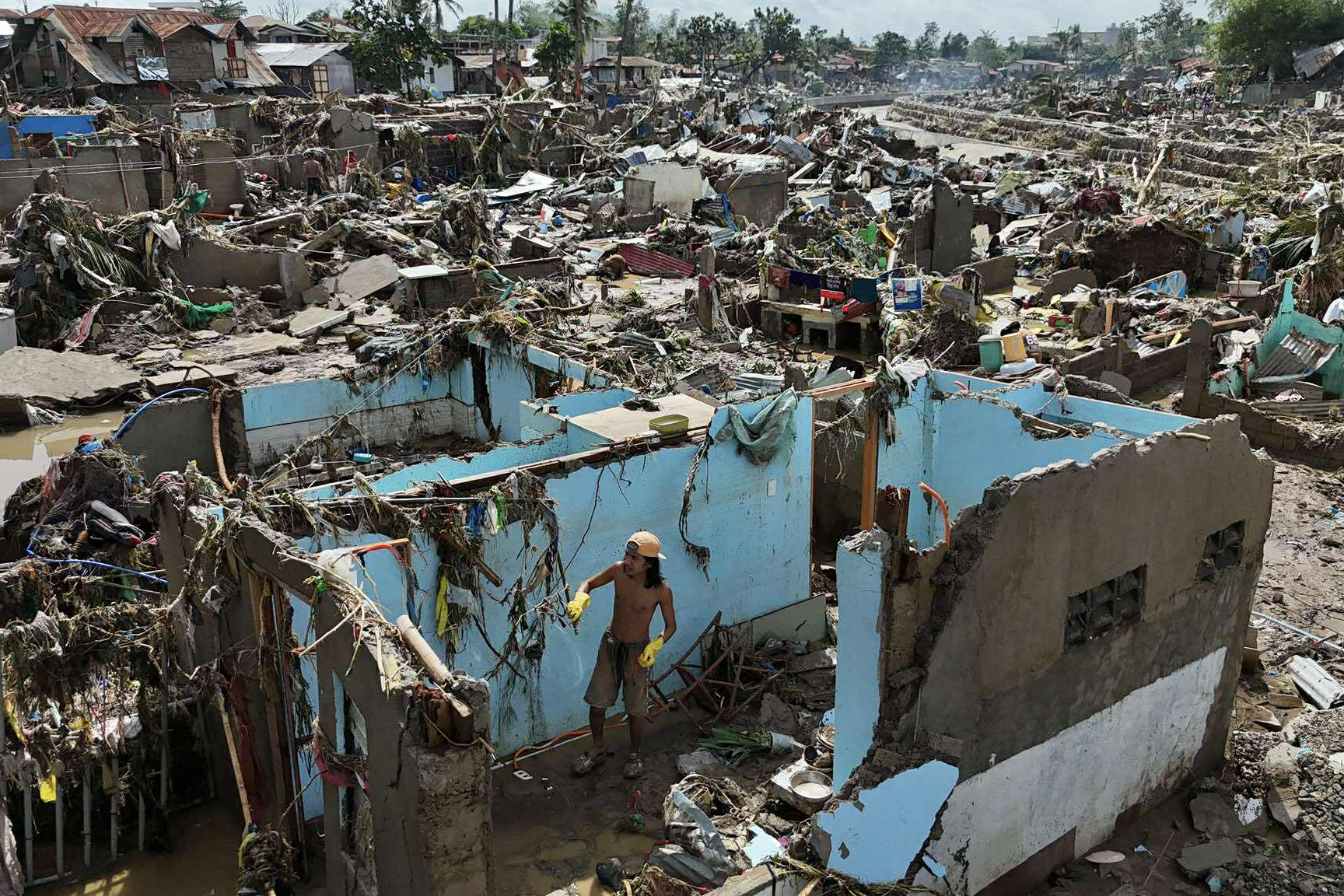
In Monte Vista, three bridges failed, and in Davao Del Norte, the National Highway in Paga Bangan, Tagum City, was submerged under floodwaters.
Banana plants were swept downstream, clogging waterways faster than road crews could clear them.
The geography of the region exacerbates the flooding crisis.
Mindanao, located on the eastern edge of the Philippine archipelago, is fully exposed to moisture from the Pacific Ocean.
The provinces most affected, Davao de Oro and Davao Oriental, are surrounded by mountains, meaning that any rain that falls on these peaks funnels downward through narrow river valleys into low-lying towns and agricultural fields.
The Mines and Geosciences Bureau has classified large sections of these provinces as highly susceptible to flooding and landslides.
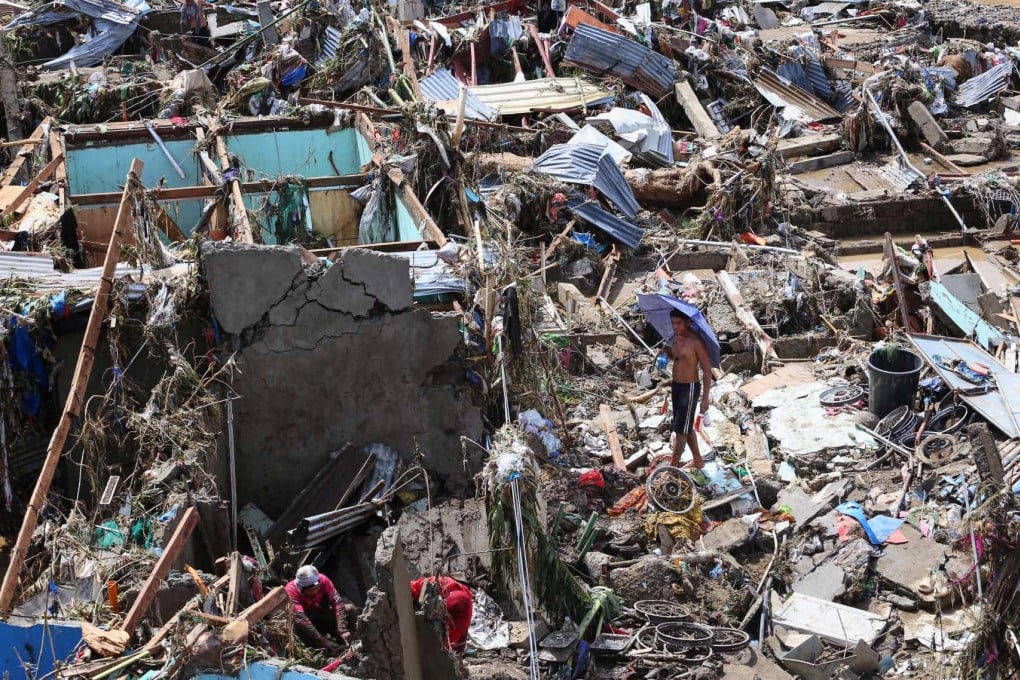
The communities that flooded were built precisely where the water was always going to go.
This disaster is particularly concerning because it was not caused by a typhoon.
The Philippines typically experiences around 20 tropical cyclones each year, and the disaster response system is designed to handle such events.
However, a shear line carries no storm name, triggers no numbered signal warnings, and generates no international alerts.
Director Ednar Dang Hyang of the Office of Civil Defense in Davao noted that even localized thunderstorms now cause catastrophic flooding due to climate change, as weather systems that once caused moderate inconvenience now destroy communities.
The infrastructure designed to manage flooding has been found severely lacking.

Dang Hyang’s investigation revealed that roads are often built along riverbanks with no cross drainage, allowing water to rush beneath the road surface and undermine its foundations.
Furthermore, national, provincial, and municipal drainage systems are designed by different agencies with disjointed plans that do not connect effectively.
He described the state of drainage systems as pitiful, stating, “There are drainage structures, but they are not complete. It is unclear where the water is supposed to flow.”
Widening the lens, we see that the Philippines has spent 545 billion pesos on flood control projects over the past three years.
A presidential review found that out of nearly 10,000 projects, 6,000 did not clearly specify what was actually built, and investigators identified 421 ghost projects—structures that were paid for but never constructed.
Authorities froze 180 billion pesos in bank accounts linked to four firms involved in these projects, and a flood control structure along the Davao River was found damaged just eight months after completion.
In September, President Marcos redirected the entire 225 billion pesos allocated for flood control in the 2026 national budget, concluding that the money already spent had not been used effectively for protection.
The 2026 budget contains zero new locally funded flood control projects.
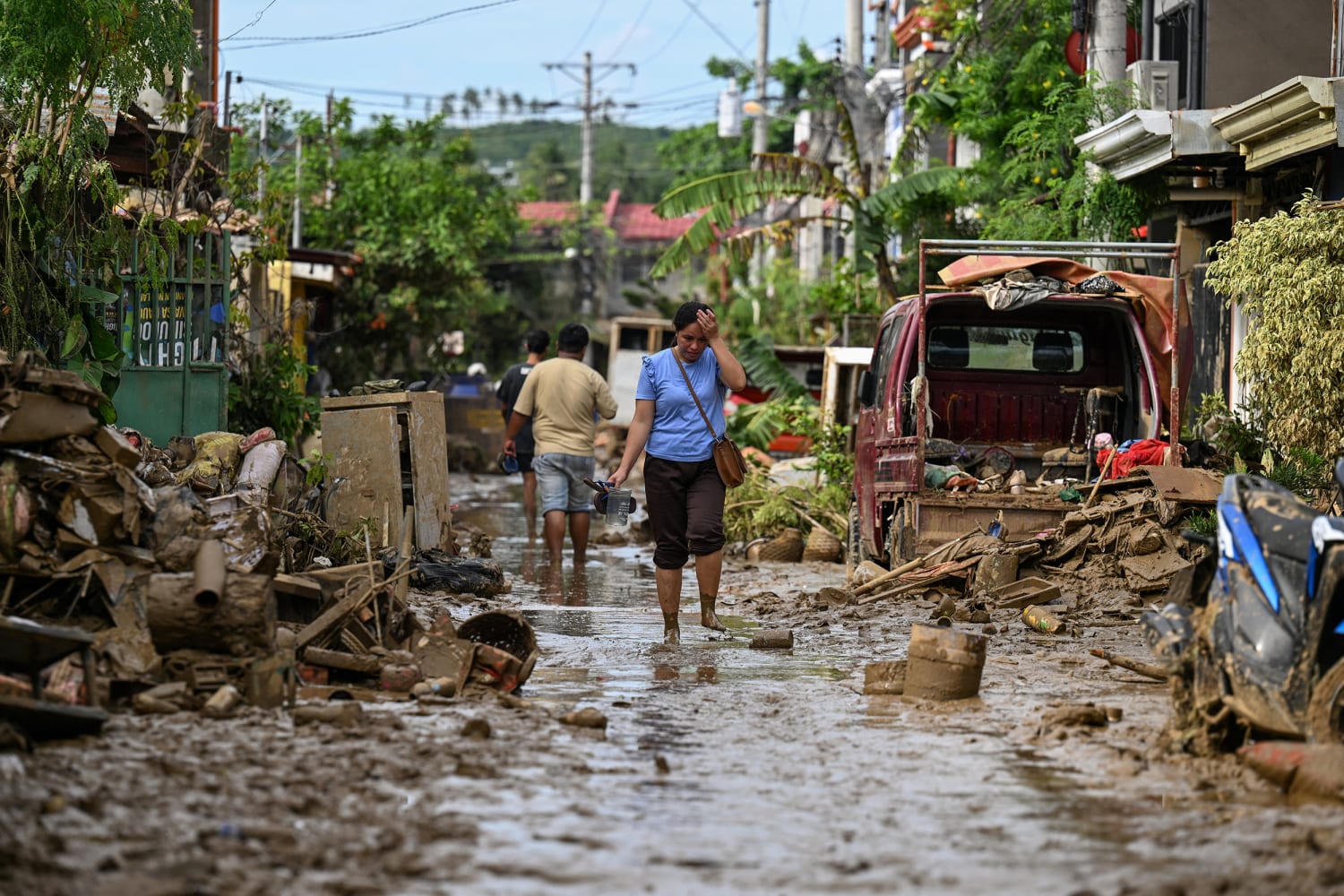
The numbers tell a grim story: 740,000 people affected, 469 neighborhoods flooded, 27,000 families still in 74 evacuation centers, and 80 homes destroyed.
In Bislig City, Surigao del Sur, flooding submerged 22 of 24 barangays, displacing 91,000 people from a single city.
Residents reported that three of the neighborhoods had never flooded before in living memory, illustrating the unprecedented nature of this disaster.
Authorities attributed the flooding to debris that clogged a bridge, causing a creek to overflow, and medical teams distributed doxycycline capsules to those who had waded through the water, warning of leptospirosis—a disease ᴀssociated with flooding.
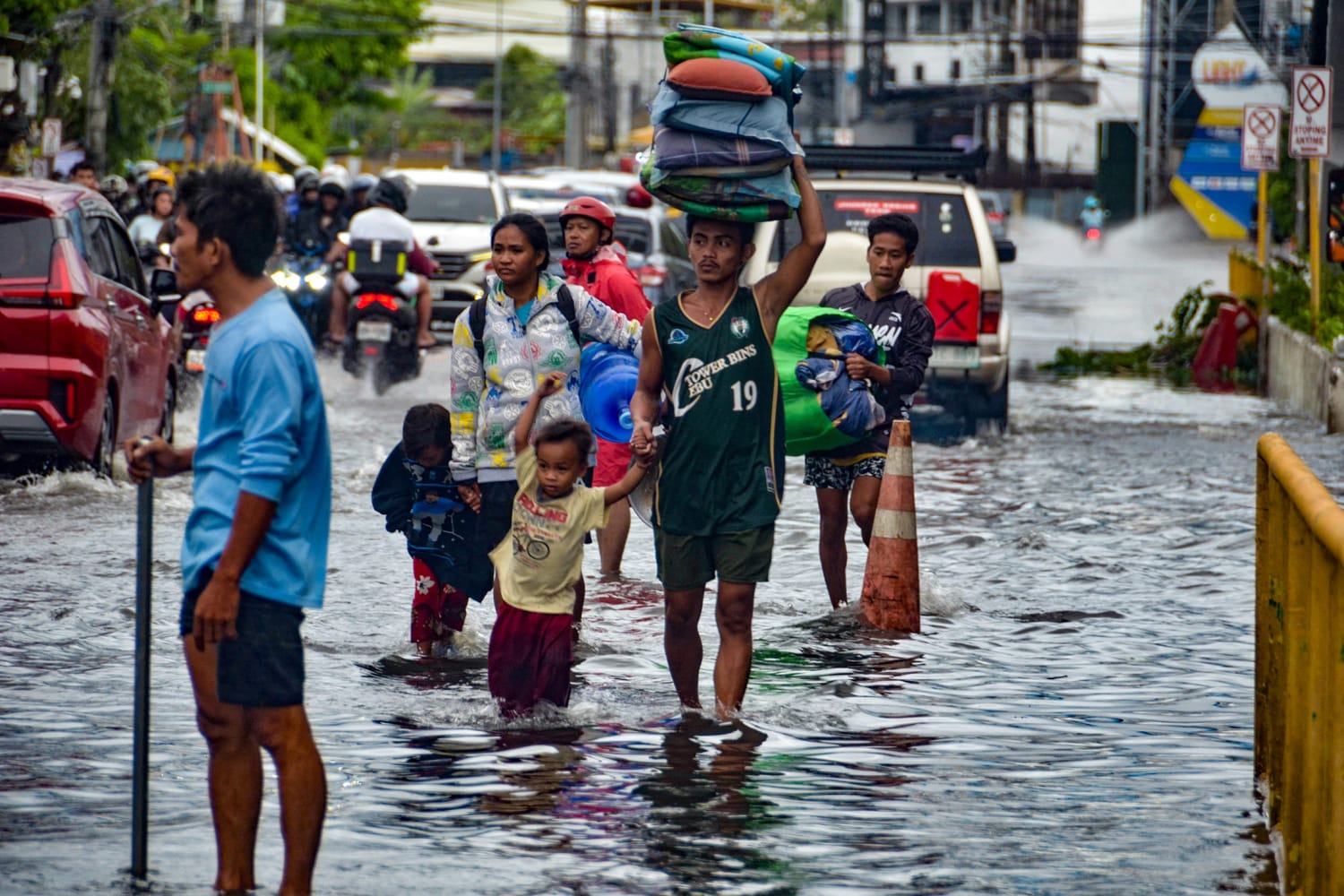
In Barangay Mapaga in Prosperidad, Agusan del Sur, residents constructed rafts from banana trunks and logs for transportation.
In Monte Vista, families stood by the roadside, too afraid to return home, watching the Manat River rise ominously.
The immediate future remains uncertain.
PAGASA formally ended its shoreline advisory on February 21, and while the rain has eased and floodwaters are receding, the soil across eastern Mindanao is still saturated from back-to-back disasters.
Only two weeks earlier, tropical storm Basang had killed 12 people and affected 645,000 individuals, leaving the ground vulnerable to further rainfall.
PAGASA warns that isolated thunderstorms remain possible, and any moderate rainfall over the same terrain could trigger additional landslides in the already vulnerable hillsides.

The Davao to Surigao Highway remains blocked by debris, and agricultural damage ᴀssessments are still being compiled.
The only province to report so far indicates losses of 376 million pesos, but authorities are still verifying whether more people are missing.
Questions linger: how many flood control projects were supposed to protect this region but were never constructed?
How many drainage systems were designed, funded, and left incomplete while families slept beneath unstable hillsides that the government knew to be at risk?
And how many more nameless weather systems will it take before the infrastructure that was paid for actually exists?
The ground beneath eastern Mindanao continues to hold water from two storms it was never built to withstand, and the next rain has yet to be named.


