Iceland’s Volcanic Crisis Intensifies: A Nation on the Brink of Geological Transformation
Iceland is not just an island; it is a geological marvel, sitting atop the Mid-Atlantic Ridge, where the North American and Eurasian tectonic plates slowly drift apart.
For nearly 800 years, the Reykjanes Peninsula was a peaceful haven, allowing generations of Icelanders to build homes, businesses, and communities without fear of volcanic activity.
However, since March 2021, the ground has split open, and the region has experienced seven eruptions in three years, marking a significant shift in the geological landscape.
The eruptions have not only caused physical destruction but have also transformed the peninsula’s geography.
Streets have cracked open overnight, and entire towns have been evacuated multiple times as the lava flows threaten to engulf them.

What is particularly alarming is that scientists are no longer viewing these events as isolated disasters; instead, they are recognizing them as permanent changes to the landscape.
The peninsula is physically changing shape, with new land emerging from the ocean, and the models that were once used to predict volcanic activity are failing.
The situation has raised critical questions: How do you adapt when the volcano beneath your home never goes back to sleep?
The Reykjanes Peninsula is home to approximately 30,000 residents, including those who live in Grindavík, a town that has faced repeated evacuations.
The community, once bustling with life, is now caught in a cycle of uncertainty, as residents are forced to leave their homes at a moment’s notice, believing they would return shortly, only to face further eruptions.
The geological activity is not random; it is part of a larger system of interconnected magma chambers beneath the surface.
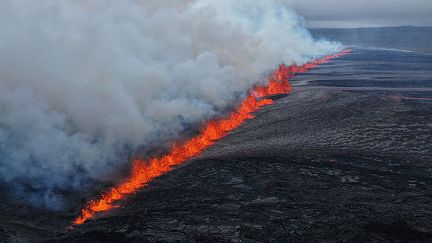
When one chamber fills, the pressure shifts to another, leading to a series of eruptions that have become increasingly frequent and intense.
The first eruption in March 2021 was perceived as a tourist attraction, a once-in-a-lifetime event that drew spectators from far and wide.
However, as the eruptions continued, the perception shifted from isolated incidents to a reawakening of a geological system that had been dormant for centuries.
By November 2023, the situation escalated dramatically when fissures opened within Grindavík itself, forcing residents to evacuate with little warning.
The frequency of eruptions has increased, with intervals shrinking from months to weeks, and the volume of lava released has grown with each event.
This pattern has alarmed scientists, as it indicates a system gaining momentum rather than one that is simply releasing pressure and returning to a dormant state.

Deep beneath the Reykjanes Peninsula, magma continues to pool, causing the ground to swell like a blister.
Real-time GPS sensors track this inflation, measuring the subtle movements that indicate an impending eruption.
The alarming reality is that the time between eruptions is shrinking, and scientists are divided on the implications of this activity.
Some believe it is a temporary phase, while others argue that the geological record suggests a new era of volcanic activity has begun, one that could last for decades or even centuries.
The psychological impact on the residents of Grindavík is profound.
The ongoing uncertainty of living in a town where the ground can split open at any moment creates a unique kind of trauma.
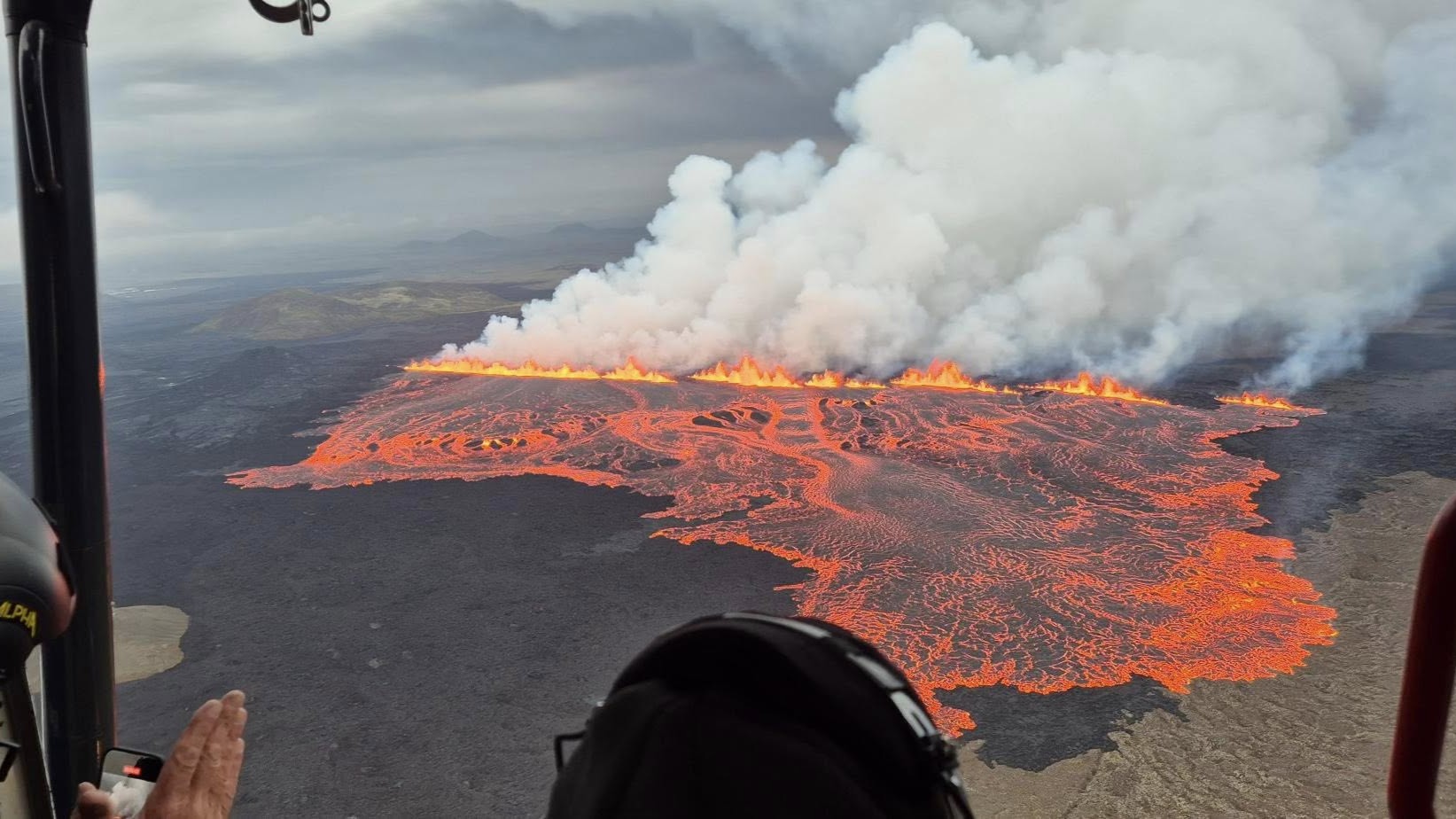
Families are repeatedly displaced, forced to pack their belongings and leave behind the homes they have built over generations.
The emotional toll of such an experience is compounded by the fact that there is no clear end in sight; the eruptions have become a part of daily life.
The volcanic activity poses significant risks to critical infrastructure in Iceland.
The Sparteni geothermal power plant, which supplies electricity and H๏τ water to thousands of homes, is located near the lava flows.
The Blue Lagoon, a major tourist attraction, has been forced to close multiple times due to the eruptions, impacting the country’s economy.
The only international airport, Keflavik International Airport, also faces threats from potential eruptions, which could isolate Iceland from the rest of the world.

In response to this ongoing crisis, Icelandic authorities have implemented measures to protect vital infrastructure.
Mᴀssive earthen barriers are being constructed to redirect lava flows, and engineers are working tirelessly to monitor the situation in real time.
While these efforts have had some success, the unpredictable nature of the volcanic activity poses challenges that are fundamentally different from past eruptions.
Unlike the successful response to the 1973 eruption on the island of Heimaey, where workers managed to cool advancing lava with seawater, the current situation on the Reykjanes Peninsula is more complex.
Fissures can open anywhere along the volcanic zone, making it difficult to target specific threats.
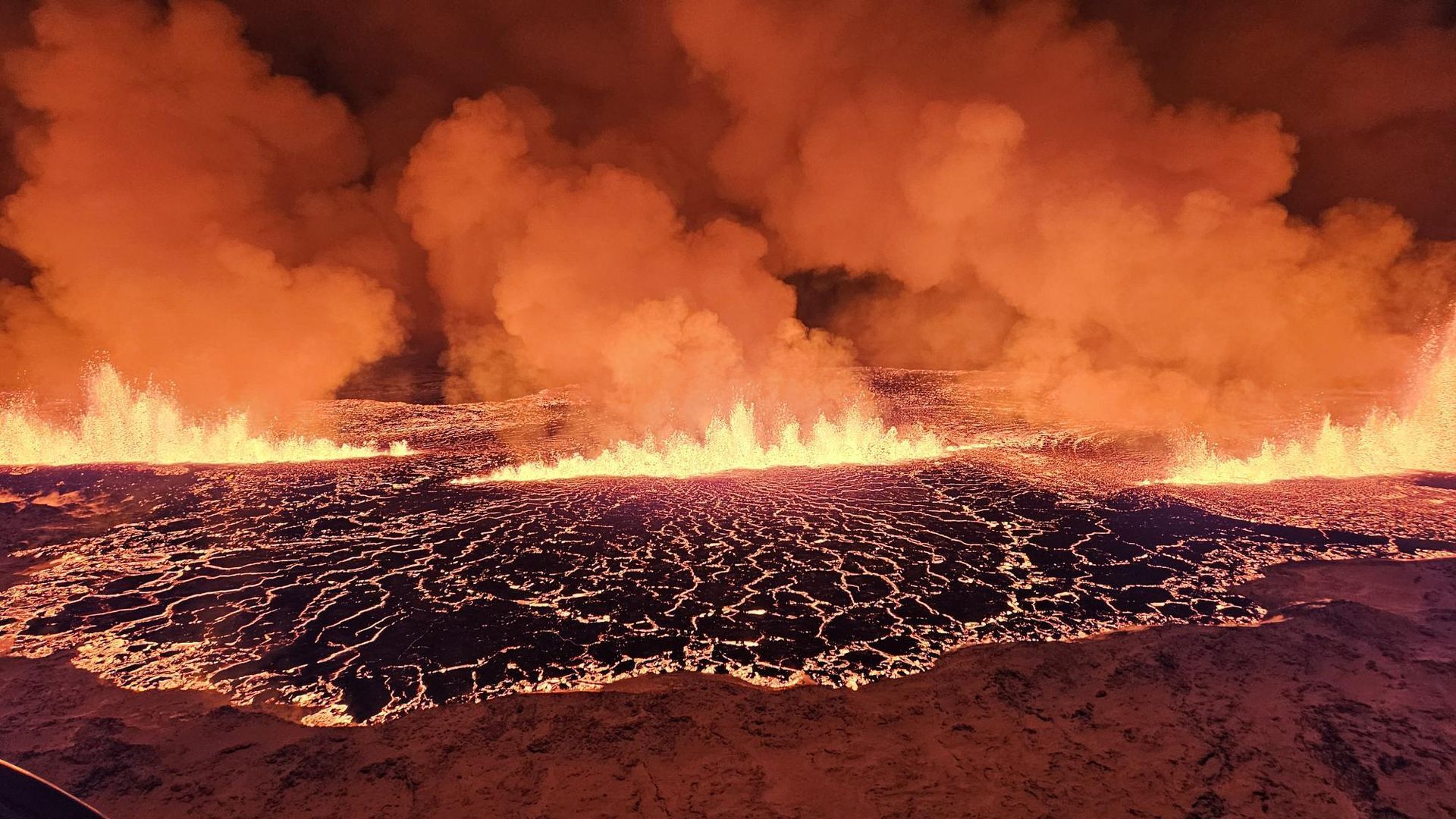
The defensive strategies that worked in the past may not be effective against an enemy that is constantly shifting.
As Iceland grapples with this unprecedented crisis, it is becoming clear that the country is not just facing a series of volcanic eruptions; it is confronting a new reality.
The landscape is being permanently reshaped, and the peninsula is becoming geologically altered in ways that will outlast current generations.
The ongoing eruptions are not merely destructive; they are also creating new land and changing the very fabric of Icelandic idenтιтy.
In the face of this geological upheaval, Icelanders are demonstrating resilience and adaptability.

The willingness to keep building barriers, monitoring lava flows, and fighting for their homes reflects a deep-rooted connection to the land.
As the country navigates this complex relationship with its volcanic landscape, it is clear that the challenges ahead will require innovative solutions and a collective commitment to coexist with the forces of nature.
Ultimately, what is happening in Iceland serves as a reminder of the power of the natural world and the fragility of human existence.
The geological forces that shape the planet operate on a timescale that is indifferent to human concerns.
As Iceland continues to confront its volcanic crisis, it must find a way to balance the need for safety with the desire to preserve the unique cultural and natural heritage that defines the nation.


