Storm Nils: France’s Avalanche Crisis Unfolds
The French Alps are currently facing a severe and unprecedented avalanche crisis, triggered by the arrival of Storm Nils on February 10, 2026.
As the storm settled over the region, it left behind a dangerously unstable snowpack that has led to the issuance of a level five avalanche alert, the highest classification available in the European avalanche danger scale.
This alert is a rare occurrence, having been issued only a handful of times in the past 25 years of monitoring, indicating the extreme risk posed to the mountainous terrain.
The consequences of this avalanche crisis have already proven ᴅᴇᴀᴅly, with reports confirming that 28 people have lost their lives this winter season alone.
Entire valleys have been sealed off, and ski resorts have closed—not due to a lack of snow, but rather because there is too much snow, stacked precariously in a way that makes the slopes primed for collapse.

Many may think that avalanches occur simply due to excessive snowfall, but the reality is far more complex.
The current situation in Savoy is not just about the recent storm; it is about the underlying conditions that existed long before Storm Nils formed over the Atlantic.
Storm Nils was no ordinary weather event.
Between February 11 and February 13, wind gusts reached astonishing speeds of 185 km/h, and the storm deposited between 60 and 100 cm of fresh snow above 1,800 meters across the northern French Alps.
In certain areas, such as the Mlanc Mᴀssive, accumulations exceeded even these staggering amounts.
To put that into perspective, every square meter of slope above 1,800 meters received the weight equivalent to several hundred kilograms of new snow in just 48 hours.
The mountain had no time to absorb this weight, no time to settle, and no time to bond the new layer with what lay beneath it.
What lay beneath was already compromised.
In the weeks leading up to Storm Nils, the surface of the snowpack had been exposed to prolonged freezing temperatures and clear skies.
Under these conditions, water vapor within the snowpack migrated upward, depositing itself on existing snow crystals and transforming them into larger, more fragile forms.
This created a layer of what avalanche scientists refer to as depth or faceted crystals—structurally weak grains buried beneath the surface that remain invisible from above and undetectable without direct examination.
These weak layers do not disappear; they persist beneath the snowpack, preserving their vulnerability under every successive storm that buries them deeper.
As the storm arrived, those weak layers had been buried for weeks, and the weight of the new snow had now settled upon them.
On February 12, the French National Weather Service, Meteo France, issued a red avalanche alert for Savoy, classifying the danger as very high.
Natural avalanches were certain, and human-triggered avalanches were also anticipated.
For the first time in the history of the French alert system, three parameters were activated simultaneously at the red level: wind, flooding, and avalanches across the same region.
Meteo France described the situation as remarkable, using the term “exceptional” to characterize the conditions—a term that does not appear in standard avalanche advisories.
However, the alert system could not convey the true danger of the storm’s impact on a snowpack that was already structurally compromised.
The resorts in the region began to close, with numerous high-alтιтude sectors shutting down operations on February 12.
Paradiski, one of the largest ski domains in the world, announced a full closure for all terrain, while other resorts suspended lift operations pending avalanche control work.
Avalanche control teams were deployed to trigger controlled releases before the slopes could release on their own.
In the 24 hours following the alert, an additional 30 to 50 cm of snow fell above 1,800 meters, further complicating the already precarious situation.
Despite their efforts, the control teams were not ahead of the accumulating snow; they were working within it, acknowledging that the mountains would move regardless of human intervention.
On February 13, with the level five alert still active, a group of six skiers entered off-piste terrain at Val D’Aeri.
That morning, the danger rating had been downgraded from level five to level four, but the distinction was misleading.
Level four indicates that while human-triggered avalanches are likely on steep slopes, the snowpack remains very unstable, having not had time to bond or stabilize after the maximum load from the storm.
The avalanche released without warning, resulting in the tragic deaths of three skiers, including two British victims.
Despite the group carrying avalanche transceivers designed to locate buried survivors, the equipment was not enough to save them.
In the aftermath, prosecutors in Savoy opened a manslaughter investigation, highlighting the severity of the situation.
By February 18, the death toll had risen to 28, with additional avalanches occurring without human triggers.

On February 17, a large natural avalanche descended from the slopes above the hamlet of La Ravine, crossing roads and pedestrian paths, resulting in one fatality and several injuries.
The avalanche activity in the region was unprecedented, with observers noting that the scale had not been seen in years.
The danger level remained at level five, and entire hamlets were evacuated as a precaution against potential secondary releases.
As the winter progressed, meteorologists warned of rising temperatures that would introduce a new vector of instability into the snowpack.
When temperatures rise above freezing, meltwater infiltrates the snowpack from below, acting as a lubricant between the dense slab and the weak layers beneath.
This phenomenon can lead to wet slab avalanches, which are notoriously difficult to forecast and can occur without clear precursors.
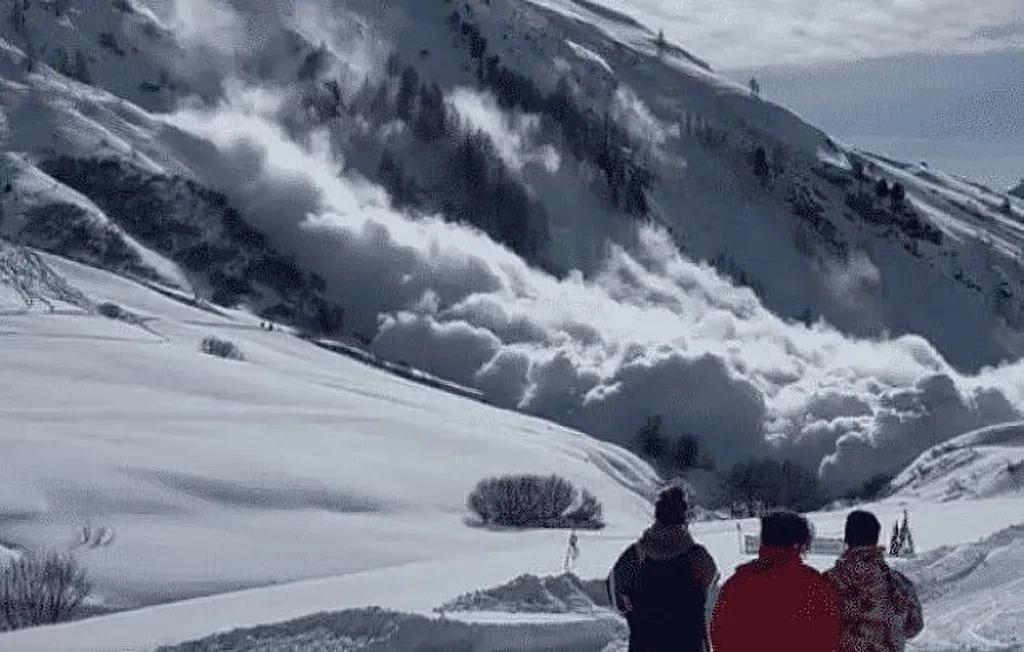
The persistent weak layers that formed during early winter continue to pose a significant threat, as they remain buried and susceptible to failure.
Across the Alps, similar conditions are being reported, with avalanche incidents occurring in neighboring regions of Italy and Switzerland.
The European Alps are a single geological structure, and the borders drawn across them do not correspond to the snowpack’s behavior.
As the situation continues to evolve, the prefectural authority of Savoy has maintained its advisory against all off-piste activity, ski touring, and snowshoe travel in the affected mᴀssifs.
The advisory reflects a recognition that the terrain cannot be made safe, only monitored.

The 28 deaths recorded in France this winter do not account for victims in Italy or Switzerland, indicating that this winter may be one of the most lethal avalanche seasons in modern recorded history across the entire western Alpine arc.
Storm Nils may have pᴀssed, but the structural damage it caused to the snowpack remains a pressing concern.
The models used to predict avalanche behavior cannot account for the human decisions made at the edge of marked paths, where desires to traverse the mountains often clash with the data indicating danger.
As new storm systems approach and temperatures fluctuate, the question is not whether more avalanches will occur, but when and where they will strike next.
The snowpack is moving, the monitors are watching, and the risk remains high as the French Alps brace for what may come next.


