California Just Lost Its BIGGEST Brewery And Beer Prices About to EXPLODE
In a shocking turn of events, Anheuser-Busch has announced the permanent closure of its Fairfield brewery, a facility that has been a staple of the California brewing industry for nearly 50 years.
On December 11th, 2025, what should have been an ordinary day turned into a crisis for the city as the brewery’s shutdown was revealed, putting approximately 250 employees out of work.
This closure comes just 17 months after the brewery underwent a multi-million dollar upgrade, leaving many to question the motivations behind such a drastic move.
The announcement hit Fairfield like a thunderclap, delivering a devastating blow to a community that had come to rely on the brewery for jobs and economic stability.
For decades, the brewery’s iconic red Budweiser sign had illuminated the skyline of Fairfield, a landmark that now stands dark and silent for the first time in living memory.
The closure not only affects the workers but also sends shockwaves through the local economy, threatening to send beer prices soaring across the state.
Local leaders were left scrambling for answers after receiving no advance notice about the closure.
Mayor Katherine Moy expressed her disbelief, stating that the decision felt like a betrayal, especially after Anheuser-Busch had invested significantly in the facility just a year and a half earlier.
This abrupt announcement, timed just weeks before the holidays, amplified the shock for those employees who suddenly found themselves facing unemployment.

For many, the brewery was more than just a job; it was a source of pride and stability for their families.
The loss of 238 jobs overnight means that the economic foundation of hundreds of households has crumbled, leaving local businesses that relied on brewery traffic—such as lunch counters and supply vendors—facing immediate uncertainty.
The closure’s impact will ripple far beyond the brewery’s gates, threatening city budgets and public services.
In the hours following the announcement, the focus shifted to the human fallout, with families facing an uncertain new year and the community grappling with the reality of lost jobs.
The Fairfield Brewery was not just a production facility; it was a giant of California industry, sprawling across 170 acres and featuring 700,000 square feet of brewing and packaging space.
The brewery produced millions of barrels of beer each year, supplying not only Northern California but also the entire Pacific Northwest, Alaska, Hawaii, and markets as far away as South America.
This mᴀssive operation relied on up to 85 trucks rolling out daily, loaded with Budweiser, Stella Artois, Michelob, and other brands, while 60 rail cars departed each week.
In addition to its size, the brewery earned acclaim for its efficiency and environmental leadership, having been recognized as the Green Plant of the Year in 2013 for its remarkable recycling efforts and water conservation.
The facility was also a regional attraction, welcoming over 40,000 visitors annually for guided tours and beer tastings, creating a strong connection between the brewery and the community.
With its closure, all of this disappears at once—the trucks stop running, the public tours end, and the award-winning sustainability initiatives lie idle.
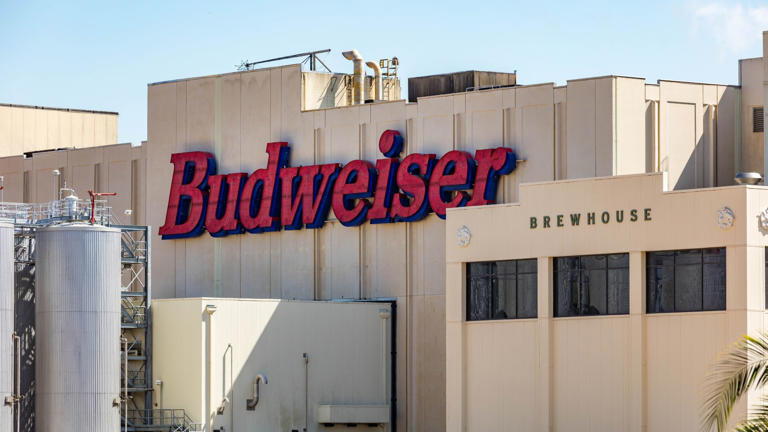
The sheer physical and cultural footprint of the Fairfield Brewery is now a vacant complex, with its future uncertain.
The closure has left a substantial gap in the city’s budget, with local economist Dr. Anna Suarez describing the loss as a fiscal shock wave.
The city faces an immediate $1.2 million drop in water utility revenue due to the loss of its largest industrial customer, which consumed over 1,500 acre-feet of water annually.
This shortfall means the city must spread its fixed costs across fewer customers, potentially leading to rate hikes.
Additionally, property tax losses could reach as high as $559,000 annually, depending on how quickly the site can attract a new tenant.
The specialized nature of the brewery makes it difficult to repurpose, raising concerns that the vacant site could become a blight, dragging down surrounding property values.
The indirect economic impact of losing hundreds of jobs will also be felt, as local stores, restaurants, and service providers lose the spending generated by brewery employees.
While the state and federal tax losses are harder to quantify, the immediate pain on the local budget is clear.
Public services, from parks to planning, now face tough choices as the city grapples with the financial fallout.
For many of the brewery’s workers, the news of the closure was devastating. Mike Rogers, who had dedicated 21 years to the brewery, learned that his job would end just months shy of his full pension.

The thought of relocating to the Los Angeles facility felt impossible for him and many others, who now face unemployment in a job market already тιԍнт from other recent plant closures in the region.
Anheuser-Busch has promised severance packages for those unable to relocate, but details remain vague, leaving many workers uncertain about their futures.
Rapid response teams from the local workforce board are scheduled to provide support, offering information on unemployment benefits and retraining, but the reality of the situation remains daunting.
The closure has struck hardest among families who built their lives around steady brewery paychecks, forcing difficult decisions about where to live and how to make ends meet.
Commodity analyst Jenna Lee highlights how external factors, such as a 25% tariff on aluminum imports, have compounded the challenges faced by the brewing industry.
With aluminum cans making up three-quarters of all packaged craft beer sold in the U.S., the tariff has driven up costs, forcing breweries to choose between absorbing losses or pᴀssing them on to consumers.
Anheuser-Busch has already seen profits tumble, with their earnings dropping from $2.07 billion in the third quarter of 2024 to just $1.05 billion a year later.
The Bud Light boycott alone erased an estimated $1.4 billion in sales, making price increases for consumers inevitable.
Industry analysts predict beer prices could rise between 3% and 8% in the coming year, translating to noticeable increases at the checkout counter.
The ripple effects of the brewery’s closure extend throughout California’s beer supply chain, which now runs through a single production facility.
With the Fairfield plant shuttered, the Van Nuys facility in Los Angeles now stands as the only production site left in the state, responsible for serving nearly 39 million people.
Logistics expert Lena Chow describes the unprecedented challenges facing Northern California distributors, who now must navigate longer routes and increased costs.
Beer that once traveled 100 miles now logs over 400, crossing mountainous terrain and urban bottlenecks, leading to higher fuel costs and potential delays during peak demand periods.
The Van Nuys Brewery has seen significant investment, with $16 million allocated last year and another $7.4 million this fall to ramp up production.
However, the company is shifting its focus, funneling more resources into premium brands like Michelob Ultra rather than classic Budweiser, further complicating supply chain dynamics.
Across the country, breweries are shutting down at an alarming rate, with 501 closures in 2024 compared to only 434 new openings—a net loss not seen since 2005.
California has been particularly hard hit, losing 48 breweries while only 26 opened, resulting in a net decrease of 22 breweries by year’s end.
This contraction is not limited to small craft operations; Anheuser-Busch has closed three major facilities nationwide, including the one in Fairfield.
National beer production has dropped sharply, falling from 192 million barrels in 2015 to just 158 million barrels in 2024, despite a growing population.
These numbers reveal a broader trend affecting the beer industry, with changing consumer preferences leading to declining sales.

Younger generations, particularly Gen Z, are drinking significantly less alcohol than their predecessors, with surveys showing that they consume about one-third less beer and wine.
The rise of cannabis legalization has also contributed to this shift, with many young adults now preferring cannabis over alcohol.
At the same time, sales of non-alcoholic beer have surged by 30% in just one year, while ready-to-drink cocktails remain the only segment of the alcohol market that is still growing.
These trends are squeezing traditional beer sales from every angle, making it increasingly difficult for breweries to operate profitably.
Solano County is no stranger to economic upheaval.
Just months after the brewery closure announcement, the Valero Benicia refinery declared it would shut down in April 2026, putting another 400 people out of work and stripping the city of up to $10 million in annual tax revenue.
Major employers like Copart and MV Transportation have already moved their headquarters out of the region, seeking lower costs in Texas.
The Vallejo school district is now facing cuts due to shrinking tax revenues, compounding the uncertainty for families and businesses in the area.
What began as a single plant closure now feels like part of a broader unraveling, leaving local leaders scrambling to prevent a downward spiral.
The future of Bush Drive, where the brewery was located, hangs in the balance.
Kushman and Wakefield, a national brokerage, has been tasked with listing the sprawling 170-acre property, but its specialized brewing infrastructure makes it a tough sell.
City officials report a steady stream of calls from commercial brokers, but only two buyer groups have entered early discussions.
The brewery’s specialized equipment and facilities pose a challenge for repurposing, raising concerns about potential blight and declining property values.
As the community grapples with the loss of its largest employer, the question of what will fill this void remains unanswered, leaving the city’s idenтιтy in limbo.
Construction crews broke ground on the Fairfield Brewery in 1974, transforming open land into a cornerstone of the community by 1976.
The brewery’s history is woven into the fabric of the city, with memories of celebrations, local traditions, and community events tied to its legacy.
With the loss of California’s largest brewery, shelves are now thinner, and prices are set to rise for millions of consumers.
As industry giants retreat and costs surge, beer becomes less accessible, impacting local economies and supply chains.
What started as a single brewery closure signals a turning point for the industry and the communities that depend on it.
In a world where staples can vanish overnight, the resilience of communities is put to the test.
What does resilience mean in the face of such unpredictability?


