😳 Explosive Allegations Spread Online Involving Aaliyah’s Family — Fact or Fiction?
Social media has once again become ground zero for a viral storm — this time involving Nicki Minaj and late R&B icon Aaliyah.
The explosive headline circulating across platforms claims that Nicki Minaj “exposed” a so-called dark truth — alleging that Aaliyah’s mother “sold her to the industry.
” The language is dramatic.
The implication is severe.
And the emotional reaction has been immediate.
But what’s actually happening?
First and most critically: there is no verified evidence that Nicki Minaj has made a confirmed statement accusing Aaliyah’s mother of selling her to the industry.
No official interview.
No documented quote.
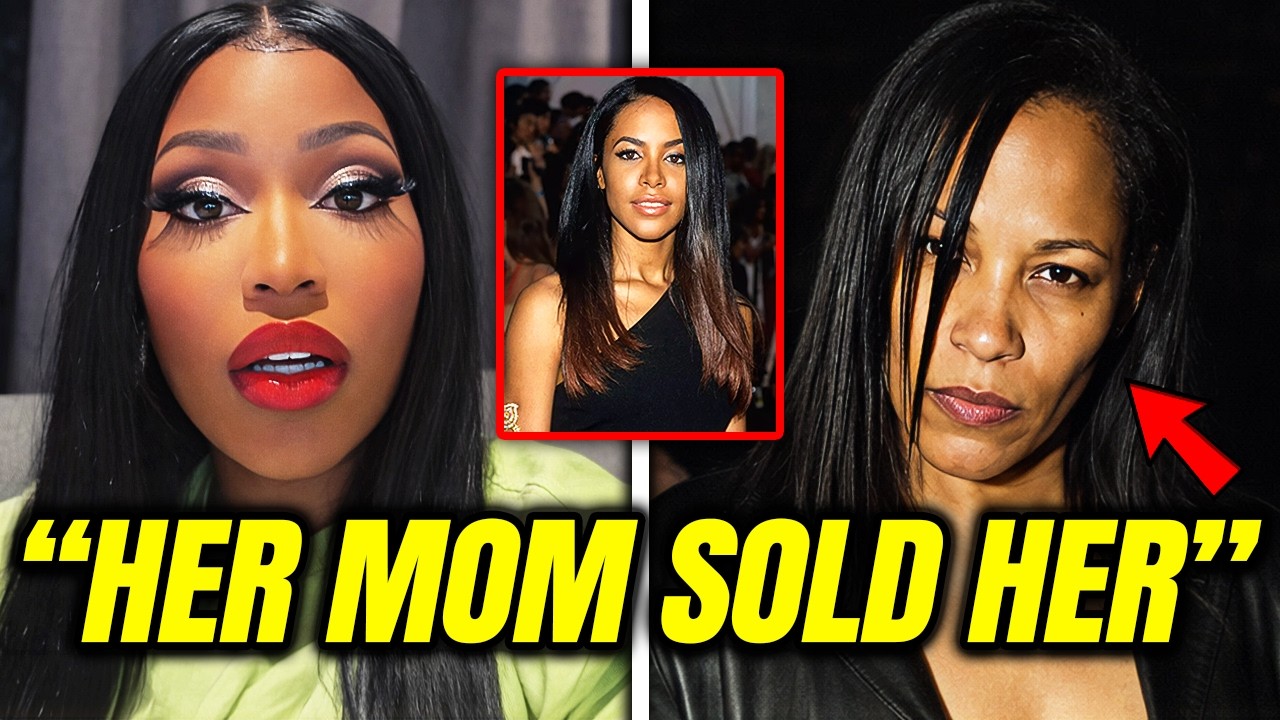
No credible source has substantiated the claim currently spreading online.
The rumor appears to have originated from a combination of edited clips, commentary videos, and sensationalized posts that gained traction through emotionally charged phrasing rather than verified reporting.
Aaliyah, who tragically pᴀssed away in a plane crash in 2001, remains one of the most respected and beloved figures in R&B history.
Her legacy — built through albums like One in a Million and Aaliyah — continues to influence artists decades later.
Discussions around her early career have long included complicated narratives involving industry power dynamics, particularly her controversial early ᴀssociation with R.Kelly.
Those historical events are documented and widely reported.
However, suggesting that her mother “sold her to the industry” is a serious allegation — one that requires substantial evidence.
As of this writing, no such evidence exists.
Nicki Minaj, known for her unfiltered presence on social media and in interviews, has certainly addressed industry politics before.
She has criticized power structures, called out executives, and spoken candidly about manipulation within entertainment spaces.
But conflating those broader critiques with a direct accusation against Aaliyah’s mother appears to be an extrapolation by online commentators rather than a documented statement.
The rumor gained momentum when certain content creators began implying that Minaj referenced exploitation within the music industry and connected those remarks — without direct proof — to Aaliyah’s early career trajectory.
In digital culture, implication can quickly morph into ᴀssertion.
Once the phrase “Nicki Minaj exposes” appeared in headlines, the algorithmic snowball began rolling.
Reaction videos followed.
Comment threads exploded.
Emotional responses outpaced verification.
The allegation itself carries significant weight.
Accusing a parent of intentionally sacrificing their child to exploitative industry forces is not just dramatic — it is potentially defamatory if presented as fact without evidence.
Aaliyah’s family has historically been protective of her legacy.
Over the years, they have carefully managed her catalog and public narrative, including overseeing the eventual release of her music to streaming platforms.
Any direct accusation of this magnitude would almost certainly prompt an immediate response if it were grounded in verified public statements.
So far, no such response has been necessary — because no verified claim has been formally made.
Experts in media ethics warn that emotionally charged narratives surrounding deceased public figures often resurface cyclically.
Aaliyah’s legacy, in particular, remains intertwined with broader discussions about exploitation in the 1990s music industry.
When contemporary artists speak about systemic issues, some audiences retroactively apply those critiques to past tragedies.
But inference is not confirmation.
It is important to separate three distinct realities:
First, the entertainment industry has documented histories of exploitation, particularly involving young artists.
Second, Aaliyah’s early career involved controversial professional relationships that have been publicly examined for decades.
Third, there is currently no confirmed evidence that Nicki Minaj accused Aaliyah’s mother of selling her to the industry.
Blurring these realities into a single sensational headline creates a narrative that may generate clicks — but does not meet the standard of factual reporting.
Social media’s speed amplifies emotionally compelling language.
Words like “dark truth” and “exposed” trigger curiosity and urgency.
But responsible coverage requires documentation.
At the time of publication, Nicki Minaj has not issued any official statement directly referencing Aaliyah’s mother in the manner described by viral posts.
Nor have reputable news organizations reported such an accusation.
That absence matters.
Speculation about exploitation within the music industry is not new.
Artists across genres have spoken about contracts, power imbalances, and coercion.
Those broader discussions deserve thoughtful analysis.
However, attaching specific allegations to named individuals without evidence crosses into potentially harmful territory.
Fans of both artists have reacted strongly.
Supporters of Aaliyah’s legacy express frustration at what they perceive as unnecessary sensationalism.
Some Nicki Minaj fans argue that her broader industry critiques are being misrepresented for dramatic effect.
Others urge caution altogether.
“Stop spreading things without proof,” one widely shared comment reads.
“Respect her family.
”
The emotional stakes are amplified because Aaliyah cannot speak for herself.
Discussions about her life carry a particular sensitivity — especially when involving family.
In an era of algorithm-driven engagement, the line between commentary and misinformation can blur quickly.
When content creators suggest a narrative without presenting verified quotes or documentation, audiences may interpret speculation as fact.
Journalistic standards require direct sourcing, documented evidence, and corroboration — especially for serious claims involving individuals and families.
Until such evidence surfaces, the allegation should be regarded as unverified rumor rather than established truth.
The broader conversation about industry exploitation remains important.
The music business, historically and presently, contains structural imbalances that have impacted many artists.
But that conversation must be grounded in facts rather than viral extrapolation.
For now, the headline claiming that Nicki Minaj exposed a dark truth about Aaliyah’s mother lacks substantiated support.
As audiences navigate emotionally charged stories online, critical evaluation becomes essential.
Ask where the quote originated.
Look for primary sources.
Check whether reputable outlets confirm the claim.
In this case, none currently do.
The legacy of Aaliyah deserves careful stewardship, not algorithmic distortion.
And discussions about industry power dynamics deserve clarity rather than sensational framing.
Until verified information emerges, the responsible position remains clear: treat the claim as unconfirmed and approach it with caution.
Because sometimes, the most viral story isn’t the most truthful — it’s simply the loudest.


