Ghost City Rising From the Flood: Ksar El Kebir Nearly Empty After Historic Deluge 😱
Before dawn, the streets of Ksar El Kebir were silent.
Not the calm silence of early morning prayer.
Not the quiet pause before a market opens.
This was the silence of abandonment.
Doors locked.
Windows boarded.
Cars gone.
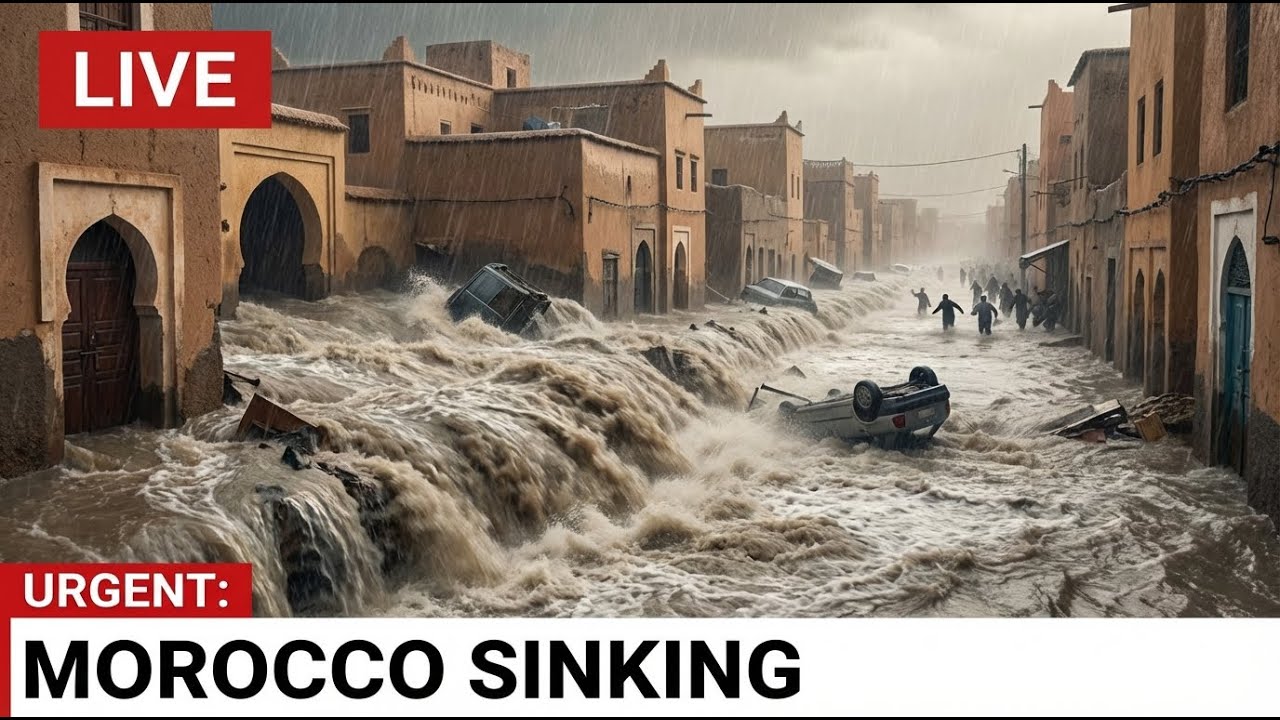
Entire neighborhoods swallowed by brown water that reflected nothing but a gray sky and the shadow of a nation bracing for impact.
Morocco is under emergency.
More than 154,000 people have been evacuated in what officials are calling the worst flooding in over 30 years.
The crisis has been triggered by the Oued El Makhazine Dam surging past 141 percent of its official capacity, forcing authorities into mᴀssive emergency water releases.
Those releases are not trickling out gently.
They are roaring through the Loukkos River basin at a rate of 560 cubic meters per second.
All of it flowing directly through Ksar El Kebir.
A city of 120,000 people now described as a ghost town.
Eighty-five percent of residents have fled.
Thirteen neighborhoods remain underwater.
Entire blocks resemble canals rather than streets.
Street signs are barely visible above muddy currents.
School buildings stand silent behind barricades of sandbags and submerged gates.
And the worst may not yet have arrived.
Storm Marta is approaching.
Officials are warning that the next 48 hours are critical.
To understand how Morocco reached this breaking point, you have to rewind seven years.
Seven long years of drought that drained reservoirs, shrank rivers, and pushed the country’s water infrastructure into survival mode.
Farmers struggled.
Crops withered.
Reservoir levels dropped to historic lows.
Then the rain came.
Not gentle recovery rainfall.
Not steady seasonal relief.
Record-breaking, relentless downpours that transformed cracked earth into raging floodplains in a matter of days.
The same hydraulic systems designed to store water for drought resilience are now straining under overwhelming pressure.
The Oued El Makhazine Dam alone has discharged more than 372 million cubic meters of water in emergency releases.
That water does not disappear.
It moves.
It surges.
It floods.
As dam gates opened, torrents rushed downstream into already saturated land.
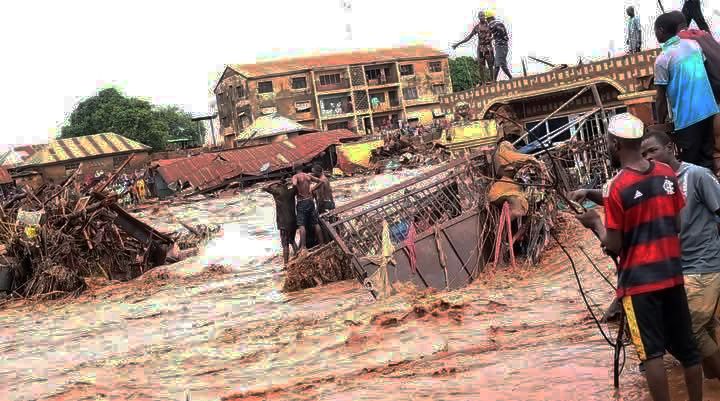
Ksar El Kebir became the epicenter.
The Loukkos River basin expanded beyond its banks.
Farmland turned into inland seas.
Roads dissolved under currents.
Bridges shook.
Residents described hearing sirens before sunrise.
Military trucks rolled in.
Loudspeakers echoed evacuation orders.
Families scrambled to pack essentials.
Some carried only documents and small bags.
Others left everything behind.
Within hours, entire districts emptied.
Larache has also felt the impact.
Coastal routes have been disrupted.
Maritime traffic between Morocco and Spain has faced delays and cancellations.
Rail lines are suspended in sections where tracks sit beneath floodwater.
Major road arteries are partially impᴀssable.
Agricultural damage is mounting.
Avocado orchards have been submerged.
Potato fields lie under murky water.
Olive groves, already weakened by years of drought, now face rot and soil erosion.
Farmers who survived drought now confront devastation from excess.
The irony is cruel.
Yet amid the chaos, one fact stands out with startling clarity.
Zero confirmed deaths.
In a disaster of this magnitude, that number is almost unimaginable.
Officials credit a mᴀssive military-led evacuation effort that began before waters reached their peak.
Troops moved door to door.
Helicopters monitored riverbanks.
Emergency teams coordinated transportation routes out of flooded zones.
Speed saved lives.
But the situation remains unstable.
When a dam exceeds 141 percent capacity, it becomes more than a reservoir.
It becomes a risk.
Continued rainfall from Storm Marta could push discharge rates even higher.
Every cubic meter released must travel somewhere.
Every neighborhood downstream becomes part of the equation.
Thirteen districts remain submerged.
Electricity has been cut in affected zones to prevent electrocution.
Emergency shelters are operating near capacity as displaced families wait for updates.
Schools have been converted into relief centers.
Mosques have opened their doors for shelter.
The economic cost is still being calculated.
Tourism disruptions ripple outward.
Trade routes slow.
Supply chains pause.
Ports adjust schedules.
Markets fluctuate.
And the psychological impact runs deeper than statistics.
For years, Morocco feared water scarcity.
Now it faces water excess at a scale not seen in decades.
Infrastructure built to endure drought now fights to withstand overflow.
Engineers monitor gauges hourly.
Emergency planners evaluate rainfall models constantly.
The next 48 hours will decide whether this crisis stabilizes or escalates.
Meteorological forecasts indicate that Storm Marta could intensify rainfall across already overwhelmed basins.
Even moderate additional precipitation could compound existing pressures.
Officials are not using dramatic language lightly when they say critical.
Because this is not only about flooded streets.
It is about structural endurance.
Hydraulic systems operate on thresholds.
Exceed them long enough and secondary failures become possible.
Levees weaken.
Riverbanks erode.
Drainage networks back up.
Urban zones once considered safe can become vulnerable.
Ksar El Kebir today looks like a city paused in time.
Shuttered storefronts.
Abandoned bicycles.
Mud-streaked walls marking the height of water lines.
Stray animals wandering streets where families once walked.
Boats navigating intersections once filled with taxis.
Drone footage shows rooftops surrounded by water in every direction.
And yet, hope persists in one number.
Zero deaths.
That statistic represents preparation, coordination, and urgency executed at scale.
It reflects warnings issued in time, decisions made decisively, and evacuation protocols enforced effectively.
But survival does not mean normalcy.
Rebuilding will take months.
Soil restoration for agriculture may take longer.
Infrastructure repairs will require funding and engineering precision.
Economic ripple effects will echo through regional markets.
Morocco’s relationship with water has shifted dramatically in one season.
From scarcity to surplus.
From drought headlines to flood emergencies.
Climate volatility has turned hydraulic planning into a high-stakes balancing act.
Reservoirs once too empty are now dangerously full.
The contrast exposes vulnerabilities that extend beyond a single dam.
The Loukkos River basin remains under intense observation.
Military patrols continue.
Emergency H๏τlines operate around the clock.
Officials urge residents not to return until structural ᴀssessments confirm safety.
Storm Marta looms.
Cloud bands move steadily across radar screens.
Forecasters analyze wind patterns and moisture levels.
Decision-makers prepare contingency plans should discharge volumes increase further.
The ghost town of Ksar El Kebir waits.
Eighty-five percent evacuated.
Thirteen neighborhoods underwater.
A city suspended between crisis and recovery.
And across Morocco, citizens watch and pray that the next 48 hours bring stabilization, not escalation.
The waters have risen.
The gates have opened.
The evacuations have happened.
Now the country stands on the edge of uncertainty, hoping that preparation will once again outrun disaster.
Because this time, nature struck after seven years of waiting.
And it struck hard.


