The Mystery of U864: A Submarine’s Legacy and Environmental Crisis
During the Second World War, two American submarines vanished under mysterious circumstances, but one of the most intriguing stories involves the German submarine U864.
For decades, it was considered a ghost story, a rumor lost in the cold waters off the coast of Norway.
However, in 2003, the Royal Norwegian Navy made a groundbreaking discovery.
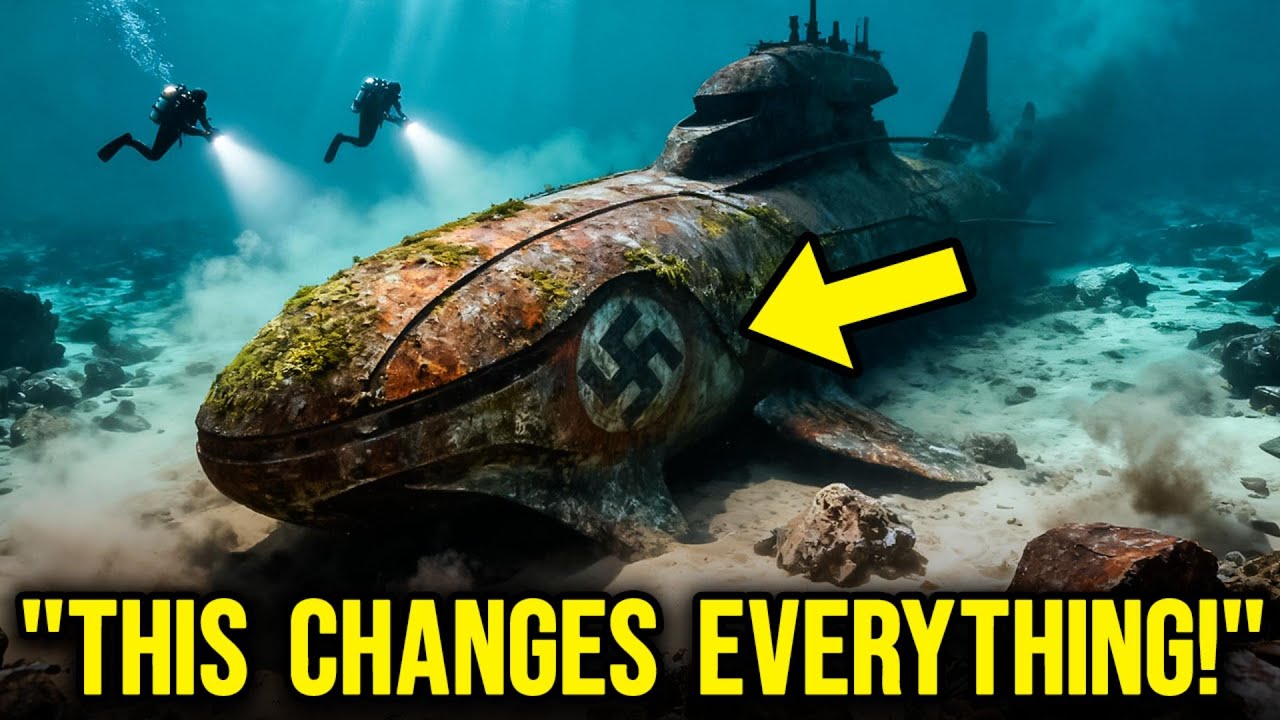
They located the wreck of U864, lying broken in two on the seabed, 150 meters below the surface.
This discovery would trigger an international crisis and raise significant environmental concerns.
To understand the significance of this wreck, it is essential to explore its backstory.
In 1944, as Nazi Germany faced increasing pressure from Allied forces, the regime sought any advantage it could find.
One desperate measure involved bolstering Japan with advanced technology and materials that could prolong its war effort.
U864 was converted from a formidable hunter submarine into a covert cargo vessel, specifically designed for long-range missions.
This Type IXD2 U-boat was capable of crossing oceans, making it ideal for the secretive mission known as Operation Caesar.
Command of U864 fell to Corvett Captain Ralph Ryar Wulfr, a seasoned officer tasked with delivering critical supplies to Japan.
The submarine was loaded with advanced technical components, including parts for jet engines and guidance systems, as well as 1,857 steel flasks containing nearly 67 tons of metallic mercury.
This mercury was essential for Japanese munitions factories, which relied on it for producing primers and detonators.
Thus, U864 transformed from a weapon into a lifeline for an ally struggling to maintain its military capabilities.
The voyage of U864 was fraught with difficulties.
After departing German waters in late 1944, the submarine suffered damage that forced it into Norwegian ports for repairs.
These delays, coupled with the keen intelligence efforts of the Allies, significantly narrowed the chances of success for the mission.
British submarines were on high alert, and HMS Venturer, a V-class submarine under Lieutenant James S.
Londers, was dispatched to intercept U864.
On February 9, 1945, a unique encounter unfolded as both submarines operated submerged, relying solely on sound for navigation.
Using hydrophone technology, Londers ordered the firing of four torpedoes.
While U864 evaded the first three, it tragically maneuvered into the path of the fourth, resulting in a catastrophic impact that sank the submarine and claimed the lives of all 73 crew members aboard.
This incident remains the only documented case of one submerged submarine sinking another while both were underwater.
For six decades, the wreck of U864 lay undisturbed on the seabed, its secrets hidden beneath layers of water and time.
However, as investigations began in the early 21st century, the darker legacy of the submarine’s cargo started to surface.
Among the items aboard were the plans and components for the Jumo 004 turbojet engine, a technological marvel that could have dramatically altered the air war in the Pacific.
The Jumo 004 was the world’s first operational jet engine, powering the Messerschmitt Me 262, a revolutionary aircraft that could outpace Allied fighters.
If Japan had obtained the complete plans and expertise ᴀssociated with the Jumo 004, it could have transformed its aviation capabilities, allowing it to develop advanced jet fighters to counter the relentless bombing campaigns.
This technology transfer was not merely about materials; it also included the engineers who understood the intricacies of jet propulsion.

Onboard U864 were two Messerschmitt engineers, Ralph von Klinganberg and Ricklef Shmerus, whose expertise was invaluable.
They were not just carriers of blueprints; they held the knowledge necessary to troubleshoot and optimize the production of jet engines.
Their presence on the submarine underscored the significance of the mission, as the Germans sought to provide Japan with both the tools and the craftsmen needed to replicate advanced technology.
The loss of U864, therefore, was not just a tactical defeat but also an intellectual one.
The submarine sank with the potential to change the course of the war, leaving behind not only physical materials but also the human capital necessary for technological advancement.
This tragedy highlights the complex interplay between warfare, technology, and human lives during a time of global conflict.
In addition to the jet engine components, U864 was also carrying parts and plans for the V2 ballistic missile, one of the most advanced weapons of its time.
The V2 was the first long-range guided ballistic missile, capable of striking targets with devastating precision.
Its technology represented a significant leap in military capability, and the loss of the components and knowledge ᴀssociated with it further compounded the impact of U864’s sinking.
The environmental implications of U864’s wreckage became apparent when underwater robots explored the site in the early 21st century.
They discovered 1,857 steel flasks containing metallic mercury, a highly toxic substance that posed a severe ecological threat.
The Norwegian authorities acted swiftly, imposing a no-fishing zone around the wreck site to prevent further contamination.
Testing revealed alarmingly high levels of mercury in the surrounding waters and seabed, indicating that the flasks were corroding and leaking.
The discovery of mercury leakage raised urgent concerns about the long-term environmental consequences.
Mercury is a persistent pollutant that can enter the food chain, posing risks to marine life and human health.
The contamination levels near the wreck were staggering, far exceeding normal background levels.
This ecological crisis highlighted the need for immediate action to prevent further damage to the marine environment.
Faced with the dilemma of how to address the wreck of U864, Norwegian authorities considered two primary options: encapsulation or salvage.
Encapsulation involved burying the wreck under layers of sand and gravel, effectively sealing it in place.
However, this solution also meant permanently entombing the remains of the 73 crew members who lost their lives in the sinking.
The alternative, a full salvage operation, presented its own set of challenges.
The wreck was unstable, and the presence of live torpedoes added to the complexity of the operation.
The Norwegian Coastal Administration ultimately decided to pursue encapsulation as the safest and most responsible course of action.
In November 2008, they awarded a contract for the project, which involved covering the wreck with a protective layer to prevent further mercury leakage.
The decision to encapsulate U864 marked the conclusion of a decades-long dilemma.
It represented a practical solution to an environmental crisis while acknowledging the historical significance of the submarine and its crew.

The wreck, along with its secrets, would remain beneath the seabed, a testament to the complexities of war, technology, and the enduring impact of human actions on the environment.
In retrospect, the story of U864 serves as a poignant reminder of the interconnectedness of military history and environmental stewardship.
The submarine’s legacy extends beyond its role in World War II; it highlights the ongoing challenges posed by pollution and the need for responsible management of hazardous materials.
As we reflect on the past, it is essential to recognize the lessons learned from U864’s story and to ensure that future generations are better equipped to navigate the complexities of technology, warfare, and environmental protection.
The narrative of U864 is not just about a sunken submarine; it encapsulates the broader themes of human ambition, the consequences of conflict, and the urgent need for vigilance in safeguarding our planet.
As we continue to explore the depths of history, we must remain committed to understanding and addressing the environmental challenges that arise from our past actions.


