Long before Iran became a modern political power, before borders, missiles, and nuclear ambitions, it already existed in the pages of Scripture under its ancient name: Persia.
The Bible does not mention Iran as a footnote in history, but as a nation woven deeply into God’s unfolding plan—from humanity’s earliest generations to the prophecies of the end times.
Persia’s story is one of paradox: chosen yet rebellious, redemptive yet destructive, judged yet promised restoration.
The origins of Persia reach back to the aftermath of the flood.
When humanity began again through Noah’s sons—Shem, Ham, and Japheth—new nations emerged from their descendants.
In Genesis 10, often called the “table of nations,” two names quietly appear that would shape Iran’s future: Elam, a son of Shem, and Madai, a son of Japheth.
Their descendants settled in what is now modern-day Iran.
Elam established itself in the fertile southwest, while the Medes descended from Madai inhabited the rugged northern highlands.
From the very beginning, Persia was born from both spiritual and physical lineage, tied to Israel through Shem and spread outward through Japheth.
The first time Persia appears as a threat is striking.
In Genesis 14, Elam emerges as a powerful aggressor when its king joins an alliance of eastern rulers to invade Canaan.
Cities are plundered, people enslaved, and Lot—Abraham’s nephew—is taken captive.
Elam becomes the first eastern nation to wage war against the family of faith.
Yet the outcome is shocking.
Abraham, with only 318 trained servants, pursues the invaders and defeats them.
Against all logic, the eastern coalition collapses.
The message is clear from the start: power without God cannot prevail.
Centuries pᴀssed, and those once-defeated tribes grew into something far greater.
Elamites and Medes shared the land, slowly forming the foundation of an empire that would one day dominate the ancient world.
Though pagan, Persia was never outside God’s sovereignty.
Through the prophets, God revealed he would use this nation in ways no one expected.
Isaiah prophesied that Persia would be the instrument of Babylon’s downfall, punishing the empire that destroyed Jerusalem and burned its temple.
But Isaiah went even further, declaring something almost unthinkable: a Persian king, not yet born, would be called by name as God’s chosen servant.
Cyrus, a pagan ruler, would free Israel from exile and command the rebuilding of the temple.
More than a century before Cyrus lived, God named him and ᴀssigned him a divine mission.
That prophecy came to life through the eyes of a young Hebrew captive named Daniel.
Taken to Babylon as a teenager, Daniel remained faithful amid corruption, and God rewarded him with visions that mapped the future of empires.
In Nebuchadnezzar’s dream of a great statue, Daniel identified Babylon as the head of gold, but declared that another kingdom would follow—symbolized by silver arms.
Two arms, one body: Media and Persia, united but unequal.
Persia would rise stronger and dominate.
History unfolded exactly as foretold.
Cyrus conquered Media, united the empire, and marched against Babylon.
On the night Belshazzar defiled the sacred vessels from Jerusalem, a hand wrote judgment on the palace wall.
That same night, Persian soldiers entered Babylon through the dried Euphrates River.
The city fell without resistance.
The Jews were freed.
The temple was rebuilt.
Persia, astonishingly, became Israel’s deliverer.
Yet Daniel’s visions did not stop there.
In another revelation, Persia appeared as a mᴀssive bear, raised on one side, devouring three ribs—its great conquests of Lydia, Babylon, and Egypt.
Later, Daniel saw a ram with two horns, one taller than the other, charging in all directions, unstoppable.
The angel explained plainly: the ram represented Media and Persia.
But even this mighty empire would fall.
A swift goat from the west—Greece under Alexander the Great—would shatter Persia with blinding speed.
Persia’s glory was immense, but temporary.
Still, Persia’s role in Scripture did not fade.
In the heart of the empire, in the city of Susa, God orchestrated one of the most dramatic rescues in biblical history.
Through Queen Esther, a Jewish orphan elevated to Persian royalty, an entire nation was saved from genocide.
What was meant to be a day of annihilation became a day of triumph.
Once again, Persia became a shield for God’s people.
Centuries later, as the world awaited the Messiah, Persia appeared once more.
Wise men from the east—Magi likely from Persian lands—followed a star to Bethlehem.
Scholars of prophecy, possibly influenced by Daniel’s writings, they recognized what Jerusalem missed.
They bowed before a child, bringing gifts that declared his kingship, divinity, and sacrificial death.
Persia was among the first to worship Christ.
But the Bible also reveals a darker future.
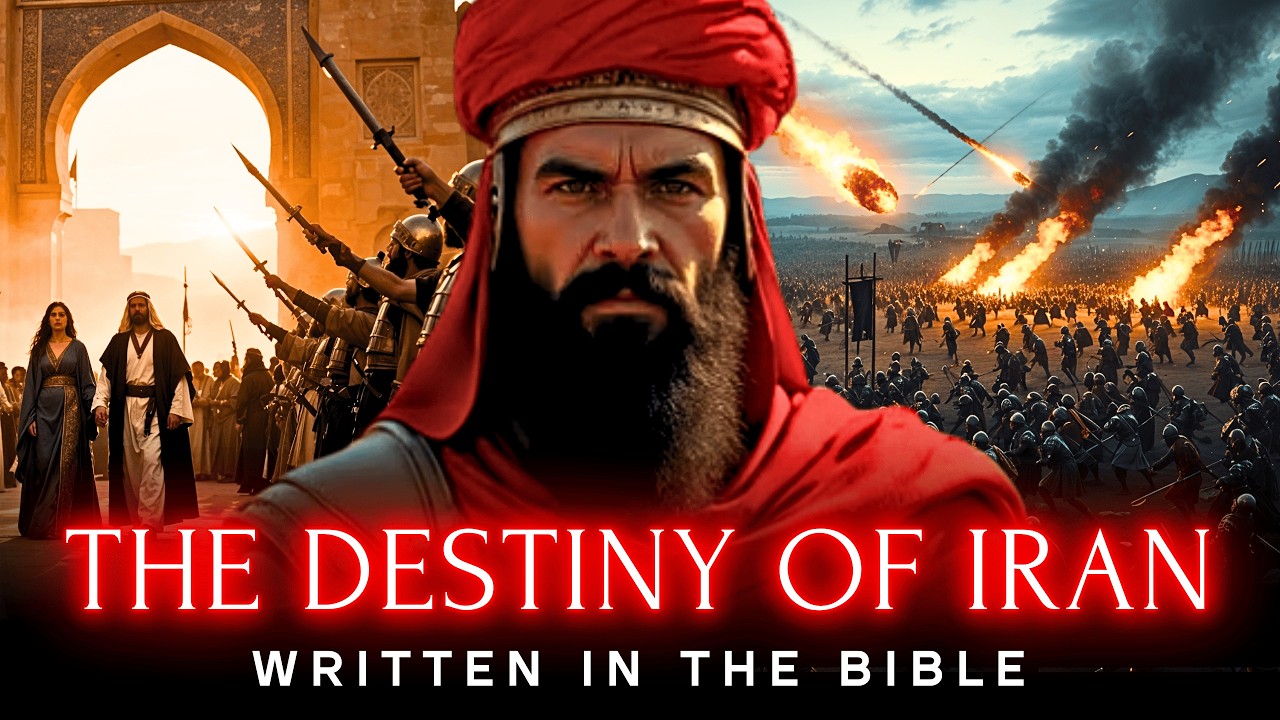
In Ezekiel’s vision of Gog and Magog, Persia is named as part of a final coalition that rises against Israel in the last days.
Alongside other nations, Persia advances like a storm—only to be met by divine judgment.
Earthquakes, fire, confusion, and destruction follow.
God intervenes directly, not merely to defend Israel, but to reveal his holiness to all nations.
Yet even here, Persia’s story does not end in ashes.
Jeremiah prophesied judgment on Elam, declaring its power would be shattered.
But then comes a promise few notice: “In the last days, I will restore the fortunes of Elam.
” Judgment is not the final word.
Restoration remains possible.
From Genesis to prophecy, Persia’s story mirrors humanity itself—called, fallen, judged, and offered redemption.
Iran’s presence in Scripture is not accidental.
It stands as both a warning and a promise, a nation that has walked the full arc of biblical history.
And as modern headlines echo ancient tensions, the Bible reminds us that no nation exists outside God’s ultimate plan.


