In the quiet of the White House cabinet room on the morning of October 5, 1963, a conversation unfolded that history would almost forget.
President John F. Kennedy sat listening as Defense Secretary Robert McNamara spoke with an urgency that bordered on desperation.
Vietnam, McNamara argued, was a ᴅᴇᴀᴅ end.
The United States needed a way out, and for the first time, such a way had been put on paper.
Kennedy did not object.
He agreed.
That moment, largely invisible to the public, set in motion a policy that would officially commit America to leaving Vietnam.
Six days later, Kennedy signed National Security Action Memorandum 263.
The document was short, precise, and revolutionary. One thousand U.S.
troops would be withdrawn by the end of 1963.
Nearly all remaining American forces would leave by the end of 1965.
The war that would later define a generation was, at least on paper, already scheduled to end.
Yet Kennedy chose secrecy.
There would be no announcement, no congressional debate, no public reckoning.

Withdrawals would be framed as routine rotations, ordinary movements of personnel rather than a strategic retreat.
To the outside world, nothing would seem to change.
This decision did not emerge overnight.
Months earlier, in May 1963, McNamara had convened a defense conference in Honolulu where withdrawal plans were openly discussed and formally requested.
This was not hypothetical thinking.
It was an instruction to prepare the machinery of disengagement.
By then, Kennedy had already reached a grim conclusion.

Privately, he admitted that the United States could not win in Vietnam and that American involvement was resented by the very people it claimed to protect.
The political problem was timing.
With an election looming in 1964, withdrawal risked accusations of weakness and betrayal.
By mid-1963, events in South Vietnam only reinforced Kennedy’s doubts.
The regime of President Ngo Dinh Diem was unraveling.
Buddhist monks burned themselves alive in protest.

Repression intensified.
Military reports painted a hopeful picture, but reality on the ground was far darker.
Kennedy faced a cruel dilemma: admit failure and face political destruction, or quietly prepare an exit while publicly claiming progress.
He chose the latter.
The strategy was elegant and cynical.
Convince Americans that the war was being won.
Present troop withdrawals as proof of success.
Train South Vietnamese forces quickly, then step away.
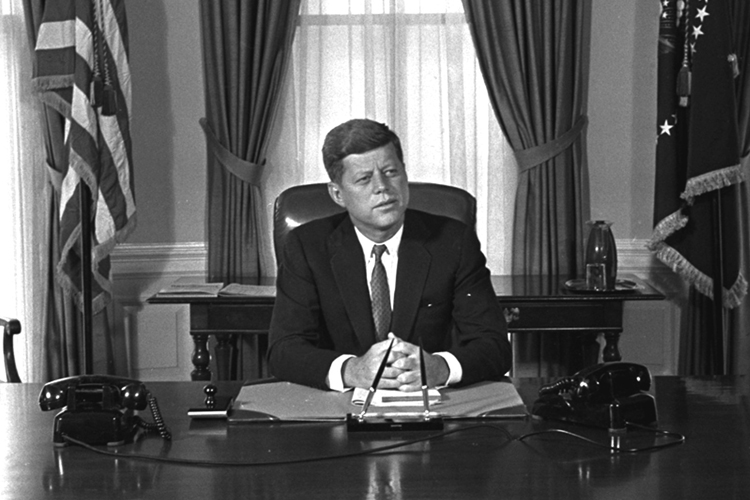
After reelection, finish the withdrawal and declare victory.
It was a gamble that depended on secrecy, stability, and time.
Kennedy believed he could manage all three.
In September 1963, Kennedy sent McNamara and General Maxwell Taylor to Vietnam to ᴀssess conditions and finalize withdrawal details.
When they returned, their report was blunt.
On secretly recorded White House tapes later declassified, McNamara can be heard telling the president that withdrawal was not only possible but necessary.
Kennedy approved the plan but insisted it be implemented quietly.
Political considerations dominated the discussion.
He feared alarming South Vietnamese leaders and provoking domestic critics.
Above all, he wanted control over the narrative.
NSAM 263 became official U.S. policy on October 11.
The withdrawal began almost immediately.
By December, hundreds of American advisers had left Vietnam, precisely as ordered.
The United States was, slowly and silently, moving toward the exit.
Then everything collapsed.
On November 1, 1963, a military coup in Saigon overthrew President Diem.
Though American officials were aware of the plot, Kennedy had insisted that Diem not be harmed.
Instead, Diem and his brother were murdered.
Kennedy was reportedly shaken, even horrified.
The coup destabilized South Vietnam, plunging it into factional chaos.
The fragile ᴀssumption underlying withdrawal—that a functioning government could survive without U.S. troops—was suddenly in doubt.
For three weeks, Kennedy wrestled with the implications.
The withdrawal order remained in force, but the situation was deteriorating fast.
He hinted publicly that U.S. forces would eventually leave but avoided specifics.
He planned to revisit Vietnam policy after a political trip to Texas.
That meeting never happened.
On November 22, 1963, Kennedy was ᴀssᴀssinated in Dallas.
Within hours, Lyndon B.
Johnson became president.
In the days following the funeral, Johnson pledged continuity.
The withdrawal plan, he said, remained in effect.
Technically, this was true.
Troops continued to rotate out, but others rotated in.
The total U.S. presence did not shrink.
What had been a genuine withdrawal under Kennedy became an accounting illusion under Johnson.
Five days after the funeral, Johnson signed National Security Memorandum 273.
On the surface, it echoed Kennedy’s language.
In substance, it marked a turning point.
The new directive emphasized expanded operations, including covert actions against North Vietnam.
Withdrawal was no longer a policy goal regardless of conditions; it was now dependent on success in the war.
The direction had reversed, quietly but decisively.
Johnson’s instincts differed sharply from Kennedy’s.
Haunted by Cold War fears and political vulnerability, he believed losing Vietnam would destroy him.
Advisers urged escalation, and Johnson listened.
Where Kennedy doubted generals, Johnson trusted them.
Where Kennedy sought exits, Johnson sought resolve.
By 1965, American combat troops poured into Vietnam.
Within three years, more than half a million U.S. soldiers were fighting there.
The consequences were catastrophic.
Fifty-eight thousand Americans died.
Millions of Vietnamese were killed.
The war tore apart American society and ended Johnson’s presidency in disgrace.
What had once been a secret plan to leave became a decade-long nightmare of escalation.
Historians continue to debate whether Kennedy would have followed through with withdrawal had he lived.
Absolute certainty is impossible.
Yet the documentary evidence is striking.
The plans were ordered, approved, signed, and implemented.
Kennedy’s private statements consistently expressed skepticism and a desire to leave.
His record shows repeated resistance to military pressure for escalation.
Whatever doubts remain, one fact is undeniable: on the day Kennedy died, the official policy of the United States was to withdraw from Vietnam.
In the end, the most haunting aspect is timing.
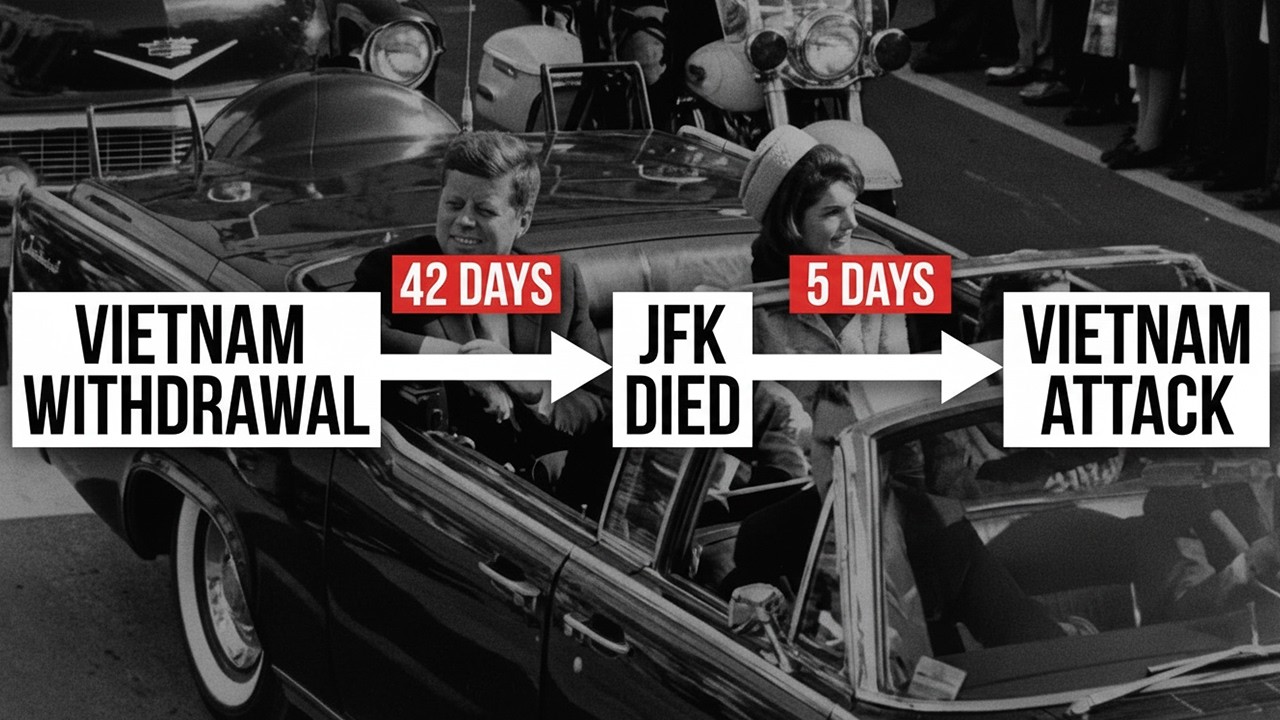
For 42 days, America was officially on a path out of Vietnam.
Then a single ᴀssᴀssination altered the course of history.
Not because of new intelligence or battlefield realities, but because one man with different instincts took power.
The Vietnam War was not inevitable.
It was a choice.
And for a brief moment in 1963, the United States had chosen differently.


