I have always found it unsettling how quickly tragedy hardens into “official truth.
” On November 29, 1963, just one week after President John F.
Kennedy was sH๏τ ᴅᴇᴀᴅ in Dallas, the nation was still in shock.
Flags were at half-staff, rumors were spreading, and fear hung thick in the air.
From the White House, President Lyndon B.
Johnson stepped forward to reᴀssure the country.

He announced the creation of a special commission to investigate the ᴀssᴀssination.
It would be impartial, thorough, and definitive.
The American people, he promised, would know the truth.
Then Johnson began to read the names.
Chief Justice Earl Warren would chair the commission.
Senator Richard Russell.
Congressman Gerald Ford.

Respected men, establishment figures, names meant to inspire confidence.
And then one name slipped past almost unnoticed by a grieving public: Allen Dulles.
It is difficult to overstate how strange that moment was.
Allen Dulles was not just a former government official.
He was the former director of the CIA.
More importantly, he was the CIA director John F.
Kennedy had personally fired just two years earlier.
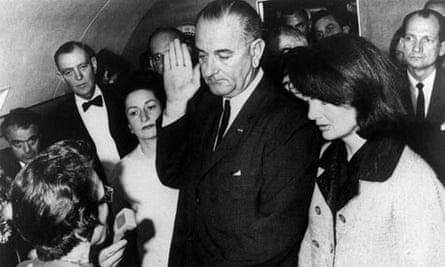
The same man Kennedy blamed for the Bay of Pigs disaster.
The same man Kennedy humiliated by forcing him out of the most powerful intelligence position in the world.
Now, that man would help investigate Kennedy’s murder.
This is not speculation or rumor.
It is documented history.
And once you pause long enough to absorb it, the implications are impossible to ignore.
Allen Dulles was American power personified.
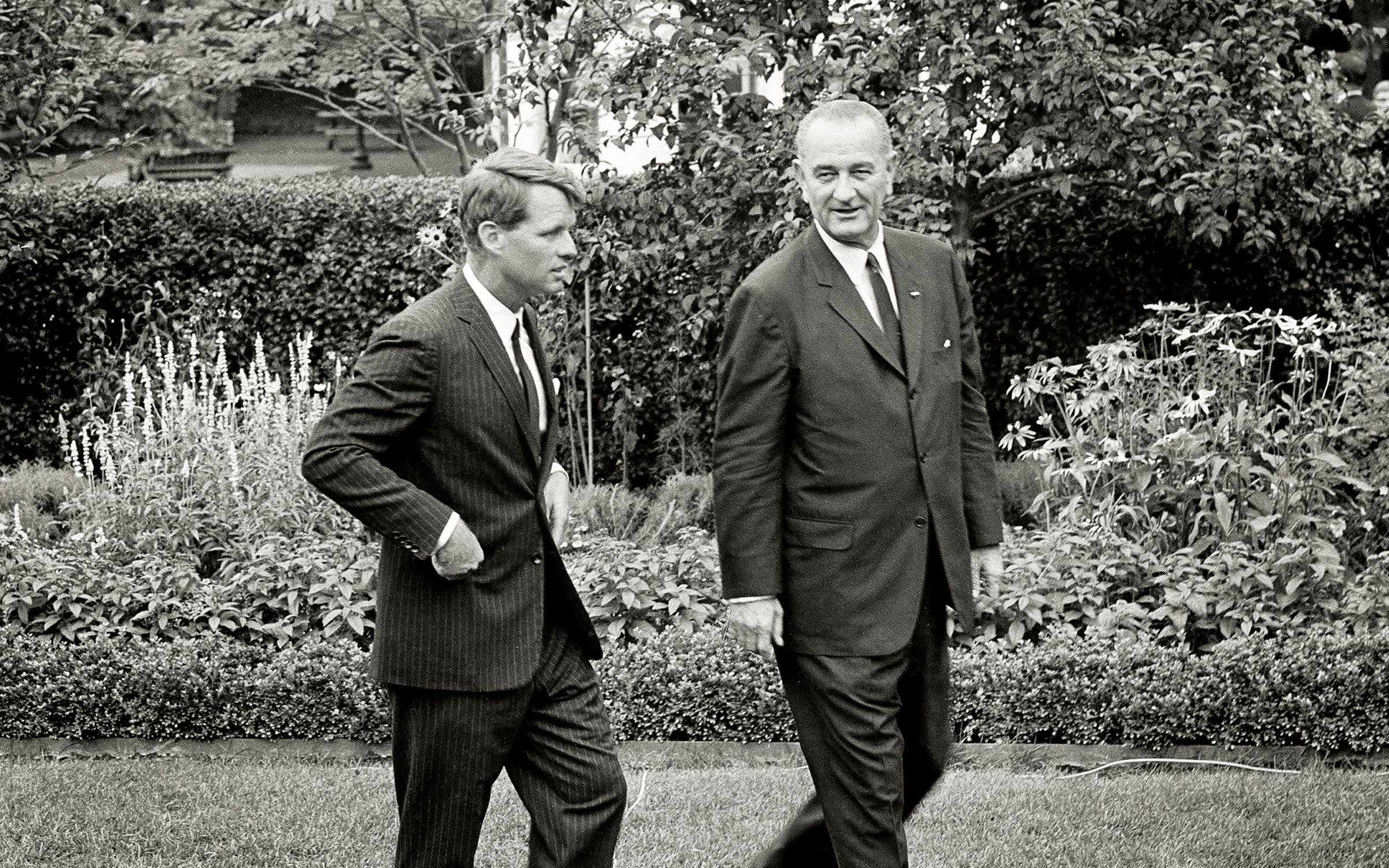
Born into a family that practically defined U.S.
foreign policy, he moved effortlessly through elite circles.
His grandfather and uncle both served as Secretary of State.
His brother, John Foster Dulles, would later dominate foreign policy under President Eisenhower.
Allen Dulles didn’t just witness the rise of American intelligence power; he built it.
During World War II, Dulles ran intelligence operations in Switzerland, cultivating networks that survived the war and later fed directly into the creation of the CIA.

When the agency was formally established in 1947, Dulles was one of its architects.
By 1953, he became director of central intelligence, and under his leadership, the CIA transformed from an information-gathering body into a covert weapon.
Iran in 1953.
Guatemala in 1954.
Democratically elected governments fell, replaced by regimes friendly to American corporate and strategic interests.
Dulles believed covert action was not only justified, but essential.
He believed presidents should have plausible deniability.
And he believed unelected intelligence professionals, not politicians, should shape America’s real foreign policy.

Then came John F. Kennedy.
Kennedy was young, skeptical, and increasingly distrustful of Cold War orthodoxy.
The collision between the two men was inevitable, and it exploded in April 1961 with the Bay of Pigs invasion.
Dulles ᴀssured Kennedy the plan would work.
He ᴀssured him American involvement would remain hidden.
He ᴀssured him the Cuban people would rise up.
None of it happened.
The invasion collapsed in humiliation.
Kennedy felt deceived.
He believed the CIA had boxed him into a corner, counting on him to escalate militarily.
Instead, Kennedy pulled back.
The result was a public disaster and a private reckoning.
In September 1961, Kennedy forced Allen Dulles out.
Officially, it was a “retirement.
” In Washington, everyone knew better.
Dulles had been fired.
But Dulles never truly left power.
He remained in Washington, retained his clearances, and continued meeting with CIA officials.
He was briefed, consulted, and treated as an elder statesman.
He knew too much to be discarded.
Yet privately, those close to him recalled bitterness.
Kennedy was weak, Dulles said.
Naive.
Dangerous.
In his view, Kennedy didn’t understand the communist threat or the necessity of force.
Then, on November 22, 1963, Kennedy was ᴅᴇᴀᴅ.
The ᴀssᴀssination threw the government into crisis.
Speculation spread instantly.
Foreign involvement? Domestic conspiracy? The new president needed calm, order, and closure.
The Warren Commission was meant to provide exactly that.
By appointing Allen Dulles, Johnson claimed he was adding expertise.
Dulles knew intelligence, after all.
But if the CIA itself had played any role, directly or indirectly, Dulles’s presence was not expertise.
It was a conflict of interest of staggering proportions.
Dulles did not sit quietly on the commission.
He became its most active member.
He attended meetings, questioned witnesses, reviewed documents, and most importantly, positioned himself as the authority on all intelligence matters.
Whenever CIA-related questions arose, eyes turned to him.
That was the trap.
Information from the CIA flowed through Allen Dulles before reaching other commissioners.
He interpreted it, summarized it, and filtered it.
He explained what mattered and what didn’t.
In effect, the man most invested in protecting the agency became the gatekeeper of what the investigation could see.
And there were things Dulles never revealed.
During his tenure as CIA director, the agency had run covert plots to ᴀssᴀssinate Fidel Castro, including collaborations with organized crime figures.
These operations, later known as part of Operation Mongoose, were explosive.
Had the Warren Commission known about them, it would have been forced to consider retaliation, blowback, and Oswald’s pro-Castro ᴀssociations.
But Dulles said nothing.
When questions arose about CIA activities in Cuba, he downplayed them.
When conspiracy possibilities surfaced, he redirected attention.
He pushed relentlessly for the lone gunman narrative, even distributing books about unstable political ᴀssᴀssins to shape his colleagues’ thinking.
Years later, congressional investigations revealed what Dulles had hidden.
Senators were stunned.
Former CIA officials admitted they ᴀssumed Dulles would disclose the Castro plots.
He never did.
By the time the Warren Report was released in 1964, the conclusion was set: Lee Harvey Oswald acted alone.
No conspiracy.
No CIA involvement.
Case closed.
Yet public doubt never faded.
Allen Dulles died in 1969 without ever acknowledging his role in shaping the investigation.
But the damage was done.
The official story stood, not because all questions were answered, but because the wrong man was placed in charge of asking them.
Kennedy once said he wanted to splinter the CIA into a thousand pieces.
Instead, the man he fired ensured the agency survived intact, its secrets buried, its power preserved.
That decision, made in the White House just seven days after a murder, may be one of the most consequential in modern American history.


