Heavy D’s Arrest Exposed: The Untold Battle, Shocking Legal Twist, and Why No One Wants You to Know the Real Story
When news broke of Heavy D’s arrest, social media and news outlets erupted.
For days, Dave “Heavy D” Sparks—the charismatic star of Discovery Channel’s Diesel Brothers—was everywhere: mugsH๏τs, rumors, and viral outrage.
But beneath the headlines was a tangled saga of legal battles, environmental activism, and a fight for accountability that few truly understood.
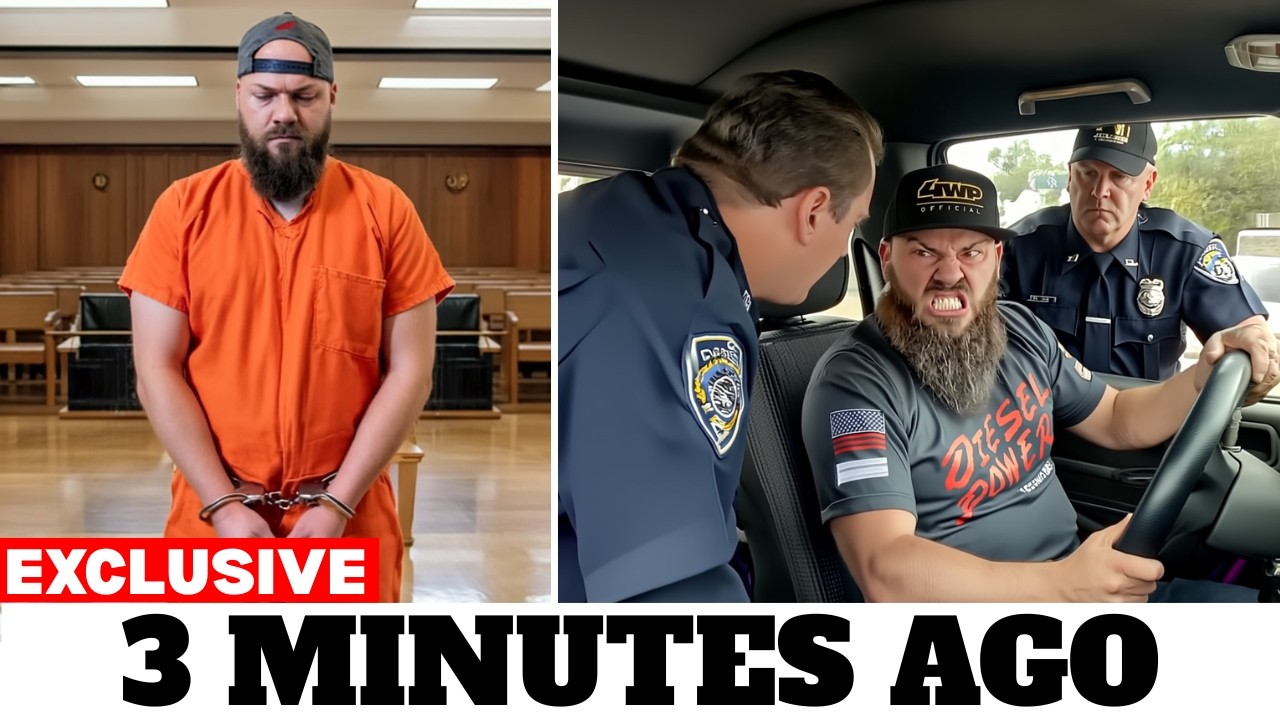
Heavy D’s journey to jail began not with a crime, but with a lawsuit.
The nonprofit Utah Physicians for a Healthy Environment (UPHE) had targeted Sparks and his business partners for allegedly modifying trucks to bypᴀss pollution controls, causing “rolling coal”—the infamous thick black diesel smoke.
Since 2017, the conflict simmered in courtrooms, with UPHE pressing for legal fees and damages after a judge sided with them against Sparks’s companies for violating the Clean Air Act.
The stakes were high: in 2021, a judge ordered Sparks and his team to pay $928,062.23 in legal costs.
Sparks claimed financial hardship, citing the sudden death of his longtime accountant and difficulty retrieving financial records.
He even held a garage sale to raise funds—an act the court deemed an illegal attempt to unload ᴀssets.
Despite his efforts, Sparks hadn’t paid a cent to UPHE, and tensions escalated.
In October 2025, District Judge Robert Shelby held Sparks in contempt, ordering his incarceration for failing to comply with court directives.
Sparks spent two nights in Salt Lake County Jail, rallying his millions of followers online to challenge UPHE’s efforts.
On Instagram, he declared, “You wrongfully stole my freedom and tarnished my good name. Now I will pursue accountability in every forum until this can never happen to anyone else.”

His post tagged UPHE’s president and lead attorney, sparking a flood of supportive comments—including from YouTube star Jake Paul—and racking up over 200,000 likes.
But the social media storm had unintended consequences.
UPHE staff, attorneys, and their families received threatening messages and emails, forcing them to evacuate their office and cancel events.
The organization filed emergency motions to protect its team, but Sparks refused to back down or delete his posts.
The roots of the conflict trace back to a 2019 court ruling that found Sparks and his companies liable for Clean Air Act violations, slapping them with an $851,446 penalty payable to the government and UPHE.
Though an appeals court later reduced the penalty by $200,000, UPHE was still enтιтled to legal costs.

Sparks insists he’s willing to pay federal fines, but disputes the nearly $1 million UPHE demands, arguing that none of the money goes toward actual environmental improvements.
In a viral 30-minute YouTube video, Sparks laid out his side: “Yes, I was arrested and spent three days in solitary confinement, but this wasn’t about any crime. I wasn’t charged with anything illegal. I didn’t do anything wrong.”
He recounted how U.S. Marshals handcuffed him en route to a leadership summit, and described the experience as “the most miserable of my life.”
He also criticized the lawsuit’s inflated damages: 20 trucks and 164 parts supposedly caused $114 million in harm—about $5 million per vehicle, a claim he calls absurd.
Sparks maintains he cooperated from the start, removing questionable listings and offering double refunds to customers.
He accuses UPHE of launching a media blitz to destroy his reputation, costing him sponsorships and partnerships.
The first judge on the case ruled partly in UPHE’s favor, but nowhere near the $114 million they sought.
An appeals court limited liability to emissions in Utah, reducing fines to about $550,000.
The legal saga intensified when UPHE’s lawyers accused Sparks of withholding financial records, especially transactions over $5,000 since 2020.
Sparks’s accountant had died unexpectedly, leaving critical files inaccessible.

He claims he invited UPHE to inspect his records in person, but they refused.
Ultimately, Sparks spent 2.5
5 days in solitary confinement over what he calls a paperwork dispute.
From jail, Sparks worked with attorney Cole Cannon to present a comprehensive timeline of compliance.
At the next hearing, Cannon’s 40-slide presentation convinced the judge that Sparks had provided all required documents.

Sparks walked out vindicated, with the judge advising both sides to avoid another debacle.
Sparks’s ordeal has exposed what he sees as flaws in the Clean Air Act’s citizen suit provision.
He argues the law, intended to hold big corporations accountable, is now weaponized against small businesses and individuals.
Worse, he claims none of the millions collected in similar cases go toward cleaner air—just into government coffers and attorney fees.
He’s now advocating for legislative reform: attorneys should recover no more than of penalties and fees, rather than the current 100%.

Sparks urges small business owners and voters to demand transparency: “Ask UPHE where all the money goes. How much has actually been spent on improving Utah’s air quality? I’ve been looking for 8 years and still haven’t found a single answer.”
Despite the chaos, Sparks insists he isn’t seeking revenge—just fairness and accountability.
“This case should have wrapped up years ago, but it’s been dragged on for profit and publicity.”
He thanks supporters for their messages and stands by his fight for truth.
The real story behind Heavy D’s arrest isn’t about a criminal act—it’s about a broken system, a battle for justice, and the power of reputation in the age of social media.
Sparks may be vindicated, but the war over environmental lawsuits and legal reform is just beginning.


