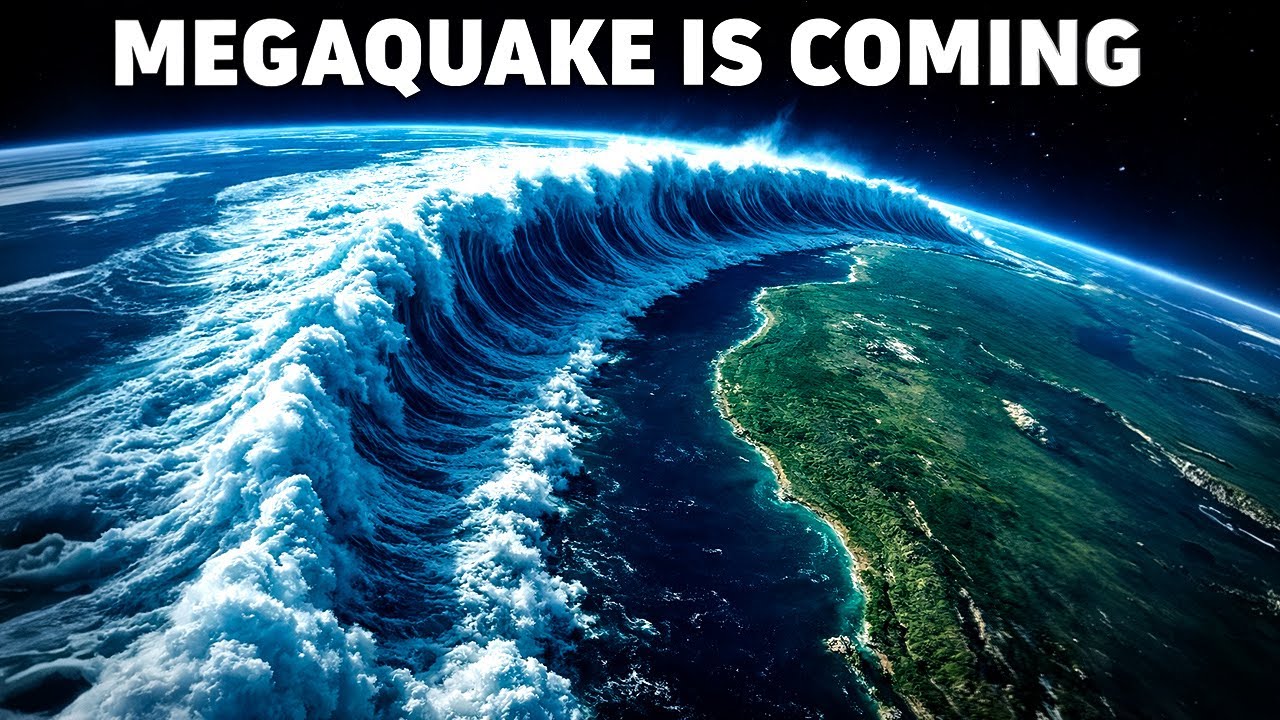
On January 26th, 1700, one of the biggest earthquakes in history hit off the coast of the United States.
It had a magnitude of 9, which puts it in the top 10 most powerful earthquakes ever recorded.
This earthquake triggered a huge tsunami and changed the coastline all the way from Southern British Columbia down to Northern California forever.
Back then, the area wasn’t very populated, but thanks to clever research, scientists have figured out exactly what happened that day by looking at old geological records, tree rings, and even some history from Japan.
On the same day as the earthquake, a mᴀssive tsunami also hit Japan’s eastern coast.
For a long time, no one connected the two, but in the 1980s and 90s, researchers realized the tsunami in Japan had been caused by the earthquake in the Pacific Northwest.
They were also able to pinpoint the exact day: January 26th, 1700.
They even found old trees in coastal Washington that had all perished around the winter of 1700, which matched up perfectly with the timing of the earthquake.
The earthquake came from the Cascadia Subduction Zone, a fault where the Juan de Fuca Plate slides under the North American Plate.
This fault stretches about 700 miles from northern Vancouver Island in British Columbia to Cape Mendocino in California.
The pressure from the moving plates builds up over time, and eventually, another big, devastating earthquake will hit the same region.
It’s just a matter of time.

When Will the “Big One” Hit?
By looking at the geological records, past tsunami deposits, and signs of land-level changes, scientists can figure out how often these huge earthquakes happen.
Emergency planners have been preparing for the next big quake, often calling it “the Big One”.
Scientists believe earthquakes in the Cascadia Subduction Zone happen every 200 to 1,000 years.
And since the last major one was over 300 years ago, the Pacific Northwest is definitely due for another.
When it happens, the earthquake is expected to be as big as the one from 1700, but this time, it’ll affect around 15 million people.
The devastation will be severe.
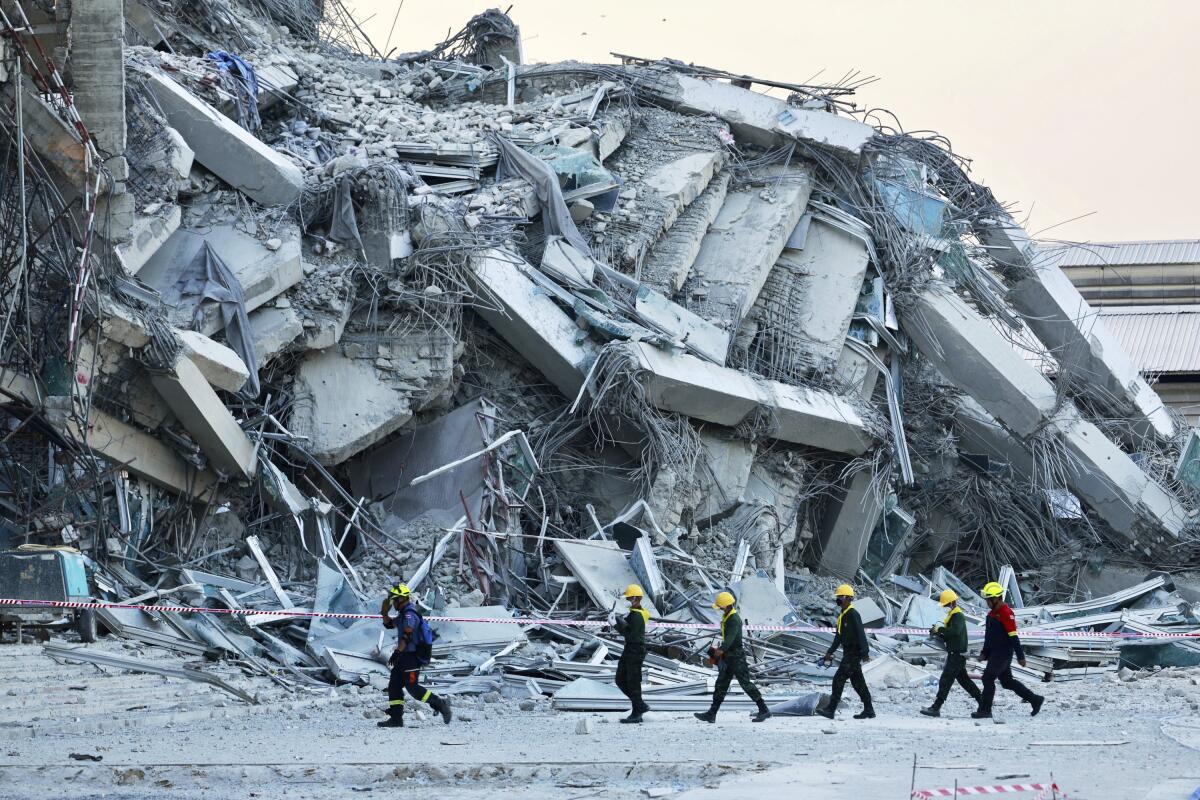
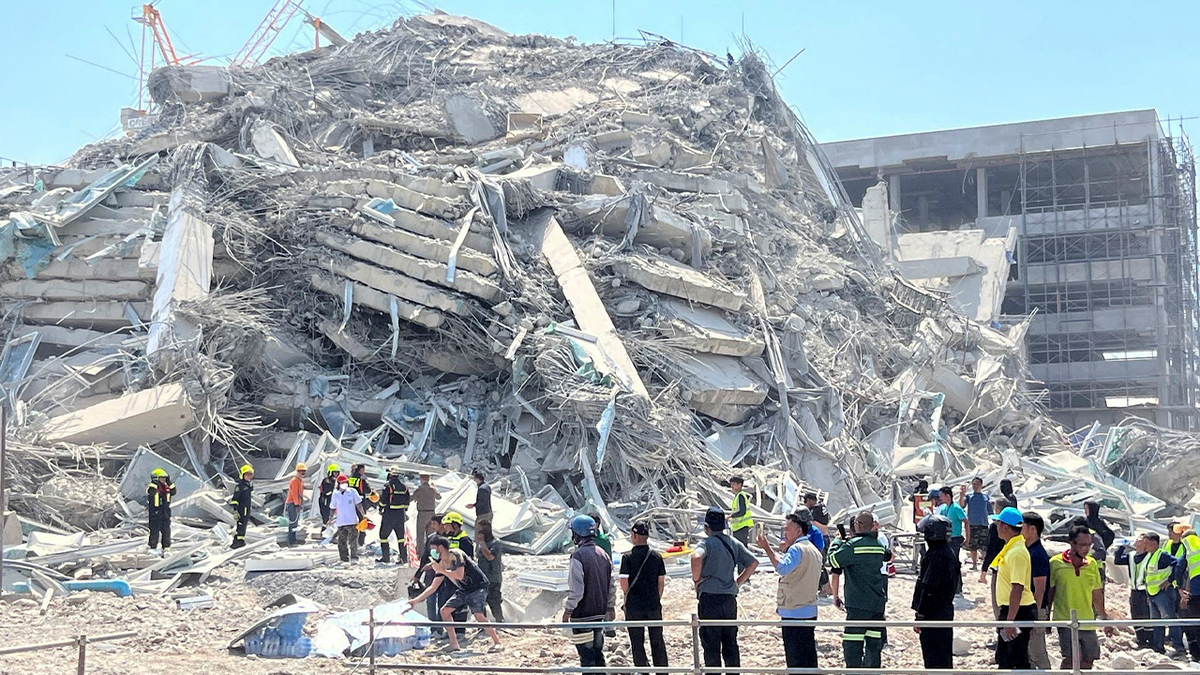
Buildings will collapse, roads and runways will crack, and bridges will fall.
Communication in and out of the area will be cut off.
But the worst part: the earthquake will trigger a mᴀssive tsunami that might hit parts of the Washington coast in as little as 10 minutes.
It’s not a matter of if, but when the Cascadia Subduction Zone will break.
Impact: The Worst Disaster the US Has Ever Faced
When it happens, it will be the worst disaster the US has ever faced.
Worse than Hurricane Katrina or Superstorm Sandy.
It’ll impact an enormous area stretching from southern British Columbia all the way down through Oregon to Northern California.
That means millions and millions of people will be affected.
Fairchild is considered a backup staging area for handling the aftermath of the earthquake, with Grant County International Airport in Moses Lake being the main one.
For those who survive the initial quake and tsunami, the aftermath could be just as disastrous.
Aftershocks will follow, and transportation will be a mess.
Roads will be damaged or completely blocked.
Airports will shut down, and most of the main routes like Interstate 5 will have bridges destroyed.
This means food and water supplies will be cut off, and it will be incredibly difficult for help to get in or for people to escape.
How Will the Region Survive?
Gas pipelines will most likely be damaged too, and restoring them could take anywhere from a few days inland to weeks or even months along the coast.
Power outages will be widespread within 100 miles of the coast throughout the entire Pacific Northwest.
And water could be out for 3 to 7 months.
Even telecommunications will be down for 2 to 3 months across the Pacific Northwest, Alaska, and even parts of East Asia.
The good news for eastern Washington is that it will mostly avoid the worst of it, thanks to natural barriers between the west and east sides of the state.
The tsunami may hit the Columbia River Gorge, but it will lose energy quickly because of a sandbar under the river.
The Cascade Mountains will absorb much of the earthquake’s impact, so the east side won’t feel it as strongly.
And since eastern Washington won’t get hit as hard, it’ll be up to them to handle the aftermath of the quake.
That means helping western Washington, taking in refugees from the areas that got destroyed, and delivering supplies to where they’re needed.
Preparing for the Big One: What Can We Do?
Scientists have looked at other major 8.0 to 9.0 magnitude earthquakes like the ones in Chile (1960), Alaska (1964), Sumatra (2004), and Japan (2011).
These kinds of quakes can shake the ground for anywhere between 6 to 10 minutes.
And that’s a long time for the ground to be shaking.
Such quakes are super intense because they happen close to Earth’s surface.
So, it’s not just a quick shake, it’s a long, strong one that can cause a lot of damage.
If the Cascadia earthquake and tsunami were to hit tomorrow, over 13,800 people could lose their lives and about 107,000 people could be injured.
The economic toll in Washington, Oregon, and California could top $70 billion.
To put that into perspective, we can compare these numbers with some other major earthquakes.
In Chile’s 1960 earthquake, about 1,650 people lost their lives.
The 1964 Alaska quake resulted in around 140 lives lost.
The 2004 Sumatra earthquake and tsunami took the lives of an estimated 280,000 people.
And the 2011 Japan earthquake and tsunami caused over 20,000 casualties.
What Can We Expect After the Big One?
Authorities know about the dangers of the Cascadia fault, but even with all the planning, no one can say for sure what will be needed when the big quake hits.
Right after the earthquake and tsunami, the areas outside the immediate disaster zone won’t be able to help much because roads and airports will be destroyed and resources will be limited.
How can we deal with this kind of disaster and its effects? We don’t have all the answers yet.
Right now, let’s focus on the Cascadia Subduction Zone.
It’s a huge fault line that stretches about 620 miles from Vancouver Island to Cape Mendocino in California, sitting about 93 miles off the coast.
It’s like one tectonic plate is slowly sliding under another.
When the plates are close to the surface—about 18 miles deep or less—they get stuck because of friction, kind of like pushing two rocks together.
Over time, this creates a lot of pressure.
When the pressure finally becomes too much, the plates slip, causing a mᴀssive earthquake.
This is called a mega-thrust earthquake, and it can be huge.
Conclusion: The Inevitable Earthquake
With pressure building under the Cascadia Subduction Zone, experts agree that the next major earthquake is just a matter of time.
Preparing for this event and understanding its potential effects on the Pacific Northwest is essential, as it could very well be the worst natural disaster the region has ever faced.


