Unsealed After Decades: The Secret Nazi Bunkers and the Astonishing Treasures Hidden Inside
When most people picture Hitler’s final days, they imagine the infamous Berlin bunker or the Eagle’s Nest.
But across Europe, a network of secret Nazi bunkers, buried deep beneath forests, mountains, and cities, remained hidden and untouched for decades after the war.
These concrete fortresses—some perfectly preserved, others filled with eerie relics—offer a glimpse into the dark ambitions, technological marvels, and human suffering that defined the Third Reich.
The search for these bunkers has led to jaw-dropping discoveries.
In northern France, the Fortress of Mimoyek was designed to house Hitler’s “London Cannon”—the V3 super-gun capable of launching thousands of shells at the British capital every day.

Its underground railway tunnels and mᴀssive gun shafts, built by thousands of enslaved laborers, were bombarded by the Allies and finally demolished by Churchill’s orders.
Today, the ruins serve as a haunting museum, honoring both Allied airmen and the workers who perished.
Just inland from Normandy’s beaches, the Maisy Battery lay forgotten for over 60 years until a hand-drawn map led historian Gary Stern to its hidden entrances.
Excavations revealed bunkers untouched since 1945, filled with German helmets, gas masks, ammunition, and signs of fierce firefights.
The sprawling underground city included gun emplacements capable of shelling D-Day beaches, a hospital, and officer quarters.
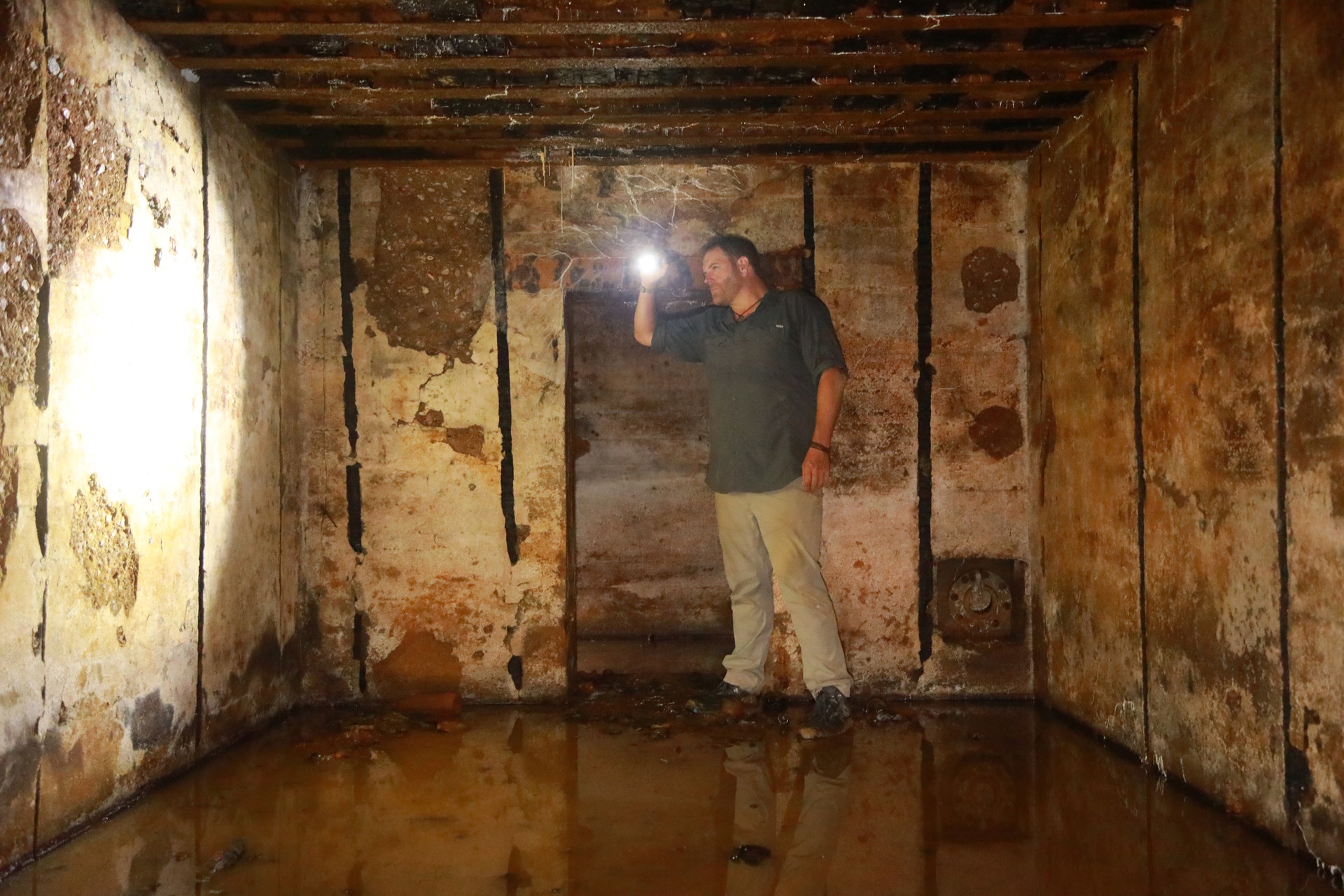
Despite Allied bombardments, Maisy Battery continued firing for days after the landings, only falling after a brutal Ranger ᴀssault.
Denmark’s coastline is dotted with more than 7,000 bunkers from Hitler’s Atlantic Wall.
In 2008, storms revealed fully furnished bunkers, undisturbed since the Nazis fled: tobacco pipes, schnapps bottles, uniforms, and even Hitler stamps.
The discoveries sparked fierce debate—some called for preservation as historical truth, others demanded their destruction.
Today, many have become museums, attracting thousands of visitors eager to see these “time capsules” firsthand.

In Poland’s dense forests, the Wolf’s Lair was Hitler’s Eastern Front headquarters, a sprawling complex where he spent over 800 days.
The site witnessed the infamous July 20, 1944 ᴀssᴀssination attempt, where Colonel von Stauffenberg’s bomb killed four but left Hitler nearly unscathed.
Later excavations unearthed human remains, likely those of forced laborers who built the lair under horrific conditions.
The ruins now draw hundreds of thousands, their crumbling walls a stark reminder of Nazi power and paranoia.
Some bunkers held secrets so well, they remained sealed for decades.
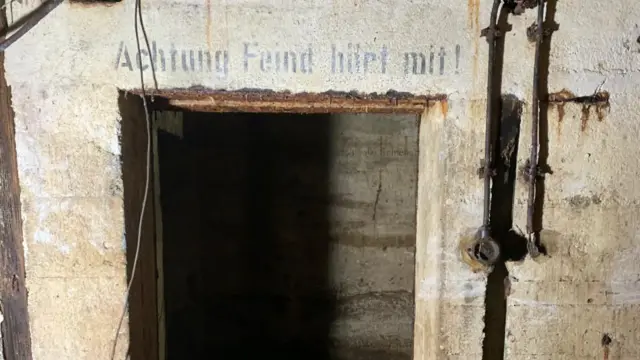
In Hamburg, the Elba 2 U-boat bunker was demolished with tons of explosives, entombing advanced submarines that weren’t rediscovered until 1985.
Researchers found the warships eerily preserved, a snapsH๏τ of Nazi naval technology frozen in time.
The site, now buried beneath a parking lot, remains inaccessible—its secrets locked away beneath the city.
The Channel Islands’ Hoait tunnels, carved 50 meters underground, housed German troops and later became emergency hospitals.
Built with forced labor from across Europe, the tunnels’ brutal conditions led to countless deaths.
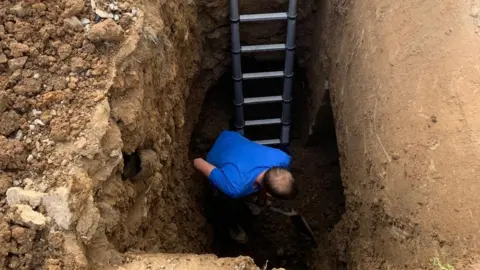
Today, the Jersey War Tunnels museum preserves the operating theaters and barracks, using holographic displays to bring the suffering of prisoners and islanders to life.
Other bunkers, like Vinegut 1 in Bavaria, were desperate attempts to shield weapons production from Allied bombs.
Innovative concrete arches were built over gravel mounds, then excavated to create vast underground factories.
Most laborers were Jewish prisoners or Soviet POWs; thousands died before the Americans arrived and destroyed the unfinished structures.
Block House Deerlex in France was meant to be the world’s first V2 rocket ᴀssembly and launch site, with walls five meters thick.

Allied bombing crippled the facility before it could fire a single rocket.
Now a museum, its battered concrete stands as a testament to both Nazi ambition and Allied determination.
Austria’s B8 Berg Crystalall was an underground jet fighter factory, churning out hundreds of Messerschmitt fuselages every month.
Prisoners from nearby camps worked in dust-filled tunnels, facing death from exhaustion and brutality.
The facility was liberated in 1945, its machinery dismantled and the tunnels destroyed to prevent Soviet access.
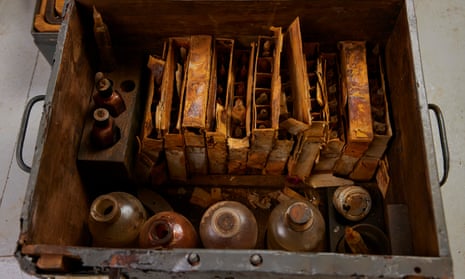
Perhaps the most infamous is the Führerbunker in Berlin, Hitler’s final refuge.
Eight meters underground, its reinforced concrete walls housed the last desperate days of the Third Reich.
Here, Hitler married Eva Braun and ended his life, while the city above was consumed by Soviet artillery.
The bunker’s claustrophobic rooms, damp and noisy, were the backdrop for the collapse of Nazi Germany.
Other sites remain shrouded in mystery.
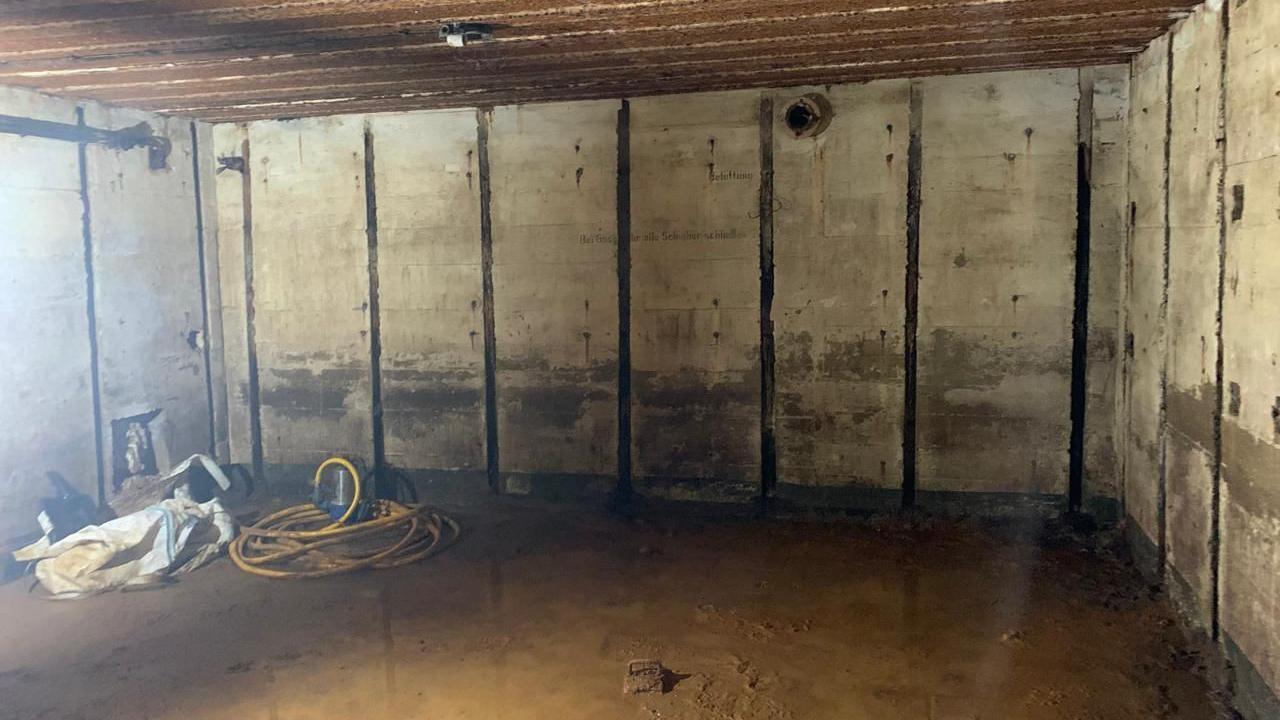
Project Riese in Poland’s Owl Mountains is a labyrinth of tunnels whose true purpose is still debated—was it a headquarters, a weapons factory, or something else? The lack of documentation and unfinished pᴀssages fuel speculation to this day.
What was found inside these bunkers? The answer ranges from rusted weapons and personal effects to preserved machinery and chilling evidence of forced labor.
Some sites are museums, others are sealed or destroyed, but all offer a window into the ambitions, tragedies, and secrets of the Nazi regime.
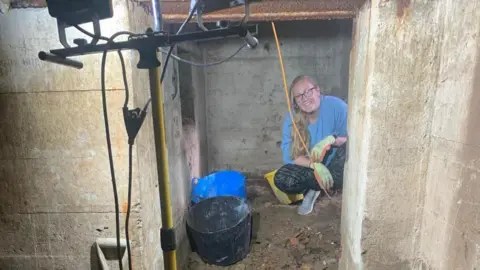
Each discovery rewrites history, revealing stories of survival, resistance, and horror that textbooks never taught.
For those who dare to explore, the secret Nazi bunkers are more than ruins—they’re monuments to the extremes of human ingenuity and cruelty.
The artifacts and remains inside challenge us to remember, reflect, and never forget the lessons buried beneath the concrete and earth.


