Why Pope Leo Rejected His First Papal Shoes: A Tale of Vatican Tradition and Personal Preference
The Vatican is a place where every detail—down to the shoes on the pontiff’s feet—matters.
For over four decades, Italian shoemaker Adriano Stephanelli has been the quiet craftsman behind the scenes, shaping history one pair at a time.
His journey began with a moment of compᴀssion and ingenuity: after witnessing Pope John Paul II suffer a minor collapse during Easter, Stephanelli asked himself how he might ease the pontiff’s suffering.

The answer was simple and profound—make him a pair of shoes.
That act of kindness sparked a tradition.
Stephanelli’s shoes have since graced the feet of popes, presidents, and patriarchs.
Yet, the process is anything but routine.
Each pope brings his own preferences and personality to the task, and Stephanelli’s work is guided by both tradition and the unique requests of his clients.

The story of Pope Leo XIV’s first papal shoes is a perfect illustration of this delicate balance.
When Stephanelli prepared the initial pairs for the new pope, he chose a design that was both beautiful and symbolic: white shoes lined and trimmed in yellow, the colors of the Vatican.
Delivered during a private audience on August 29th, the shoes were meant to mark the beginning of a new papacy with a nod to tradition and Vatican pride.
But Pope Leo had other ideas.
He declined the shoes—not because of their craftsmanship or comfort, but because of their color.
For Pope Leo, the symbolism of white, even with yellow trim, didn’t reflect his vision of the papacy.
He wanted black shoes, strictly and unmistakably.
Stephanelli, ever the perfectionist and respectful of papal wishes, went back to his workshop and created a new pair, this time in black, echoing the understated elegance and authority Pope Leo wished to project.
This wasn’t the first time Stephanelli had navigated the preferences of a pontiff.
Pope John Paul II requested a rubber midsole for comfort, while Pope Benedict XVI wanted only leather—a classic red loafer that became iconic.
Pope Francis, whose health required orthopedic footwear, received slippers embroidered with the pontifical coat of arms, as Stephanelli was not qualified to make orthopedic shoes.
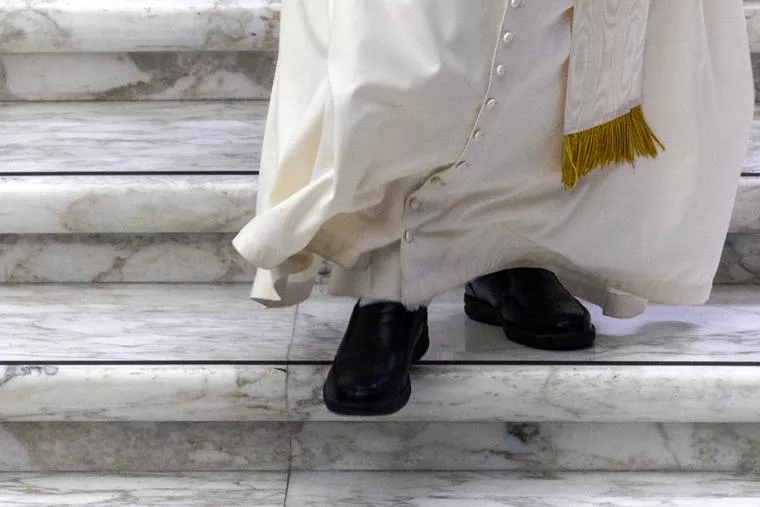
For Pope Leo, Stephanelli used the same model as Benedict’s red loafers, but in black, a subtle yet meaningful change.
The choice of papal footwear is never just about style.
It’s about comfort, symbolism, and the message the pope wishes to send.
White shoes might signal purity and celebration, but black shoes can convey humility, seriousness, and continuity.

Papal shoes are also a nod to history: tradition holds that popes wore red shoes for centuries, a color rich with meaning—martyrdom, the blood of Christ, and the authority of the office.
Yet, each pope has the freedom to reinterpret these symbols, and their choices become part of the evolving story of the Church.
Stephanelli’s reputation extends well beyond the Vatican.
He’s crafted shoes for international leaders, including President Obama and First Lady Michelle Obama.
During Pope Benedict’s visit to America, President Bush admired the pope’s red loafers so much that he requested a pair for himself—though in black.
Stephanelli discovered, in a twist of fate, that both men shared the same shoe size: 42.
His client list includes not only popes and presidents but patriarchs, business leaders, and Italian industrialists, each with their own story and requirements.
The tale of Pope Leo’s shoes is more than a footnote in Vatican history—it’s a reminder of how personal preference, tradition, and symbolism intersect in the daily life of the papacy.
A pair of shoes may seem ordinary, but in the Vatican, nothing is ever just what it seems.
The color, the material, and the fit become part of a larger narrative about idenтιтy, legacy, and the values each pope brings to his role.

For Adriano Stephanelli, the challenge is always the same: to honor tradition while serving the unique needs of each client.
The shoes may be “always the same” in terms of quality, but the details—rubber soles, leather, color, embroidery—are what make them special.
Every pair is a testament to the ongoing dialogue between past and present, between the insтιтution and the individual.
Pope Leo’s rejection of his first papal shoes wasn’t a scandal—it was a statement.

By choosing black over white, he set the tone for his papacy, signaling his priorities and the image he wished to present to the world.
In a place where every choice is magnified, even the color of a shoe can speak volumes.
So next time you see the pontiff walking through St. Peter’s, remember: there’s a story at his feet, crafted by a humble shoemaker, shaped by centuries of tradition, and made unique by the man who wears them.


