Genghis Khan and the World’s Most Elusive Tomb
For more than eight centuries, the burial place of Genghis Khan has remained one of the most carefully protected secrets in human history.
Unlike the grand tombs of Egyptian pharaohs or Chinese emperors, the final resting place of the Mongol Empire’s founder was deliberately erased from memory.
According to historical records and oral tradition, rivers were redirected, forests replanted, and all witnesses to the burial were eliminated to ensure absolute secrecy.
The intention was clear.
Genghis Khan was never meant to be found.

Genghis Khan, born Temüjin in the Mongolian steppe during the twelfth century, rose from obscurity to become the architect of the largest contiguous empire the world has ever known.
His early life was shaped by betrayal, hardship, and survival, experiences that forged an unusually disciplined and pragmatic leader.
By uniting rival Mongol clans through loyalty, merit, and shared law rather than bloodline, he created a revolutionary political and military system.
His armies relied on speed, intelligence, and psychological warfare.
Mounted archers trained from childhood executed coordinated maneuvers that overwhelmed far larger forces.
Cities often surrendered before a single arrow was fired, having heard of the devastation inflicted on those who resisted.
Between 1206 and 1225, Mongol campaigns reshaped Asia, Central Asia, and Eastern Europe, destroying old powers while opening vast trade networks across Eurasia.
Beyond conquest, Genghis Khan governed with remarkable administrative vision.
His legal code, known as the Yᴀssa, enforced discipline, protected envoys and merchants, and permitted religious freedom.
He promoted skilled administrators regardless of ethnicity, incorporating Chinese engineers, Persian scholars, and Muslim traders into imperial governance.
The result was the Pax Mongolica, a period of stability that enabled commerce, communication, and cultural exchange along the Silk Road.
When Genghis Khan died in 1227 during a campaign against the Western Xia, the Mongol leadership immediately concealed his death.
The reasons were strategic and symbolic.
Revealing the loss of the empire’s founder risked rebellion, invasion, and instability.
His body was transported in secrecy, and his burial site was deliberately erased from geography and record.
Legend holds that those involved in the burial were executed, and the ground was trampled by thousands of horses to disguise all traces.
Over time, the land returned to its natural state.
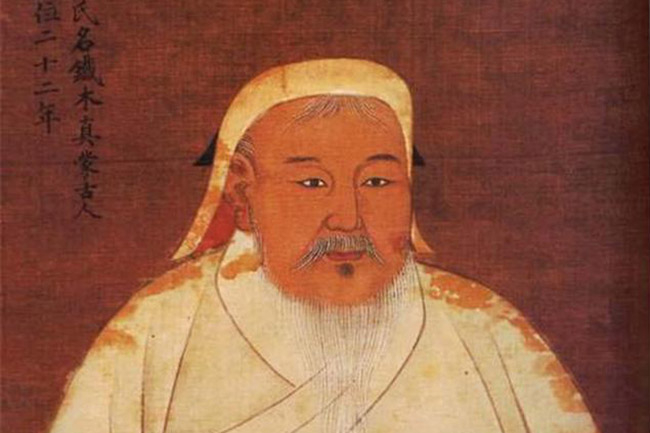
The absence of a known tomb was not a failure of record keeping, but a deliberate cultural act rooted in Mongol beliefs about power, ancestry, and sacred space.
Central to this secrecy is the region known as Ikh Khorig, or the Great Taboo, near Burkhan Khaldun in northeastern Mongolia.
This vast protected area was guarded for centuries by the Darkhad, a hereditary class tasked with defending royal burial grounds.
Entry was forbidden, and rituals preserved the sancтιтy of the land.
To this day, the region remains one of the least disturbed landscapes in Asia.
Despite the myths, modern archaeology has not confirmed the discovery or opening of Genghis Khan’s tomb.
No verified excavation, no authenticated human remains, and no peer reviewed evidence has established its location.
Claims circulating online suggesting the tomb has been opened are not supported by credible archaeological insтιтutions or the Mongolian government.
Nevertheless, the mystery has driven serious scientific investigation.
Since the late twentieth century, international teams have employed satellite imagery, magnetometry, and ground penetrating radar to search without disturbing sacred ground.
One of the most prominent efforts was led by explorer Albert Lin Yu Min, whose team combined advanced imaging technology with community consultation.
While anomalies were detected, none were conclusively identified as the tomb.
Earlier expeditions, including the joint Japanese Mongolian Three Rivers project, documented hundreds of elite burial sites but confirmed how difficult it would be to isolate a single grave intentionally hidden among many.
Other researchers, such as Maury Kravitz, dedicated decades to the search, blending historical texts with field exploration, yet found no definitive proof.
Alternative theories have also emerged.
Explorer Alan Nichols proposed that the tomb may lie far from traditionally accepted regions, possibly closer to Inner Mongolia near the Yellow River.
His findings, based on geophysical anomalies, remain unpublished and unverified, adding to speculation but not confirmation.
The continued absence of physical evidence has not diminished global fascination.
For Mongolia, the mystery is deeply personal.
Genghis Khan is not merely a historical conqueror but a foundational ancestor whose spirit symbolizes national unity and resilience.
His image appears on currency, monuments, and state iconography.
.png)
Many Mongolians believe the tomb should remain undisturbed, protected by tradition rather than exposed by excavation.
The ethical debate surrounding the search reflects a broader question in archaeology.
Should every historical secret be uncovered, or are some meant to remain sacred? International organizations increasingly emphasize non invasive research methods, prioritizing preservation over discovery.
Mongolia has consistently supported this approach, balancing academic inquiry with cultural respect.
Claims that the tomb has been opened have therefore generated concern and criticism.
Scholars warn that misinformation undermines public trust and disrespects Mongolian heritage.
UNESCO and regional authorities have reiterated that no authorized excavation of Genghis Khan’s burial site has occurred.
What remains undisputed is the enduring power of the mystery itself.
The absence of a tomb has become part of Genghis Khan’s legacy.
Unlike rulers who sought eternal visibility, he vanished into the land he united, leaving behind an empire, a legal system, and a cultural imprint that reshaped the world.
Future research may yet reveal new clues through improved remote sensing, climate modeling, and historical analysis.
Advances in non destructive archaeology could one day identify the burial site without violating sacred ground.
Until then, the silence surrounding Genghis Khan’s tomb stands as one of history’s most deliberate acts of erasure.
In a world obsessed with uncovering the past, the Great Khan’s final secret endures.
Not because humanity lacks the tools to find it, but because wisdom may lie in knowing when not to look.


