In the world of agriculture, where the stakes are high and the margins are razor-thin, a recent debate has ignited a firestorm of discussion.
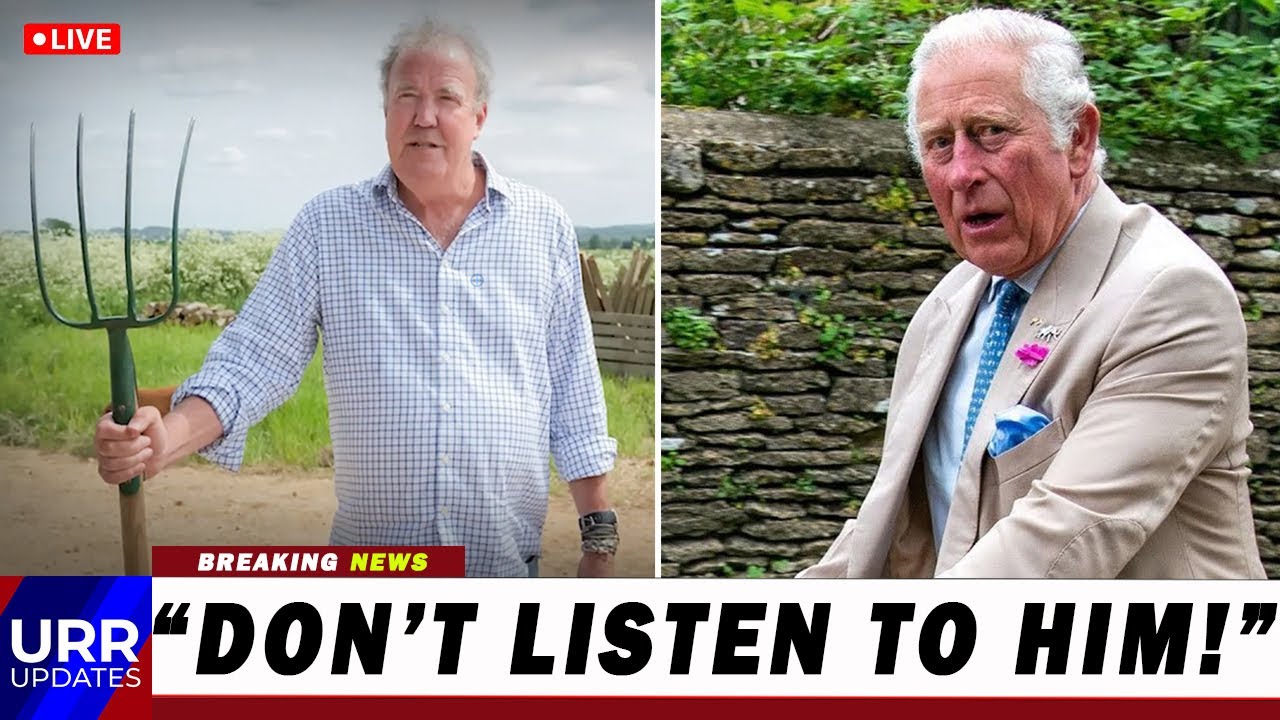
Jeremy Clarkson, the outspoken former Top Gear host and current farmer, has taken a bold stance against King Charles III’s idealistic vision for British farming.
The monarch’s recent remarks about a “return to nature” have been met with skepticism from Clarkson, who argues that the reality of farming is far more complex than royal rhetoric suggests.
This clash of perspectives raises important questions about the future of agriculture in the UK, particularly in light of the challenges faced by farmers across the nation.
The Reality Gap
At the heart of this debate lies a significant disconnect between the ideals espoused by those in power and the harsh realities faced by farmers on the ground.
King Charles’s vision of sustainable, organic farming may sound appealing in theory, but for many farmers, it feels like a distant dream.
Clarkson highlights the financial burdens that come with transitioning to organic methods, emphasizing that speeches from palaces do little to alleviate the economic pressures that farmers endure daily.
The reality is stark: the yield gap between conventional and organic farming practices can be staggering.
While organic farming is often lauded for its environmental benefits, the truth is that many farmers struggle to make ends meet under these constraints.

The Organic Experiment
Clarkson’s critique extends to the so-called “organic experiment,” where the removal of chemicals and pesticides is seen as a panacea for agricultural woes.
He questions the feasibility of this approach, pointing out that many farmers cannot afford to abandon the tools that have historically helped them maintain productivity.
The romantic notion of farming without chemicals is appealing, but it often overlooks the practical challenges that come with such a transition.
Farmers are not just stewards of the land; they are businesspeople who must navigate a complex web of economic realities.
For many, the dream of organic farming can quickly turn into a financial nightmare.

Food Security Concerns
Another critical aspect of this debate is the issue of food security.
Clarkson raises alarms about the dangers of relying heavily on food imports, particularly in a world that is increasingly vulnerable to global supply chain disruptions.
The strategic danger of trading local production for global imports cannot be overstated.
As farmers face mounting pressures to adopt sustainable practices, the risk of compromising food security looms large.
A bankrupt farm is, quite simply, the least sustainable thing on Earth.

The Human Cost
Perhaps the most poignant point made by Clarkson is the human cost of these agricultural policies.
Those who write the rules often do not bear the brunt of the risks ᴀssociated with farming.
Farmers are the ones who face the consequences of policy decisions, and their voices must be heard in the ongoing dialogue about the future of agriculture.
Clarkson advocates for a balanced conversation that takes into account both environmental goals and the economic realities that farmers face daily.
The disconnect between policymakers and farmers must be bridged if we are to create a sustainable future for agriculture.
Conclusion: A Call for Honest Dialogue
As this debate continues to unfold, it is clear that an honest conversation is needed.
Clarkson’s commentary serves as a reminder that farming is not just a lifestyle; it is a high-stakes battle that requires practical solutions and real support.
The future of British agriculture depends on acknowledging the complexities of the industry and finding a way to balance environmental ideals with economic survival.
In the end, it is not just about farming; it is about the future of our food security and the livelihoods of those who work tirelessly to feed us.
As we move forward, let us hope for a dialogue that respects the realities of farming while striving for a more sustainable future.
It is time to listen to the voices of those who are on the front lines of this vital industry.
In doing so, we can work towards solutions that benefit both the environment and the farmers who cultivate our land.
The stakes are high, and the conversation is just beginning.


