Mount Rainier’s Record-Breaking Earthquake Swarm: What Scientists Are Really Saying
On July 8, 2025, seismic instruments surrounding Mount Rainier began registering an unusual burst of activity. Within days, what started as a cluster of small tremors evolved into the largest earthquake swarm ever recorded at the volcano. By the time the event subsided, more than 1,350 earthquakes had been detected.
For residents of the Pacific Northwest, the numbers were startling. Mount Rainier—towering more than 14,000 feet above sea level and draped in glaciers—is not just a scenic landmark. It is an active stratovolcano. And when an active volcano produces record-breaking seismic activity, concern spreads quickly.
Social media posts and dramatic video headlines described a “RED ALERT.” But according to the U.S. Geological Survey (USGS), that characterization does not reflect the scientific ᴀssessment.

Unlike a typical earthquake sequence—where one large quake is followed by smaller aftershocks—a swarm consists of many small earthquakes occurring in a concentrated area over a short period of time, without a single dominant mainshock.
Mount Rainier experiences one or two small swarms almost every year. Most go largely unnoticed by the public. What made the July 2025 event extraordinary was its scale. The total number of earthquakes exceeded previous records by a wide margin. For comparison, a notable swarm in 2011 involved roughly 150 small quakes over about a week. In 2025, that number was surpᴀssed in just days.
Despite the sheer volume, most of the quakes were small in magnitude and shallow in depth—typically occurring between one and three miles below the surface.
The key question during any volcanic swarm is simple: Is magma moving toward the surface?
According to scientists at the USGS Cascades Volcano Observatory, the answer in this case was no.
Detailed analysis of the earthquake waveforms, depths, and patterns indicated the activity was driven by hydrothermal processes. Mount Rainier contains a complex hydrothermal system—H๏τ water and steam circulating through cracks in the rock, heated by a deep magma body far below.
When pressurized steam fractures brittle rock, it can generate numerous small earthquakes. This type of seismicity is common at volcanoes with active hydrothermal systems.
Crucially, scientists reported no signs of volcanic inflation (swelling of the mountain), no unusual gas emissions, and no abnormal increases in surface heat—key warning signs that typically accompany magma movement.
Throughout the swarm, the volcano’s alert level remained unchanged.
Researchers are still analyzing why the 2025 swarm reached record levels. Several factors may have contributed, including:
-
Natural variability within the hydrothermal system
-
Seasonal snowmelt affecting groundwater flow
-
Subtle tectonic stresses related to regional plate movement
Mount Rainier sits within the Cascade Range, formed by the ongoing subduction of the Juan de Fuca Plate beneath the North American Plate. That tectonic environment adds another layer of complexity to the volcano’s internal processes.
Scientists caution that large swarms can occur without leading to eruptions. The 2025 event, while unprecedented in scale, still fit within known patterns of hydrothermal unrest.
Although the swarm was not linked to magma intrusion, Mount Rainier remains one of the most potentially hazardous volcanoes in the United States—not primarily because of explosive eruptions, but because of lahars.
Lahars are fast-moving flows of mud, rock, and water that can travel far down river valleys. Rainier’s heavy glacial coverage makes it particularly vulnerable to such events. Even non-eruptive collapses or intense hydrothermal disturbances can, in rare cases, destabilize ice and rock.
During the 2025 swarm, emergency planners closely monitored river levels, glacier stability, and slope conditions. No significant landslides, avalanches, or flooding occurred.
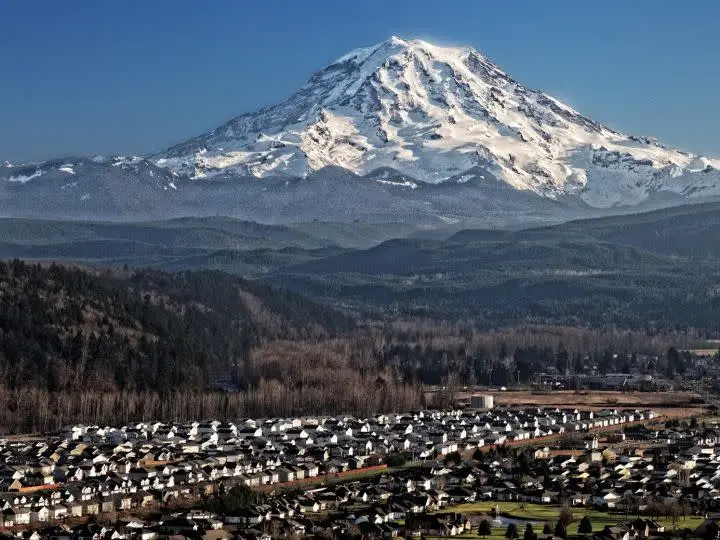
Still, the episode served as a reminder of why communities in valleys such as Puyallup and Orting regularly conduct lahar evacuation drills.
Despite viral headlines, the USGS did not issue a volcanic “Red Alert” for Mount Rainier during the swarm. Official alert levels remained consistent with background hydrothermal activity.
Scientists emphasized that while the number of earthquakes was extraordinary, the type of seismic signals did not indicate an eruption was imminent.

As Dr. Seth Moran of the USGS explained during public briefings, “Large numbers can sound alarming, but context matters. We saw no evidence of magma rising toward the surface.”
Every earthquake provides data. The 2025 swarm has given researchers an unprecedented dataset for refining models of Rainier’s internal plumbing system. Understanding the difference between hydrothermal unrest and magmatic intrusion is critical for early warning systems.
The event also demonstrated the value of modern monitoring networks. High-resolution seismic instruments, satellite deformation measurements, and gas sensors allow scientists to detect subtle changes long before they become dangerous.
&imwidth=800&imheight=600&format=webp&quality=medium)
Mount Rainier has now returned to background seismic levels. But “background” at an active volcano does not mean silence. It means constant monitoring, steady vigilance, and incremental learning.
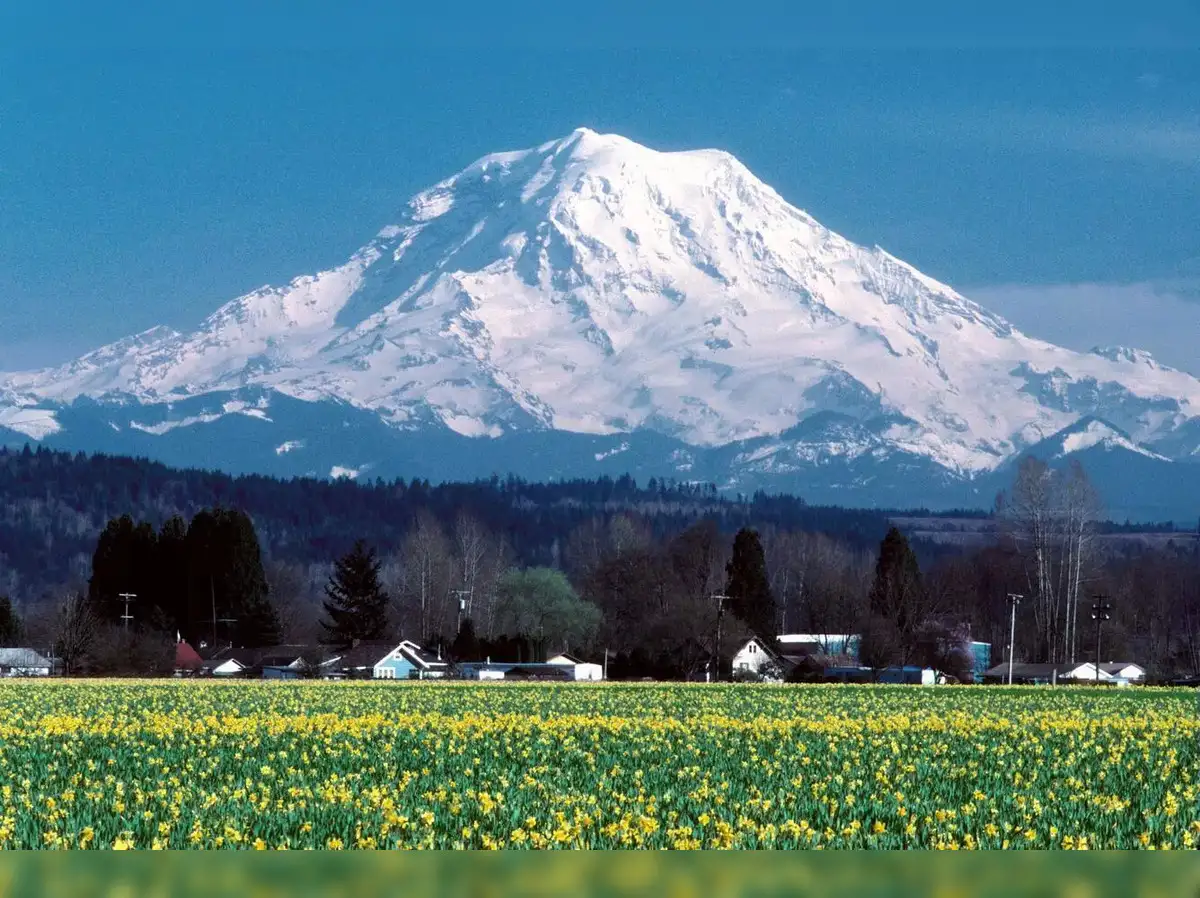
The 2025 swarm did not signal an eruption. It did, however, remind the Pacific Northwest that beneath the glaciers and wildflower meadows lies a dynamic geological engine—one that demands respect, preparation, and scientific scrutiny.
For now, the mountain rests.
But scientists continue to listen.


