Missiles, Fire, and Uncertainty: Joint Attack Intensifies War as Donald Trump Predicts End
The fragile balance in the Middle East shattered once again as a coordinated ᴀssault involving Hezbollah and Iran struck targets inside Israel, marking one of the most intense escalations in the ongoing regional conflict.
The attack, described by officials as a rare moment of synchronized action between Tehran and its regional ally, unfolded under the cover of darkness, when warning sirens pierced the night and forced civilians into shelters.
Missiles and drones were reportedly launched toward northern Israeli regions, triggering immediate defensive responses as interception systems lit up the sky.
For many residents, the scenes were both familiar and terrifying, a reminder that the conflict—already weeks deep—was entering a more dangerous and unpredictable phase.
According to military sources, the joint nature of the strike signaled a shift in strategy, suggesting deeper coordination between Iran and Hezbollah, a group long considered one of Tehran’s most powerful regional proxies.
The attack comes amid an already expanding war that has spread beyond borders, drawing in multiple fronts and raising fears of a broader regional confrontation.
In recent weeks, Israel has intensified its operations, carrying out strikes not only against Iranian targets but also against Hezbollah positions in Lebanon, escalating tensions across multiple theaters.
The consequences have been severe.
Casualties have mounted, infrastructure has been damaged, and entire communities have been displaced as the conflict continues to ripple outward.
Yet even as the violence intensifies, a contrasting message has emerged from Washington.
Donald Trump has repeatedly suggested that the war could be nearing its conclusion, stating that military objectives are close to being achieved and that the conflict may end “very soon.”
Those remarks, however, stand in sharp contrast to the realities on the ground.
While U.S. leadership signals a possible wind-down, Israeli officials have indicated that operations may continue without a fixed timeline, emphasizing that objectives must be fully met before any cessation of hostilities.
This divergence has created uncertainty, leaving observers questioning whether the conflict is truly approaching an endpoint—or simply entering a new and more volatile phase.
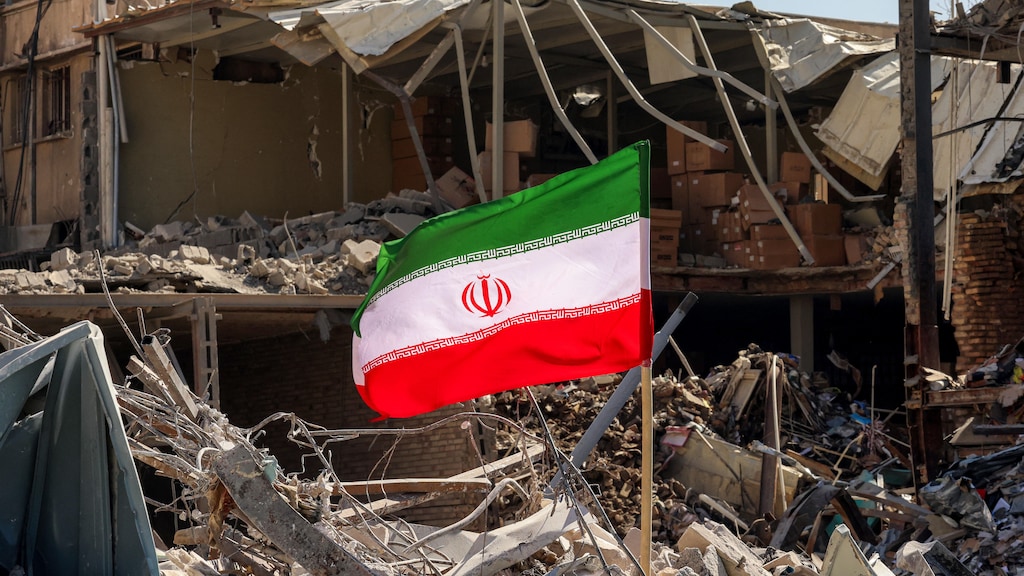
Military analysts note that coordinated attacks like the one carried out by Hezbollah and Iran often serve multiple purposes.
They are not only tactical actions but also strategic signals, demonstrating capability, unity, and resolve.
“In conflicts like this, coordination sends a message,” one expert explained.
“It tells opponents that alliances are active, responsive, and willing to escalate if necessary.”
At the same time, such actions increase the risk of miscalculation.
Each strike, each retaliation, carries the potential to widen the conflict further, drawing in additional actors and complicating efforts to de-escalate.
The broader geopolitical context adds yet another layer of complexity.
The conflict has already disrupted global markets, particularly energy supplies, as tensions around key shipping routes like the Strait of Hormuz continue to affect oil flows.
Even if hostilities were to end soon, analysts warn that the economic and political consequences could linger for years.
Back on the ground, the immediate focus remains on security and response.
Israeli forces have intensified defensive measures while continuing offensive operations, targeting what they describe as threats linked to Hezbollah and Iranian networks.
Meanwhile, Hezbollah has vowed to continue its actions, framing them as part of a broader resistance effort tied to regional dynamics and ongoing hostilities.

Civilians on all sides are caught in the middle, navigating a reality defined by uncertainty, fear, and rapidly changing conditions.
Shelters, checkpoints, and emergency alerts have become part of daily life, underscoring the human cost of a conflict that shows no clear resolution.
Diplomatic efforts, while ongoing, have yet to produce a breakthrough.
Negotiations remain complicated by competing objectives, regional alliances, and the sheer scale of the confrontation.
As the situation evolves, the gap between political statements and battlefield realities continues to draw attention.
On one hand, there are ᴀssurances that the war could soon end.
On the other, there are expanding operations, coordinated attacks, and escalating rhetoric.
For now, the world watches closely, aware that each new development could shift the trajectory of the conflict in unexpected ways.
What is clear is that this is no longer a localized confrontation.
It is a multi-front struggle with implications far beyond the region, touching on global security, economic stability, and the delicate balance of international power.
And as missiles continue to fly and statements continue to emerge, one question remains at the center of it all.
Is this the beginning of the end—or just another chapter in a conflict that refuses to slow down.


