The Legend, The Theories, and the Truth About Tupac’s “Return”
On September 7, 1996, Tupac Amaru Shakur sat in the pᴀssenger seat of a black BMW on the Las Vegas Strip. Just hours earlier, he had attended the Mike Tyson fight at the MGM Grand with Death Row Records CEO Suge Knight. As their car stopped at a red light on Flamingo Road, a white Cadillac pulled alongside them. Gunfire erupted. Tupac was struck four times.
He was rushed to University Medical Center, where he underwent multiple surgeries and was placed on life support. Six days later, on September 13, 1996, Tupac was pronounced ᴅᴇᴀᴅ at just 25 years old. The official cause: respiratory failure and cardiac arrest resulting from gunsH๏τ wounds.
But almost immediately, doubt began to spread.
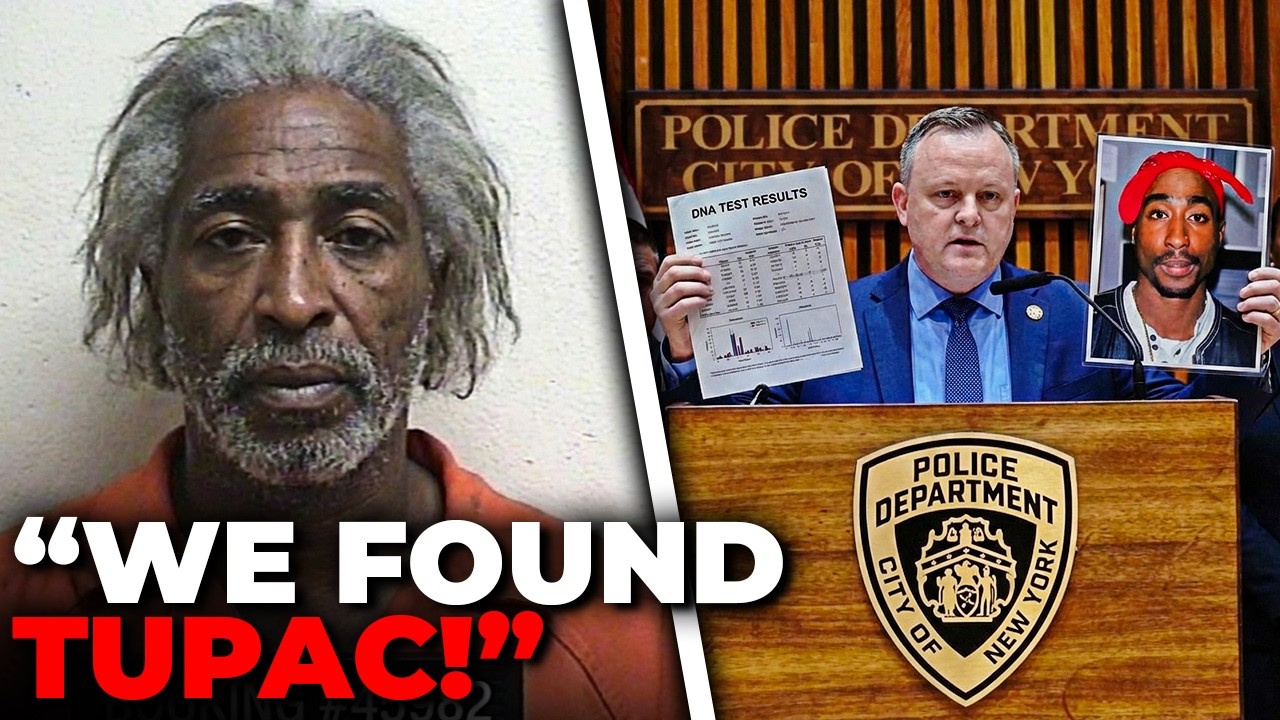
There was no public viewing. No open casket. No widely released autopsy pH๏τos. Tupac’s body was cremated shortly after his death, a decision authorized by his mother, Afeni Shakur. The murder investigation stalled for decades, with no arrests until 2023, when Duane “Keefe D” Davis was finally charged in connection with the shooting. His trial has faced repeated delays and, as of early 2026, remains unresolved.
That combination—rapid cremation, limited public evidence, and a murder case that lingered for nearly 30 years—created fertile ground for speculation. Into that vacuum rushed one of the most enduring conspiracy theories in pop culture history: Tupac faked his own death.
Unlike many celebrity death conspiracies, this one had fuel. Tupac himself had adopted the alter ego “Makaveli,” inspired by Niccolò Machiavelli, the Renaissance philosopher who wrote about deception and the strategic value of feigned death.

In the months before he was killed, Tupac immersed himself in Machiavellian philosophy while serving time in prison.
In November 1996, less than two months after his death, The Don Killuminati: The 7 Day Theory was released under the name Makaveli. The album cover depicted Tupac crucified. The back read: “Exit Tupac. Enter Makaveli.” For conspiracy theorists, this was no metaphor—it was a message.
Numerology followed. Tupac survived six days after being sH๏τ; the album referenced “7 Day Theory.” He was sH๏τ on September 7 and died on September 13. His age, 25, added up to seven. Lyrics like “Expect me like you expect Jesus to come back” were interpreted not as artistic bravado but prophecy.

The symbolism became scripture for believers.
Sightings began almost immediately. In the late 1990s, rumors placed him in Mexico and the Caribbean. By the early 2000s, Cuba became the dominant narrative. Tupac’s aunt, ᴀssata Shakur, a former Black Panther, had been living under political asylum in Cuba since the 1980s. The connection was real. The conclusion, for many, felt obvious: Tupac had fled to join her.
Over the years, sightings expanded across the globe—New York, Los Angeles, Sweden, Somalia, Malaysia, South Africa, even Tasmania. Social media accelerated the phenomenon. Blurry pH๏τos and TikTok videos claiming to show a “54-year-old Tupac” leaving a Havana studio rack up millions of views before fact-checkers can intervene. Debunkings often strengthen belief rather than weaken it, interpreted as evidence of a larger cover-up.

Escape theories evolved alongside the sightings. Some claim a body double was sH๏τ in the BMW. Others suggest a hospital switch, a helicopter extraction, or even government involvement through witness protection. More elaborate versions allege he was relocated to Cuba with high-level ᴀssistance, protected from enemies and industry pressures alike.
These scenarios require extraordinary coordination—hospital staff, law enforcement, family members—all complicit or deceived. Yet conspiracy theories rarely hinge on logistical probability. They thrive on emotional plausibility.
Tupac had motive, believers argue. He survived a previous shooting in 1994. He faced legal battles and industry disputes. He had spoken openly about death and betrayal. If anyone could orchestrate a dramatic disappearance, it was him.
Yet the documented facts remain consistent. Hospital records detail his treatment. Medical professionals confirmed his death. Afeni Shakur grieved publicly and spent years preserving her son’s legacy through the Tupac Amaru Shakur Foundation. She never hinted that he was alive.
So why does the theory endure?
The answer lies less in evidence and more in impact.
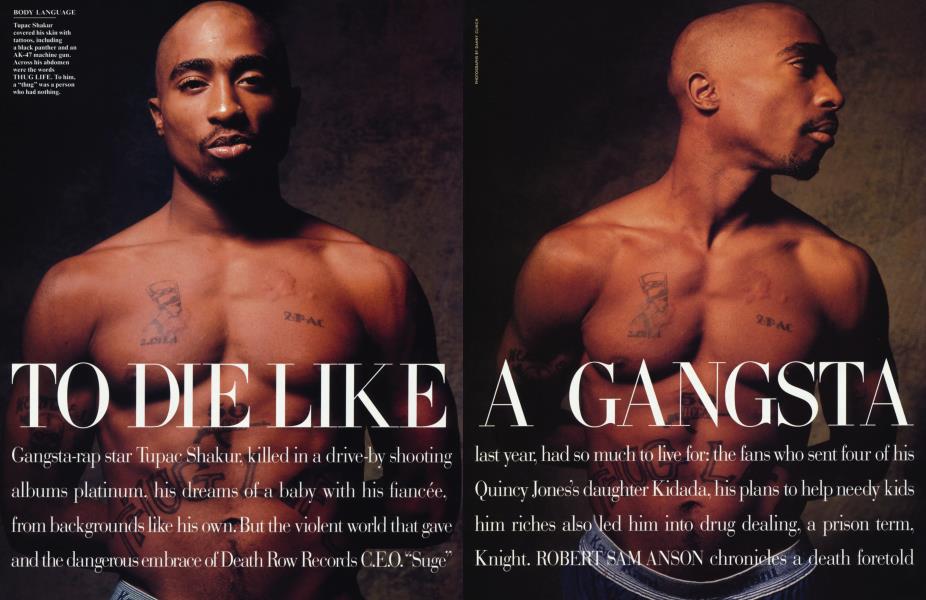
Tupac was not just a rapper. He was a cultural force. Albums like All Eyez on Me and Me Against the World blended raw vulnerability with political urgency. Songs like “Dear Mama” and “Changes” addressed poverty, racism, and resilience with uncommon depth. His work transcended music, shaping conversations about idenтιтy, injustice, and power.
Even after his death, new albums continued to be released. In 2012, a holographic Tupac performed at Coachella alongside Snoop Dogg and Dr. Dre, blurring the line between memory and presence. In 2017, he was inducted into the Rock and Roll Hall of Fame. His influence echoes through artists like Kendrick Lamar, J. Cole, and countless others.
For younger generations discovering him through streaming platforms and viral clips, Tupac doesn’t feel like a figure frozen in 1996. He feels current. Alive.

And that may be the heart of the conspiracy.
As of February 2026, all credible evidence confirms that Tupac Shakur died on September 13, 1996. The legal process surrounding his alleged killer continues, but the historical record of his death is not in serious dispute.
What is disputed—emotionally, culturally—is the idea that someone so powerful could simply vanish.
The conspiracy persists not because the evidence demands it, but because the legacy does.


