Something Is Forcing Magma Into This Oregon Volcano — And It’s Coming From 4,500 Miles Away
In the depths of the Pacific Ocean, a geological mystery is unfolding beneath the waves, and it’s capturing the attention of volcanologists around the world.
Axial Seamount, located about 300 miles off the Oregon coast, is experiencing unprecedented changes that have scientists puzzled.
The seafloor is rising, and pressure sensors anchored to the ocean floor are detecting centimeters of uplift in an area that should be stable.
Seismographs are picking up hundreds of tremors daily, each one a sign of stress in the rock that has remained undisturbed for years.
For two decades, this volcano maintained a predictable rhythm: it would inflate, erupt, and then deflate.
Scientists even managed to predict a 2015 eruption months in advance, a feat almost unheard of in volcanology.
But now, that rhythm has been disrupted.
The inflation has exceeded the threshold that triggered previous eruptions, with the caldera swelling higher than it ever has before, yet no eruption has occurred.
Instead, something unexpected is happening.
The timeline has collapsed, and models that once worked are failing.
Distant earthquakes, thousands of miles away, are seemingly influencing the magma chamber in ways that scientists are struggling to understand.
What has changed beneath the seafloor?
Why has the most predictable volcano on Earth become the least predictable?
And what could happen if this eruption does not remain contained?
Axial Seamount sits on the Juan de Fuca Ridge, a tectonic spreading center where new ocean crust is formed.
This ridge separates the Pacific Plate from the Juan de Fuca Plate, with Axial rising approximately 1,100 meters from the surrounding ridge.
Its summit is marked by a large rectangular caldera, a result of previous collapses, and is located nearly 1,400 meters below sea level, shrouded in darkness.
It is also the most heavily monitored submarine volcano on the planet.
The National Science Foundation’s Ocean Observatories Initiative has installed over 660 kilometers of fiber optic cables across the Juan de Fuca Plate, connecting more than 140 instruments directly to shore.
These include bottom pressure recorders, broadband seismometers, temperature probes, and hydrothermal cameras, all transmitting data continuously.
No other underwater volcano has ever been observed this closely, and for good reason.
Axial is not just active; it is relentlessly so.
Geological mapping has documented at least 50 eruptions over the past 800 years.
Its lava is basaltic, H๏τ, and fluid, flowing across the seafloor in glᴀssy sheets rather than erupting violently into the sky.
There are no ash columns or pyroclastic surges; the eruptions are quiet, detectable only through instruments and the biological blooms that follow.
Axial was first detected in the 1970s and mapped through submersible dives in the 1980s.
The era of real-time monitoring began in 1998, when a series of earthquakes rattled the seamount, leading to a significant eruption that was detected in real time.
In April 2011, Axial erupted again, with the caldera floor dropping dramatically as magma drained from the chamber.
But the 2015 eruption was a landmark moment, as researchers successfully predicted it based on ground deformation.
When the caldera reached a critical threshold of inflation, Chadwick and his team forecasted the eruption months in advance, and they were proven correct.
However, after this eruption, the caldera began to rise again, and the cycle appeared to restart.
Inflation climbed steadily until it began to slow in 2023, raising concerns among scientists.
Then, in October 2023, inflation rates surged again, and seismic activity increased, indicating a fundamental change in the magma supply.
By December 2024, the caldera had reached 95% of its pre-2015 inflation level, prompting Chadwick to issue another forecast for an eruption by the end of 2025.
The world took notice, and social media buzzed with excitement, but beneath the sensational headlines lay a more complex story.
The inflation did not behave as expected.
Detailed analysis revealed that the caldera had inflated more than 20 centimeters since 2015, approximately double the rate observed before previous eruptions.
Seismic activity averaged 200 to 300 earthquakes per day, with occasional spikes surpᴀssing 1,000.
However, by late April 2025, inflation rates slowed again, and seismicity dropped significantly, raising alarms about the volcano’s potential for an eruption.
The caldera had exceeded the threshold set by previous eruptions, and yet nothing happened.
Chadwick expressed his concern, stating, “It feels to me like Axial is just treading water lately.”
But then, on July 29, 2025, a magnitude 8.8 earthquake struck off the Kamchatka Peninsula in eastern Russia, the most powerful earthquake recorded since the 2011 Tohoku event.
This earthquake triggered a series of eruptions in Kamchatka, an occurrence that had not been seen in nearly 300 years.
Seismic waves from this distant earthquake reached Axial Seamount, recorded by hydrophones at the caldera.
The concept of remote earthquake triggering suggests that seismic waves from powerful earthquakes can disturb magma chambers far away, altering pressure regimes and potentially injecting stress into volcanic systems.
While this mechanism is documented, it remains poorly understood.
Not all volcanoes respond to distant earthquakes, and not all earthquakes trigger responses, but the correlation at Axial is hard to ignore.
The Kamchatka event may not be the only external influence affecting Axial Seamount.
Nearby, the Blanco Fracture Zone, a transform fault system, is one of the most seismically active structures in the northeastern Pacific.
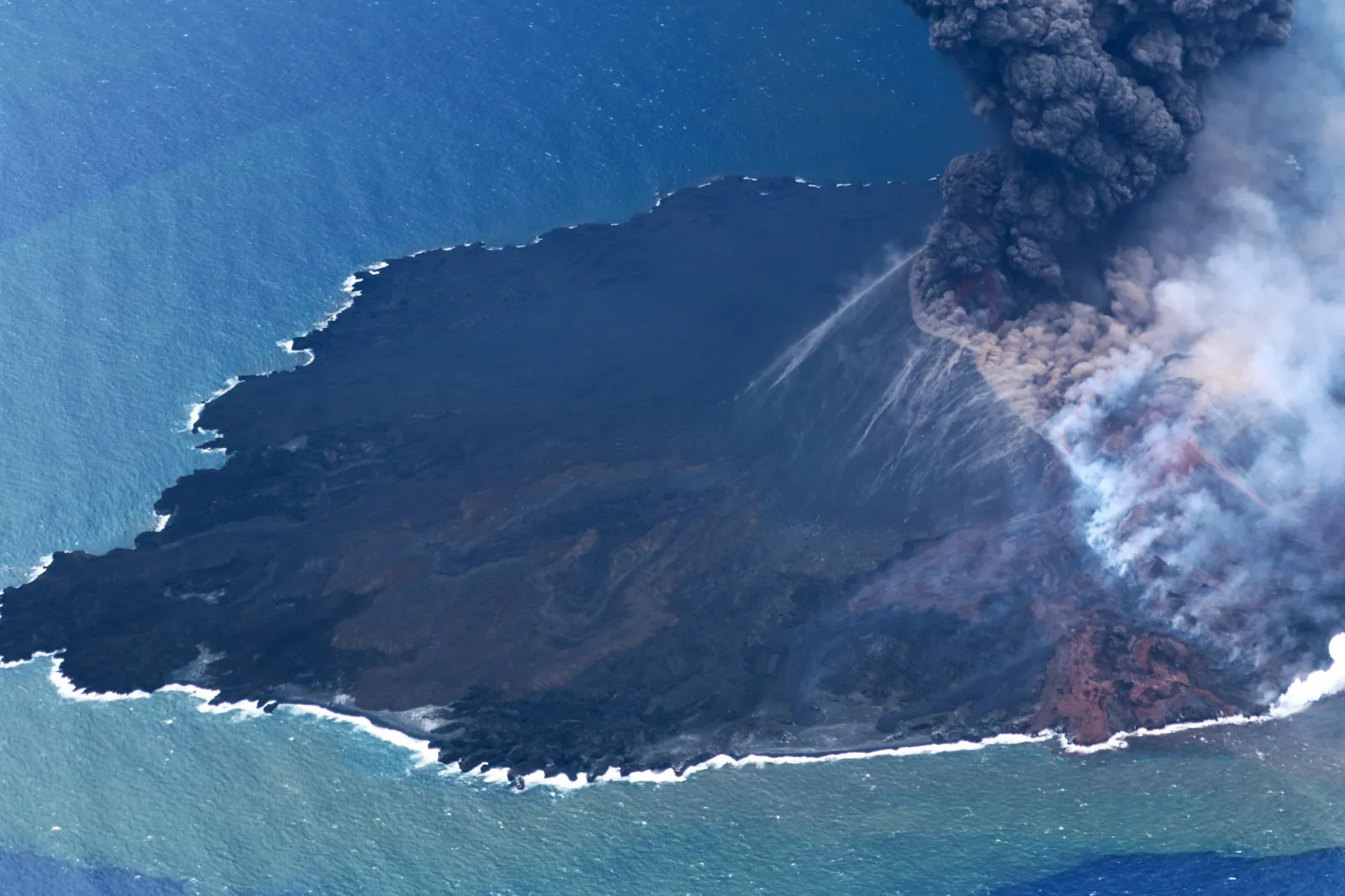
Significant seismic events in this region could plausibly redistribute stress within Axial’s shallow plumbing system.
The connection between these two systems is not merely theoretical; it is a geometric fact.
Each seismic event could be interpreted as an external pressure injection into a system already under stress.
This raises critical questions about the models used to predict eruptions at Axial.
Historically, the forecasting framework has relied on the ᴀssumption that eruptions are driven solely by internal magma accumulation.
However, if external seismic events can alter the thresholds for eruptions, the entire predictive model becomes incomplete.
Beneath Axial Seamount lies a complex labyrinth of magma, occupying a network of sills and dikes that connect the seamount to the broader Juan de Fuca Ridge system.
When seismic waves pᴀss through this network, they can potentially shake loose congealed magma, reopen sealed fractures, and redistribute pressure across interconnected pathways.
This process resembles unclogging a pipe rather than triggering an explosion.
Under this interpretation, the volcano does not erupt simply because it crosses a threshold; it erupts when the entire network reaches a state of collective failure.
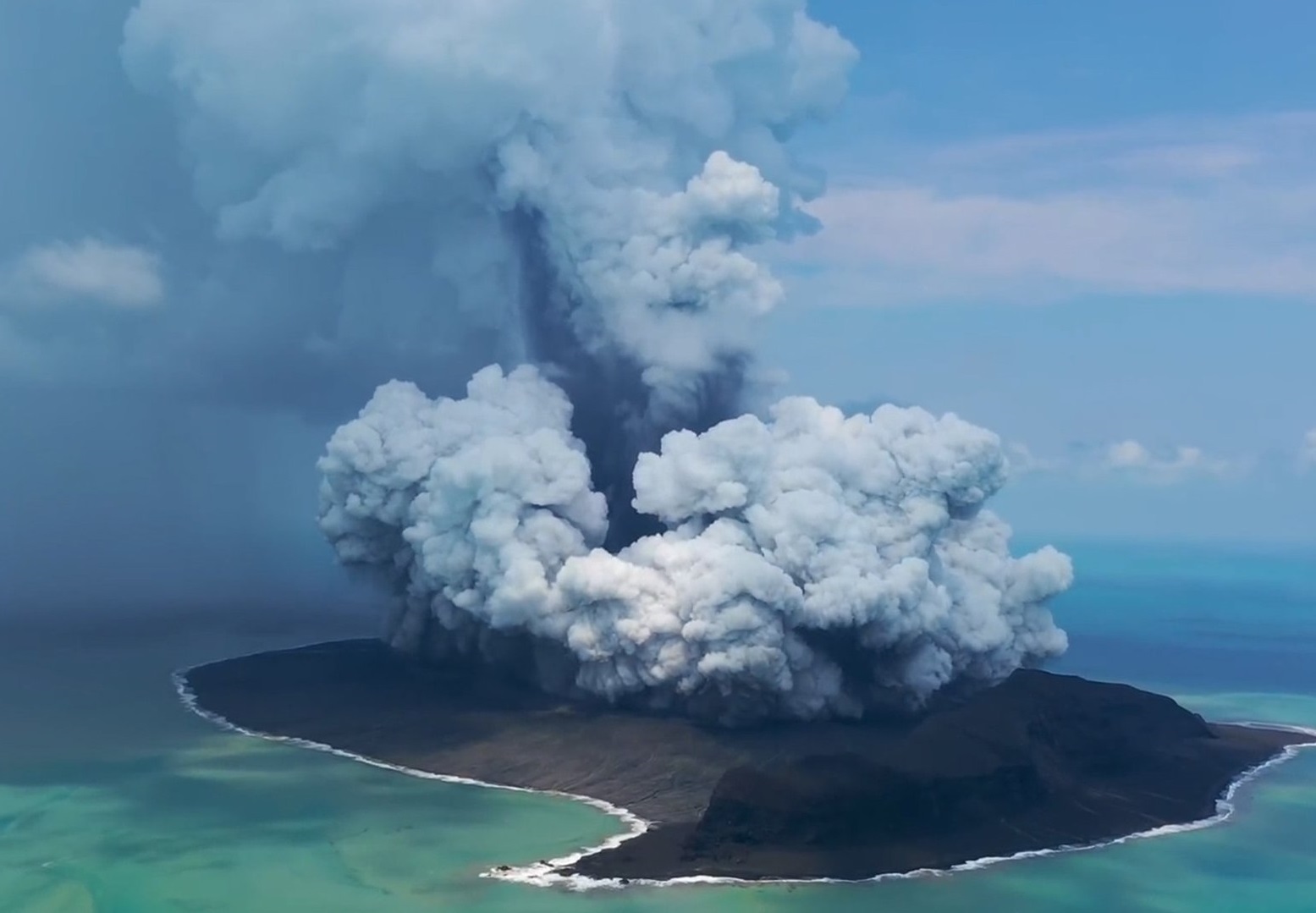
The Juan de Fuca Plate, born at the ridge, drifts eastward at approximately 4 centimeters per year.
As it moves, it cools and densifies, eventually plunging beneath the North American Plate along the Cascadia subduction zone, a locked fault stretching from northern Vancouver Island to Cape Mendocino, California.
This fault has been accumulating stress for over three centuries, and while no direct causal link has been established between an Axial eruption and Cascadia slip, it is plausible that activity at Axial could influence conditions elsewhere in the region.
Sediment cores taken from the ocean floor near Axial suggest a parallel history, with alternating layers of volcanic ash and deposits from underwater landslides triggered by earthquakes.
This record indicates that eruptions and significant earthquakes may have occurred within the same geological windows, hinting at a shared tectonic rhythm.
Whether the current inflation episode at Axial is a prelude to another eruption remains uncertain.
When it does erupt, it will not be the explosive event many envision.
The cold seawater above will suppress gas expansion, keeping the lava contained to the seafloor.
What occurs will be slower and quieter, with magma pushing through cracks in the caldera floor, forming unique structures that resemble stacked cushions.
A fisherman above the caldera might feel nothing, and a resident in Astoria, Oregon, would likely remain unaware unless they checked the news.

As Chadwick noted, “For the size of eruptions seen in the last 20 years, if you were on top of it on a boat, you would never know it.”
However, the instruments monitoring Axial will register every detail of the eruption in real-time, providing unprecedented insights into a mid-ocean ridge eruption.
Yet, the future of this monitoring system is uncertain, as funding cuts threaten to shut down the National Science Foundation program that supports it.
The cabled array, the only real-time monitoring system capable of observing Axial, has secured funding through the summer of 2026, but beyond that, its future is in jeopardy.
As of January 2026, Axial continues to inflate, sitting about 10 centimeters above its pre-2015 level, with seismic activity remaining active but below the threshold needed to trigger an eruption.
Current forecasts place the eruption window at mid to late 2026, but researchers acknowledge that the variable inflation rates have repeatedly confounded their predictions.
To address this uncertainty, a new physics-based forecasting experiment has been launched, utilizing mathematical models of structural failure to predict eruptions.
These forecasts are sealed and archived, to be opened only after an eruption occurs, eliminating hindsight bias.
The first sealed forecast was issued in November 2025, with subsequent forecasts following in December and January.
What is known is that Axial Seamount has exceeded inflation levels that preceded every recorded eruption.
The once-reliable pattern has broken down, and external seismic events from across the Pacific appear to be interacting with its magma system in ways that current models cannot fully account for.
As the caldera continues to rise, the instruments are listening, but the uncertainty surrounding the future of Axial Seamount looms large.
The moment when the crust will finally give way is still unknown, and the world watches with bated breath.


