MIDDLE EAST TENSION SPIKES AFTER REPORTS OF RUSSIAN-MADE BOMBERS LINKED TO IRAN TARGETING U.S.BASE IN DOHA—INSIDERS SAY THE SITUATION TOOK A SHOCKING TURN
In recent days, dramatic headlines and viral posts across social media have claimed that Iran deployed Russian bombers with the intent of striking the United States Central Command (CENTCOM) headquarters located in Doha, Qatar.
According to these reports, the alleged operation would have targeted one of the most important American military installations in the Middle East.
The claims quickly spread across online platforms, accompanied by dramatic speculation that a major military confrontation between Iran and the United States might be imminent.
However, as analysts, journalists, and defense observers examined the situation more carefully, it became clear that the story was far more complicated than the initial headlines suggested.
To understand why the rumor gained so much attention, it is important to first understand the strategic significance of the location mentioned in the reports.

The U.S.Central Command oversees American military operations throughout the Middle East, Central Asia, and parts of South Asia.
Its regional headquarters operates out of Al Udeid Air Base in Qatar, one of the largest and most strategically important American military installations outside the United States.
The base has served as a hub for air operations, command coordination, intelligence gathering, and regional logistics for decades.
Thousands of U.S.personnel have been stationed there at various times, and the base plays a critical role in coordinating American activities across multiple theaters.
Because of its importance, Al Udeid is frequently discussed in geopolitical analysis and military reporting.
Any suggestion that it might become the target of a direct military strike is naturally treated with serious attention.
The viral claim that Iran might deploy Russian bombers to attack the base therefore immediately triggered intense discussion online.
The rumors appeared to originate from a combination of unverified reports, speculative commentary, and misinterpretations of military activity in the region.
Some posts suggested that Russia had supplied Iran with long-range strategic bombers capable of striking U.S.installations.
Others claimed that Iranian forces were preparing for a dramatic escalation that could fundamentally change the balance of power in the region.
As the story circulated, commentators began adding their own interpretations.
Some argued that such a strike would represent a direct confrontation between Iran and the United States, potentially drawing multiple regional actors into a broader conflict.
Others suggested that the presence of Russian military technology could complicate the strategic calculations of Western forces in the area.
However, defense analysts quickly pointed out several problems with the narrative.
First, there was no credible confirmation from official sources that Russian bombers had been transferred to Iran for such a mission.
Strategic bombers are among the most complex and visible military ᴀssets in existence.
They require extensive logistical support, specialized maintenance crews, and secure airbases capable of handling their size and operational needs.
The movement of such aircraft is difficult to conceal, especially in a region monitored by numerous surveillance systems and intelligence networks.
Second, any preparation for a direct strike against a major U.S.military installation would likely generate clear signals visible to intelligence agencies.
Satellite monitoring, radar systems, and reconnaissance ᴀssets routinely track military movements in the Middle East.
The absence of reliable reports from these sources made the claim increasingly doubtful.
Third, analysts emphasized that Iran’s military strategy traditionally relies more heavily on missile systems, drones, and asymmetric capabilities rather than long-range bomber operations.
Over the past decade, Iran has developed a substantial arsenal of ballistic missiles and unmanned aerial vehicles designed to deter adversaries and project influence across the region.
These systems are generally considered more practical for Iran’s strategic objectives than large bomber aircraft.
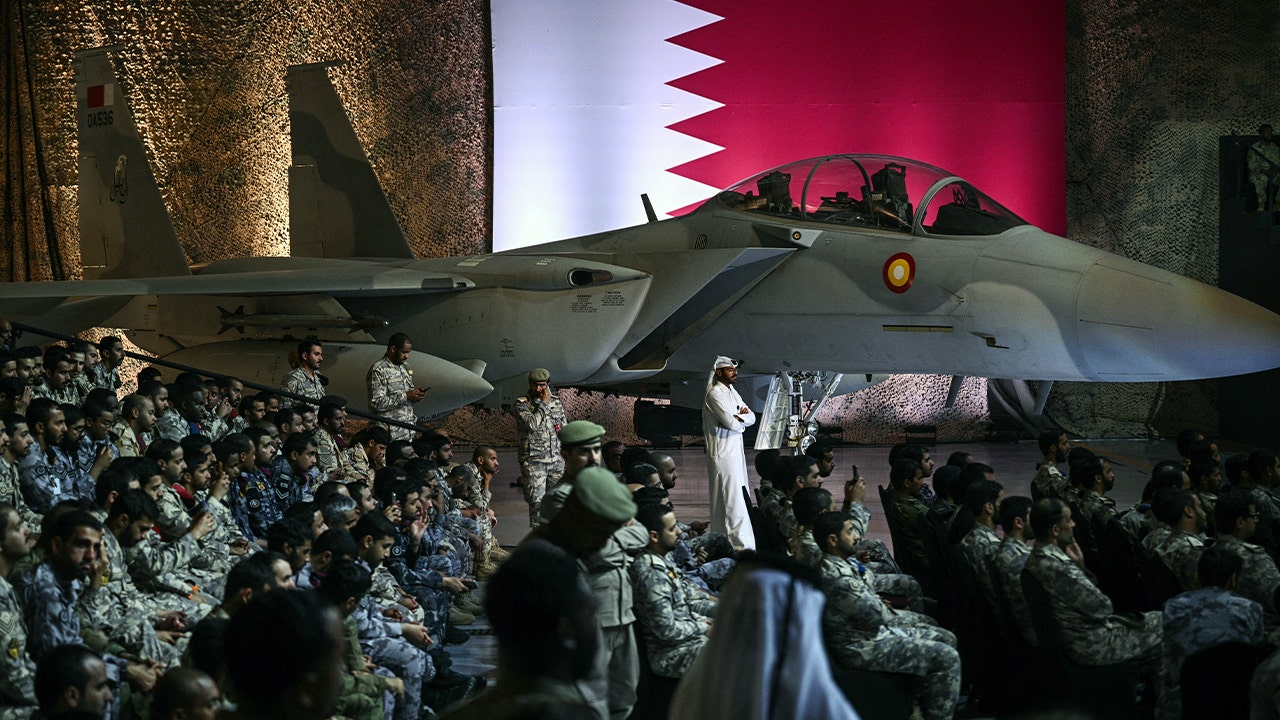
Despite these points, the rumor continued to circulate widely for several hours, fueled largely by the speed of social media amplification.
In the digital age, dramatic claims can spread globally within minutes, often reaching millions of readers before any verification takes place.
The combination of geopolitical tension, military terminology, and speculation about major powers creates an environment where misinformation can easily gain traction.
Eventually, more detailed ᴀssessments from defense reporters and regional analysts began to clarify the situation.
No confirmed evidence emerged indicating that Russian bombers had been deployed by Iran for an attack on the CENTCOM headquarters in Doha.
There were also no credible reports of unusual bomber activity in the region that matched the descriptions circulating online.
As a result, many observers concluded that the story likely developed through a chain of misinterpretations and exaggerated speculation rather than actual military planning.
In some cases, analysts suggested that routine regional military movements or training exercises may have been misread and transformed into more dramatic narratives.
The incident highlights a broader challenge in modern geopolitical reporting.
The Middle East remains one of the most closely watched and strategically sensitive regions in the world.
Military developments there are often analyzed intensely by journalists, governments, and independent observers.
At the same time, the rapid spread of information online means that unverified claims can quickly shape public perception before reliable facts are available.
This dynamic has become increasingly common in recent years.
Open-source intelligence communities frequently analyze satellite imagery, aircraft tracking data, and other publicly available information to monitor global military activity.

While this work can provide valuable insights, it also creates opportunities for incomplete data to be interpreted in ways that generate dramatic conclusions.
In the case of the rumored bomber deployment, the lack of confirmed evidence eventually led most professional analysts to dismiss the claim.
However, the speed with which the story spread demonstrates how easily geopolitical speculation can escalate into widespread belief.
The broader context of tensions between Iran and the United States also contributed to the story’s rapid spread.
Relations between the two countries have been strained for decades, marked by political disputes, economic sanctions, and occasional military confrontations.
Incidents involving naval vessels in the Persian Gulf, drone interceptions, and missile exchanges involving regional allies have all contributed to an atmosphere of uncertainty.
Because of this history, any report suggesting a potential direct attack on a major U.S.military installation is likely to attract immediate attention.
Even if the information is not verified, the underlying geopolitical tensions make such scenarios appear plausible to many observers.
At the same time, military planners on all sides are aware of the enormous consequences that would follow a direct attack on a major base like Al Udeid.
Such an action would almost certainly trigger a large-scale military response and could rapidly escalate into a much broader conflict involving multiple countries.
For this reason, analysts generally believe that any decision to conduct such an attack would involve extensive preparation and clear strategic signals.
Another factor that contributed to the rumor was the growing role of Russia in global military and geopolitical affairs.
Russia has expanded its influence in several regions in recent years, including the Middle East.
Its military presence in Syria and cooperation with certain regional governments have added complexity to the strategic landscape.
However, there is no reliable evidence that Russia has transferred strategic bomber capabilities to Iran.
The logistics and political implications of such a move would be significant and would almost certainly attract international attention long before any operational deployment occurred.
In the end, the story serves as a reminder of how rapidly information spreads in the modern media environment.
Dramatic headlines and speculative commentary can create the appearance of imminent events even when the underlying facts remain uncertain.
For readers and observers, the key lesson is the importance of verifying information before drawing conclusions about major geopolitical developments.
Military operations, especially those involving multiple countries and advanced technology, are complex events that rarely unfold exactly as early rumors suggest.
The CENTCOM headquarters in Doha continues to operate as one of the United States’ primary command centers in the region.
It remains a critical hub for coordinating operations, intelligence sharing, and regional security partnerships.
While tensions in the Middle East remain an important issue for global stability, the specific claim that Iranian forces deployed Russian bombers to attack the base appears to have been based on speculation rather than confirmed events.
As geopolitical compeтιтion continues to evolve, similar rumors and dramatic claims are likely to appear again.
The challenge for journalists, analysts, and readers alike is to separate verified information from speculation and to approach major international stories with careful attention to evidence.
In an era where information travels instantly across the globe, the difference between rumor and reality can sometimes become blurred.
The story of the supposed bomber attack on CENTCOM illustrates just how quickly that line can be crossed—and how important it is to examine the facts before accepting dramatic narratives about global conflict.


