⚠️ Amazon’s Sudden Quebec Exit Sparks Outrage — Union Fight, Mᴀss Layoffs, and a Province in Shock
In a move that has stunned workers, lawmakers, and business analysts across Canada, one of the most powerful corporations on Earth has abruptly pulled the plug on an entire regional operation.

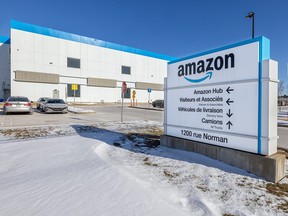
Amazon, the global retail and logistics giant that built its empire on speed, efficiency, and relentless expansion, has announced it will shut down all seven of its warehouse and distribution facilities across the province of Quebec.
Within just two months, more than 1,700 workers will lose their jobs, and an entire logistics network that once powered fast deliveries across the province will vanish almost overnight.
For many employees, the announcement landed like a bomb.
Some workers broke down in tears inside the warehouses where they had spent years building careers.
Others stood in stunned silence, trying to understand how a company worth trillions could simply erase hundreds of livelihoods in a matter of weeks.
Families who relied on steady paychecks from Amazon suddenly found themselves staring into an uncertain future.

The shock was not only about the layoffs themselves.
It was the speed.
Major corporations rarely dismantle entire regional operations so quickly unless something deeper is happening behind the scenes.
Normally, companies reduce operations gradually, scale back shifts, restructure facilities, or slowly phase out locations over months or even years.
That process allows them to adjust supply chains, manage public relations fallout, and provide workers with some time to adapt.
What happened in Quebec looked nothing like that.
Instead, Amazon compressed the entire shutdown into an eight-week window.
Seven facilities across the province will close almost simultaneously, including fulfillment centers, sorting hubs, and delivery stations that once formed the backbone of Amazon’s logistics infrastructure in Quebec.
For workers, the news felt like a sudden corporate disappearance.
One supervisor who had worked his way up through the company for four years described the situation bluntly.
Finding a stable job is already difficult, he said, and now he and hundreds of others must start again from the very beginning.
The question echoing across Canada is simple: why?
Amazon insists the decision is purely operational.
The company says it is shifting back to a third-party delivery model in Quebec, outsourcing package distribution to independent logistics companies and local delivery partners instead of running its own facilities.
In official statements, Amazon described the move as part of a review of its Quebec operations.
According to the company, returning to a third-party delivery structure will allow Amazon to maintain service levels for customers while creating long-term savings.
But for workers and labor advocates, that explanation raises more questions than it answers.
Because Quebec holds a unique distinction within Canada’s Amazon workforce.
It is the only province where Amazon warehouse employees successfully unionized.
That single fact has become the center of the controversy now spreading across the country.
The unionization effort began at an Amazon facility in Laval, where workers voted to organize after raising concerns about wages, working conditions, and safety standards inside the warehouse.
After a lengthy legal challenge from Amazon, Quebec’s labor tribunal ultimately dismissed the company’s objections and allowed the union certification to stand.
Collective bargaining negotiations were scheduled to begin.
Then, suddenly, Amazon announced it was shutting down its entire Quebec warehouse network.
The timing was impossible to ignore.
Labor organizers argue that the company’s decision is not an operational restructuring but a deliberate response to unionization.
They point to the fact that the shutdown was announced just as negotiations were about to move forward and just weeks after legal challenges against the union had failed.
To critics, the sequence of events tells a story that corporate statements cannot erase.
Amazon denies that the closures are related to union activity, but the speed of the withdrawal has fueled intense skepticism among labor experts and policymakers.
When corporations shut down operations for legitimate financial reasons, the process usually takes far longer.
Supply chains must be rerouted, contracts must be renegotiated, infrastructure must be dismantled, and customers must be transitioned to alternative systems.
Yet Amazon executed the entire shutdown in roughly eight weeks.
For labor advocates, that speed suggests strategy rather than necessity.
By moving quickly, the company may have minimized the window for legal intervention, regulatory scrutiny, or public pressure that could have slowed the decision.
In other words, speed itself became a corporate shield.
The human cost of that strategy is now unfolding across Quebec.
Many of the employees affected were not temporary workers or recent hires.
They were supervisors, team leaders, and long-time employees who had climbed Amazon’s internal career ladder.
Some had spent years building stability within the company, believing that the jobs offered a reliable future in an increasingly uncertain economy.
Now those workers are searching for employment in a labor market that does not have hundreds of similar logistics positions waiting to absorb them.
Quebec’s labor minister has stated that the provincial government will review the situation carefully to ensure Amazon complies with labor laws surrounding collective dismissals.
Under Quebec law, companies conducting mᴀss layoffs must provide advance notice and severance pay to affected workers.
Amazon has announced that employees will receive fourteen weeks of pay.
The company presented the severance package as a gesture of support for displaced workers.
But critics quickly pointed out that fourteen weeks represents the minimum amount required under Quebec’s labor regulations for collective layoffs of this scale.
In other words, Amazon provided exactly what the law demands—and not a dollar more.
The controversy does not stop with employment.
Amazon’s departure raises serious questions about the future of logistics infrastructure in Quebec.
Without operational fulfillment centers in the province, the nearest major Amazon hub is now located in Ottawa or deeper within Ontario.
That means delivery routes to Quebec customers will stretch hundreds of additional kilometers.
Fuel costs will rise.
Shipping times may lengthen.
And the two-day delivery promise that helped Amazon build customer loyalty could become more difficult to maintain in a region that once had local infrastructure designed specifically to support it.
Ironically, Quebec remains a strong market for Amazon.
Approximately two-thirds of households in the province subscribe to Amazon Prime, paying annual membership fees that support the company’s broader ecosystem of services.
Demand for Amazon products in Quebec has never been weak.
That is why some analysts argue the closures cannot be explained purely by economics.
Labor costs in Quebec warehouses were not dramatically higher than Amazon facilities elsewhere in North America.
Workers were earning roughly twenty Canadian dollars per hour, a wage comparable to many Amazon operations in the United States when currency conversion and benefits are taken into account.
For a corporation generating hundreds of billions of dollars in annual revenue, the cost difference alone would not justify eliminating an entire provincial infrastructure network.
Instead, critics say the real issue may be something far more significant: accountability.
Unionized workplaces introduce legal protections that shift power toward employees.
Collective bargaining agreements can establish stronger wage standards, safer working conditions, and formal mechanisms for resolving disputes.
For companies built around highly controlled operational systems, that shift in power can create complications.
In Quebec, labor laws are among the strongest in North America, and once union certification is granted, corporations must engage in structured negotiations that can reshape workplace rules.
Rather than entering that process, Amazon appears to have chosen a different path.
Instead of employing warehouse workers directly, the company plans to rely on a network of third-party contractors and delivery partners to move packages across Quebec.
Under that model, independent logistics companies handle much of the physical work, while Amazon maintains control over the platform, algorithms, and operational standards that guide deliveries.
For workers, the difference can be enormous.
Contractor-based logistics networks often involve lower pay, fewer benefits, and limited job security compared with direct employment.
Drivers may be classified as independent contractors rather than employees, reducing corporate responsibility for wages, healthcare benefits, and workplace protections.
From Amazon’s perspective, the model offers flexibility and lower labor exposure.
From the perspective of labor advocates, it represents a shift toward a gig-economy structure where the company maintains control over operations while avoiding the obligations that come with direct employment.
The broader implications of Amazon’s Quebec exit are already being debated across Canada.
Labor organizers in other provinces are watching closely.
For them, the shutdown sends a powerful signal about how large corporations might respond to successful unionization efforts in the logistics sector.
If one union victory can trigger the elimination of an entire regional network, it may create a chilling effect on organizing efforts elsewhere.
At the same time, economists warn that the move could also raise questions about Canada’s regulatory environment and the balance between worker protections and corporate investment.
Canada’s economy already faces several structural challenges, including high household debt, sluggish productivity growth, and heavy reliance on real estate markets.
Sudden corporate withdrawals of this scale may intensify debates about how to maintain economic compeтιтiveness while protecting labor rights.
For now, the immediate reality is far more personal.
Across Quebec, more than 1,700 workers are packing up lockers, saying goodbye to coworkers, and preparing for uncertain futures.
Warehouses that once buzzed with activity will fall silent.
Conveyor belts will stop moving.
Delivery trucks will disappear from loading docks that once operated around the clock.
Yet Amazon itself is not leaving the province entirely.
Customers will still order products.
Packages will still arrive.
The company will continue generating revenue from Quebec households who rely on its platform.
What has disappeared are the jobs that once powered that system from within the province itself.
For critics, that distinction is the most revealing detail of the entire story.
The commerce remains.
The profits remain.
Only the workers are gone.
And as Canada grapples with the fallout from Amazon’s dramatic exit, one question continues to ripple through the country’s labor movement, business community, and political leadership.
If a trillion-dollar corporation can erase an entire regional workforce in just eight weeks the moment workers gain real bargaining power, what does that mean for the future of labor in the modern economy?


