“We keep the doors shut all day, but the stench still seeps inside…” Burst Sewers & an Uneasy Silence: The Collapse No One Wants to Admit
The rain did not arrive as a spectacle.
It came steadily, clinically, almost politely.
Then it stayed.
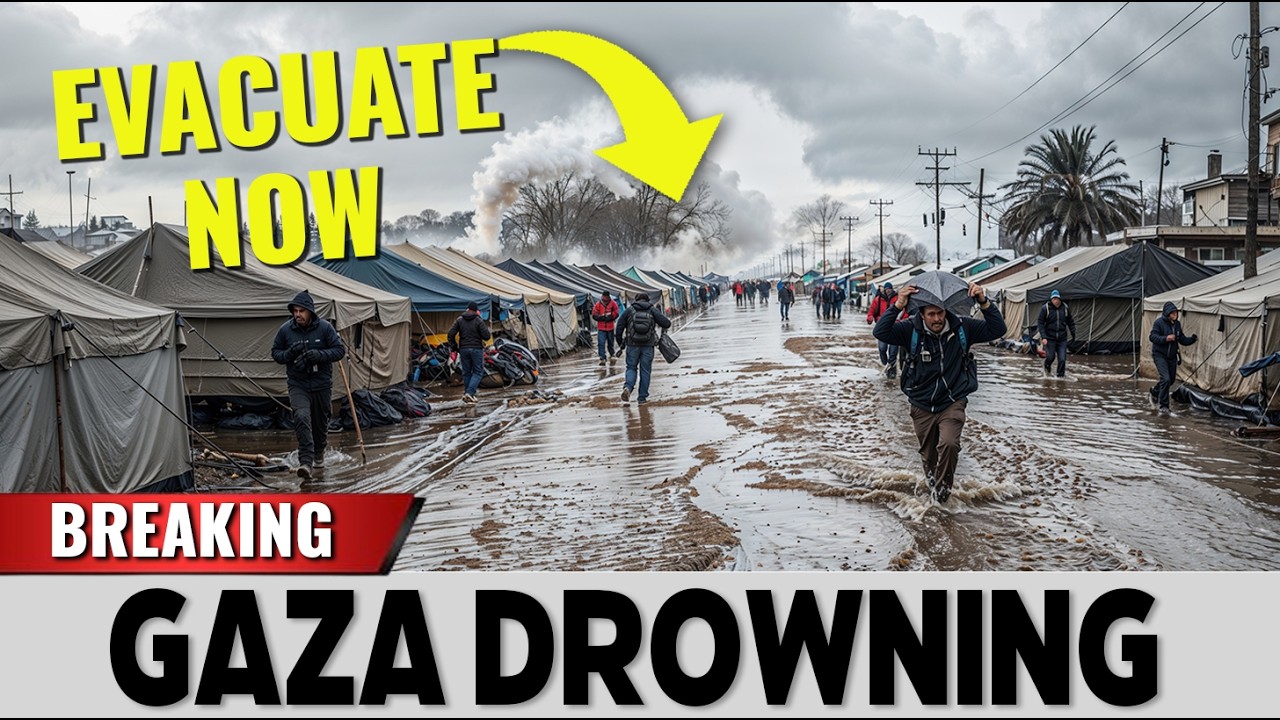
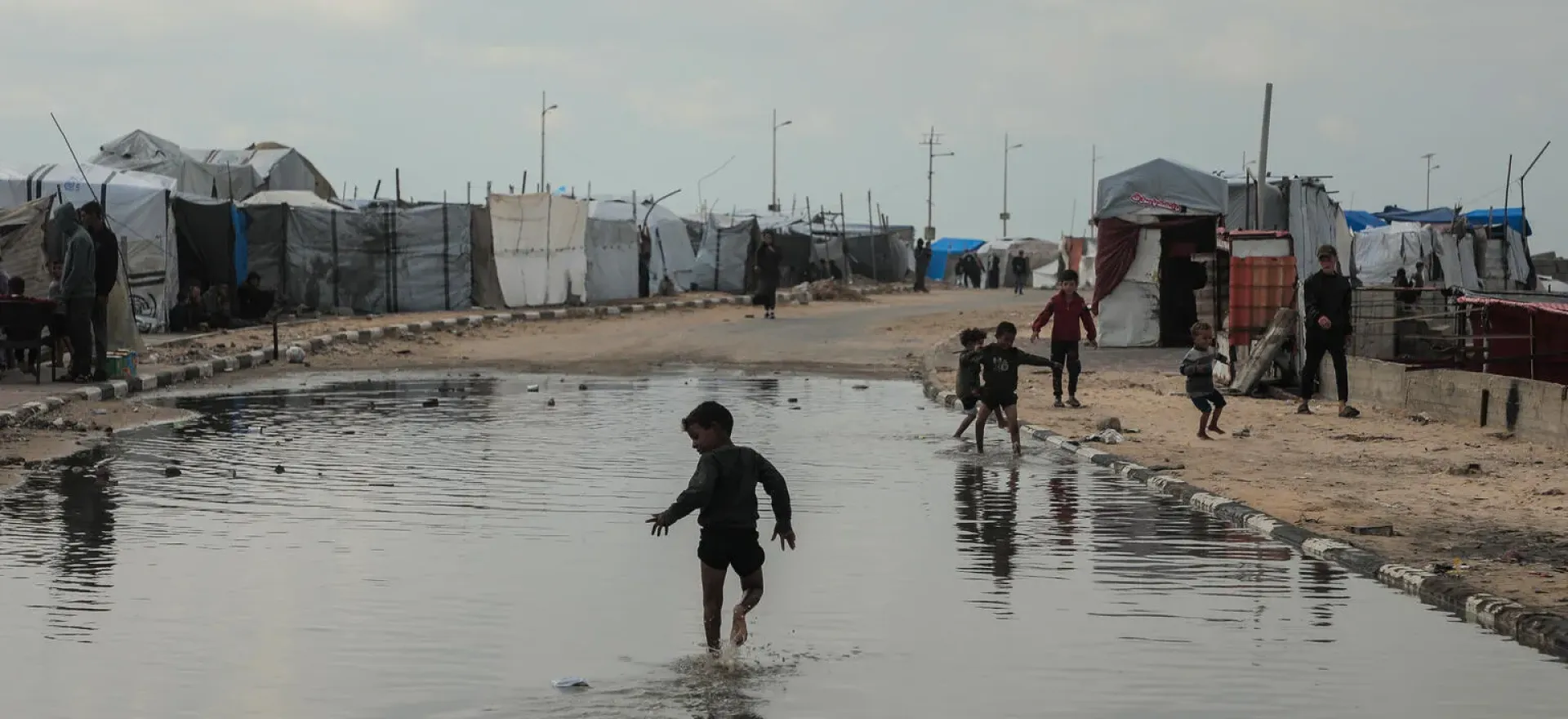
In the low-lying neighborhoods of the Gaza Strip, water began to gather in the usual places—potholes, unfinished roads, courtyards bordered by cracked cement walls.
Residents have seen flooding before.
They know how to lift furniture, how to stack sandbags, how to wait.
But this time, something else surfaced with the rain.
Something heavier than water.
At first, the smell was faint.
A sour trace carried on damp air.
Then it thickened.
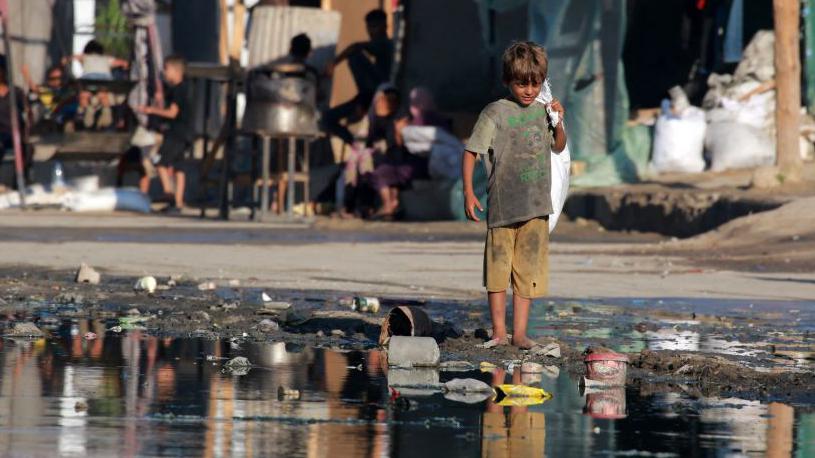
By the second day, families reported that the floodwater creeping through alleyways was no longer just rain.
“We no longer have clean water to drink,” one resident said quietly, declining to give his name.
“And we cannot tell what is flowing past our doors.
” The distinction between storm runoff and raw sewage had dissolved.
The pipes beneath the streets—old, patched, strained by years of overuse—had begun to fail.
Municipal engineers, speaking in guarded terms, confirmed that multiple wastewater lines were overwhelmed after days of sustained rainfall.
Pumping stations lost power intermittently.
Drainage canals clogged with debris and sediment.
In districts already operating beyond capacity, pressure built underground until it found release through cracks in the system.
Manhole covers rattled.
In some places, they lifted.

Official statements described the situation as “temporary overflow.” Yet the footage circulating online suggested something less controlled.
Brown water surged against storefront shutters.
Children waded barefoot through murky currents that reflected the gray sky like dull metal.
Medical workers warned of heightened risks—skin infections, gastrointestinal disease, contamination of already fragile water supplies.
The warnings sounded procedural.
The reality felt closer to collapse.
The infrastructure crisis in Gaza is not new.
Years of blockade, conflict damage, and limited access to construction materials have left water and sanitation networks in a state of chronic fragility.
Reports by the United Nations have repeatedly described the enclave’s aquifer as over-extracted and increasingly saline.
Treatment plants operate under constraints—fuel shortages, power cuts, mechanical wear without adequate replacement parts.
When rainfall intensifies, the margin for error narrows to almost nothing.
And yet, rainfall alone does not explain the scale of what unfolded.
Meteorological data indicates that the storm system, while heavy, was not unprecedented.
Seasonal downpours have struck the eastern edge of the Mediterranean Sea for centuries.
What has changed is the resilience of what lies beneath the asphalt.
Residents describe a pattern that feels less like accident and more like inevitability.
“Every year it gets worse,” a shop owner in Gaza City said.
“The water stays longer. The smell is stronger.” He paused before adding, “No one says it out loud, but we all know the system cannot handle another season like this.”
Hospitals, already strained, reported an uptick in patients with waterborne symptoms within days of the flooding.
Clinics distributed chlorine tablets where available.
Tanker trucks attempted to deliver potable water to neighborhoods where taps ran dry or ran brown.
In some households, families resorted to boiling water that carried an unmistakable odor.
They drank it anyway.
There are neighborhoods where electricity flickers unpredictably, where pumps meant to divert wastewater operate only when power allows.
When the grid fails, gravity takes control.
Sewage flows along the path of least resistance—often toward residential streets.
In тιԍнтly packed districts, where buildings lean close and ventilation is poor, contamination lingers in enclosed spaces.
Windows remain shut against the stench, but the air feels heavier.
Local authorities insist emergency measures are underway.
Crews in reflective vests have been filmed clearing drains, reinforcing embankments, redirecting flows with temporary barriers.
But behind the visible response lies a quieter question: how long can a system built for far fewer people sustain a population that has doubled over decades? The pipes were not designed for this density.

The treatment facilities were not designed for prolonged disruption.
Maintenance schedules ᴀssume access to materials that are not always obtainable.
International observers point to structural causes—restricted imports, repeated infrastructure damage during hostilities, limited funding.
Political analysts counter that governance inefficiencies and planning failures compound the crisis.
The debate unfolds far from the flooded streets.
On the ground, arguments offer little relief from contaminated water pooling at the threshold.
There is also a more uncomfortable dimension.
Environmental experts have warned for years that untreated or partially treated wastewater discharged into the sea can circle back.
Coastal contamination does not respect municipal boundaries.
When storm surges push seawater inland, they may carry more than salt.
The cycle is not conspiratorial.
It is chemical.
Yet its implications are unsettling: what flows outward may eventually return.
In interviews conducted after the floodwaters began to recede, several residents spoke of a persistent unease.
“It feels like something breaking that cannot be fixed with a pump,” one teacher said.
She described waking at night to the sound of water slapping against the building’s ground floor, unsure whether it was rain, sewage, or both.
“You start to imagine what is under your feet.”
That imagination is not entirely abstract.
Beneath Gaza’s surface lies a patchwork of pipes, many installed decades ago, some repaired with improvised materials during periods of acute shortage.
Corrosion advances quietly.
Seals weaken.
Each heavy rain tests joints and valves never intended to endure such strain.
When failure occurs, it is rarely dramatic at first.
A slow leak.
A damp patch.
Then, during a storm, rupture.
Critics argue that framing the disaster as mysterious risks obscuring practical solutions: investment, coordinated reconstruction, reliable energy supply.
They caution against narratives that drift toward fatalism.
Still, the lived experience of residents resists tidy categorization.
When floodwater invades homes carrying visible waste, the distinction between technical malfunction and systemic breakdown blurs.
Data collected in recent years indicate that a significant percentage of Gaza’s water is unfit for human consumption without treatment.
Even before the floods, many families relied on purchased desalinated water delivered by private vendors.
During the recent crisis, distribution networks faltered.
Demand spiked.
Prices, some residents claim, rose accordingly.
Whether by market logic or opportunism, the effect was the same: access narrowed when need expanded.
Children returned to school in buildings where ground floors had been disinfected but still smelled faintly of stagnation.
Teachers reported difficulty maintaining attention as rumors circulated—about disease outbreaks, about structural collapse, about contamination seeping into foundations.
Most of these claims remain unverified.
Yet uncertainty itself exerts pressure.
Satellite imagery reviewed by independent analysts shows water pooling across several districts days after rainfall ceased.
Drainage was slow.
Evaporation slower.
The lingering presence of standing water increases the risk of vector-borne disease.
Mosquito populations thrive in such conditions.
Public health officials acknowledge the hazard but emphasize that large-scale outbreaks have not been confirmed.
The phrase “not confirmed” echoes through press briefings with careful neutrality.
In private conversations, some engineers concede that without substantial overhaul, the cycle will repeat.
Each season compounds wear.
Temporary fixes accumulate like sediment in a pipe—functional, but narrowing capacity.
A single failure can cascade, overloading adjacent segments.
In dense urban terrain, redundancy is limited.
There is no single moment that defines a breakdown.
It is a sequence of tolerances exceeded.
A pump operating beyond specification.
A valve not replaced in time.
A storm that lingers one day longer than forecast.
The recent flooding in Gaza may not qualify as unprecedented in meteorological terms.
But in infrastructural terms, it may mark a threshold.
As waters slowly recede, what remains is residue—literal and figurative.
Walls stained a darker shade near the floor.
Carpets discarded in alleys.
Conversations edged with suspicion about what lies beneath repaired pavement.
Officials speak of resilience.
Residents speak of endurance.
Between those words sits a system that groans under weight it was never meant to carry.
Whether this episode will prompt decisive intervention or fade into the catalogue of recurring crises is uncertain.
The images will scroll past on distant screens.
The smell will not.
For those who live there, the next rainfall will not be merely weather.
It will be a test—of pipes, of policy, of promises long deferred.


