HOLY RELIC SHOCKER: NEW DNA ANALYSIS OF THE SHROUD OF TURIN REVEALS FINDINGS THAT ARE “IMMENSELY INTERESTING” — BUT WHAT ARE THEY NOT SAYING?
For centuries, the world has stared at a faint, ghostly image on an ancient piece of linen and collectively asked the same question: is this the real deal, or the most ambitious medieval art project in human history?
Now, buckle up, because scientists have re-tested DNA from the world-famous Shroud of Turin, and what they found is—brace yourself—“immensely interesting.
” Not mildly interesting.
Not “huh, neat.
” Immensely.
And in the world of religious relics, “immensely interesting” is basically the academic equivalent of someone flipping over a Monopoly board.
The Shroud of Turin, believed by many to be the burial cloth of Jesus Christ, has been debated, dissected, carbon-dated, re-dated, denounced, defended, televised, and meme-ified more times than any piece of fabric deserves.

It lives in Turin, Italy, inside the Cathedral of Saint John the Baptist, under conditions so controlled that even luxury skincare products would feel jealous.
But science never rests.
Especially not when there’s a mystery soaked in theology, history, and global controversy.
This latest chapter began when researchers revisited genetic material collected from dust and fibers on the cloth.
Yes, dust.
The same stuff you ignore on your bookshelf.
Except in this case, the dust might hold clues about one of the most debated artifacts in human history.
The original carbon dating tests in 1988 famously concluded the cloth dated back to the Middle Ages, roughly between 1260 and 1390.
That announcement sent shockwaves through believers and skeptics alike.
Some declared the case closed.
Others insisted contamination, fire damage, repairs, and medieval textile shenanigans had skewed the results.
Fast forward decades later, and scientists armed with more advanced DNA sequencing tools decided to take another look.
And what did they find?
A genetic buffet.
According to reports, the DNA extracted from the fibers revealed traces of multiple plant species and human genetic material from various regions.
Europe.
The Middle East.
Even parts of Asia.
Cue the dramatic music.
Supporters of the Shroud immediately perked up.
The Middle Eastern genetic traces, they argue, align with the historical narrative of the cloth’s supposed origin.
After all, if the Shroud traveled from Jerusalem through centuries of migration, war, pilgrimage, and relic trafficking, you’d expect it to pick up some international souvenirs along the way.
Skeptics, however, were not exactly shaking in their lab coats.
“Of course it has DNA from multiple regions,” imaginary relic analyst Dr.
Felicia Threadcount tells us while dramatically adjusting safety goggles.
“It’s been handled by thousands of people over centuries.
If your couch could talk, it would also claim to have Middle Eastern DNA.”
And she has a point.
The Shroud has been touched, kissed, examined, displayed, studied, pH๏τographed, and debated by countless hands since it surfaced in documented history in 14th-century France.
Pilgrims, priests, scientists, tourists, and probably at least one overly curious intern have all left their mark.
But the presence of Middle Eastern plant DNA is what truly fuels the headlines.
Some of the plant species identified are consistent with regions around the Levant.
That doesn’t automatically prove first-century origins, but it certainly adds another layer to the puzzle.
It’s like discovering your antique chair contains wood from a forest that technically existed in medieval times but also could have been transported later.
Interesting? Yes.
Conclusive? Not exactly.
The scientific team behind the DNA re-testing emphasized that contamination over centuries makes definitive conclusions difficult.
The Shroud survived fires, was doused in water, repaired with patches, and stored in conditions that were far from sterile in its early life.
Each event was basically an open invitation for foreign DNA to join the party.
One fictional skeptic blogger declared, “At this point, the Shroud probably contains more international DNA than a budget airline.
”
Yet for believers, the findings feel vindicating.
Not because they “prove” anything outright, but because they complicate the simplistic narrative that the cloth is merely a medieval fake.
And complexity, in the world of ancient relics, is everything.
There’s also the matter of the human genetic material found on the Shroud.
Studies suggest the presence of DNA from individuals of different ethnic backgrounds.
This could reflect centuries of handling, or it could hint at the Shroud’s long journey across continents.
The truth is, ancient textiles are like biological sponges.
They absorb stories.
They collect evidence.
They pick up fragments of history the way your winter coat collects lint.
The problem is sorting which fragments belong to the original story and which are just historical clutter.
Imagine trying to solve a crime scene where the evidence has been trampled by tourists for 700 years.
That’s essentially what scientists are dealing with.
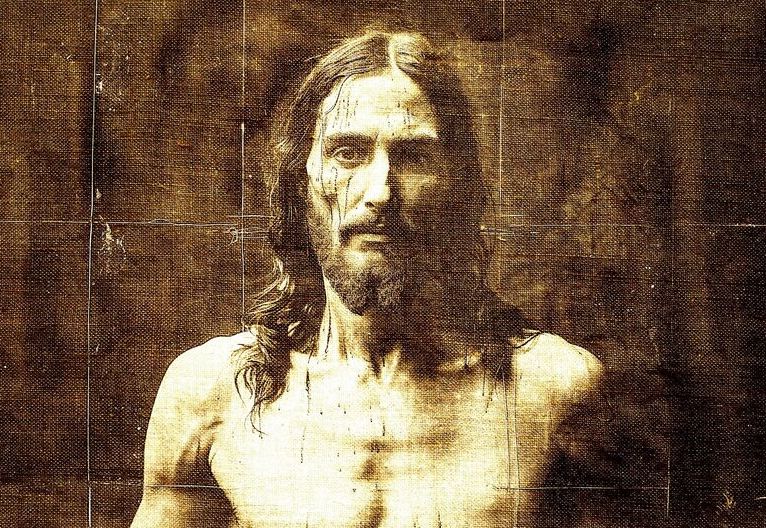
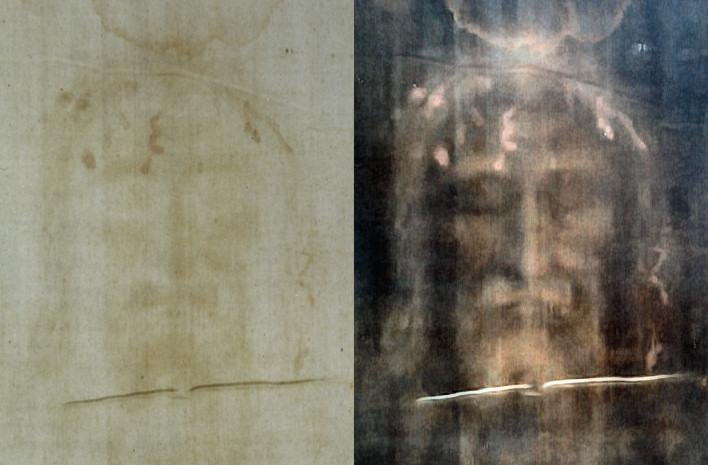
And then there’s the image itself.
The faint outline of a man bearing wounds consistent with crucifixion has baffled researchers for decades.
Various theories have attempted to explain how the image formed: medieval artistry, chemical reactions, scorching, even radiation bursts.
Yes, radiation bursts.
Because when the Shroud enters the chat, things escalate quickly.
Some proponents argue that no known medieval technique could have produced the image with such anatomical precision and superficial coloration.
Skeptics counter that we should never underestimate the creativity of medieval craftsmen.
After all, these were the same people building cathedrals without calculators.
The new DNA findings do not solve the image mystery.
They simply add another chapter to a book that refuses to end.
What makes this story irresistible is not just the science, but the symbolism.
The Shroud sits at the intersection of faith and forensic analysis.
It’s where microscopes meet miracles.
Every new study reignites the debate.
News cycles spin.
Social media erupts.
Amateur historians flood comment sections with certainty usually reserved for people arguing about pizza toppings.
“This changes everything,” proclaims one viral headline.
“It changes nothing,” replies another.
The reality, as usual, lies somewhere between dramatic extremes.
The re-tested DNA underscores that the Shroud’s history is complicated and global.
It suggests the cloth interacted with people and environments far beyond a single medieval workshop.
But it stops short of declaring it the authentic burial cloth of Jesus.
Science rarely delivers cinematic plot twists.
It delivers incremental insight.
And yet, the public craves resolution.
We want a lab coat to step forward and announce, “Ladies and gentlemen, the Shroud is 100% authentic,” or alternatively, “Pack it up, it’s a 14th-century prop.”
Instead, we get layered data, contamination concerns, and nuanced conclusions.
How disappointing.
How very scientific.
Still, the immense interest surrounding these findings proves something undeniable: humanity remains captivated by relics that blur the line between legend and laboratory.
Whether you view the Shroud as sacred artifact or historical curiosity, the fact that modern DNA sequencing is being applied to ancient linen speaks volumes about our obsession with answers.
And perhaps that’s the real story here.
The Shroud of Turin survives not because of definitive proof, but because of enduring mystery.
Each study, each re-test, each microscopic fiber analysis keeps the conversation alive.
In an era where information is instant and certainty is demanded, the Shroud stubbornly refuses to cooperate.
It remains ambiguous.
Complicated.
Infuriatingly inconclusive.
And that might be precisely why it continues to fascinate.
So what did scientists find when they re-tested DNA from the Turin Shroud?
They found evidence of a long journey.
They found traces of many hands.
They found plant species linking to various regions.
They found complexity.
They found a mystery that refuses to sit quietly in a glᴀss case.
And in doing so, they ensured that dinner party arguments, academic conferences, and late-night documentaries will continue for years to come.
Because when it comes to the Shroud, immensely interesting is more than enough to keep the world watching.


