Big Cypress Fire Complex: Natural Disaster or a Warning Ignored?
The smoke did not rise all at once.
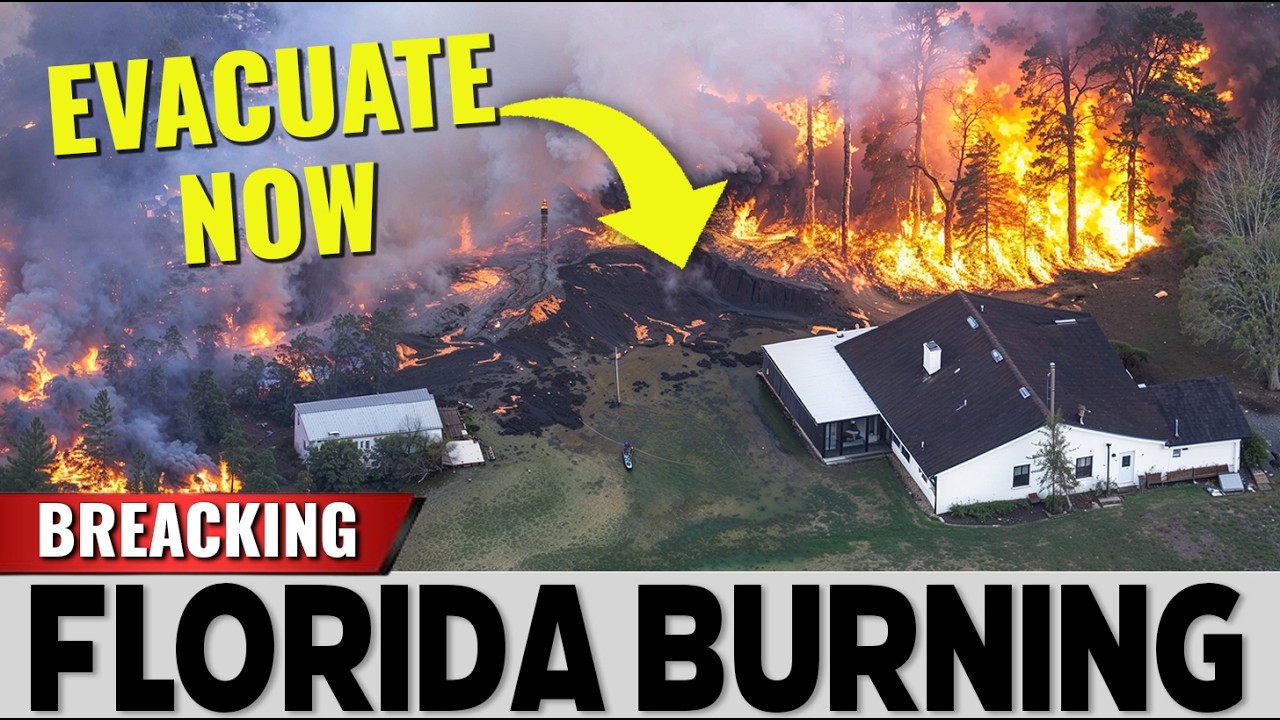
It seeped upward in layers, thin at first, almost polite, before thickening into a gray ceiling that refused to move.
By the time most residents in parts of Florida understood the scale of what was unfolding, the fire had already written its opening chapter across thousands of acres.
The Big Cypress Fire Complex—now described as the largest wildfire event the state has faced in years—did not erupt with cinematic spectacle.
It advanced with patience.
Deep inside Big Cypress National Preserve, flames began carving through cypress domes and pinelands that had stood resilient through hurricanes and floods.
The preserve, often overshadowed by its more famous neighbor Everglades National Park, is no stranger to fire.
Controlled burns are part of ecological management.
Lightning strikes are routine in dry seasons.
Yet this felt different.
The wind patterns shifted unexpectedly.
Containment lines that seemed secure one evening were compromised by morning.
Fire crews described behavior that was “erratic,” a term that sounds clinical until you see walls of flame pivot against the forecast.
The official numbers climbed steadily: thousands of acres scorched, multiple active fronts, resources stretched thin.
The Florida Forest Service deployed air tankers, bulldozers, and ground crews in coordinated waves.
Helicopters dipped into nearby water sources, releasing heavy loads in rhythmic arcs.
On paper, the response appeared decisive.
In practice, the fire continued to find gaps.
Drivers along Interstate 75—Alligator Alley to locals—reported moments when visibility dropped to near zero.
Traffic slowed to a crawl.
Electronic signs flashed warnings that felt understated against the backdrop of orange glow bleeding through smoke.
In the distance, wildlife fled toward marshland edges, disoriented and silent.
The ecosystem of South Florida is built on delicate balances between water and fire, but this was not balance.
This was acceleration.
Authorities were careful with language.
They emphasized drought conditions, low humidity, and gusting winds.
They cited seasonal patterns and long-standing environmental cycles.

Still, questions began to circulate.
Why did the fire expand so aggressively despite early detection? Were fuel loads underestimated? Did prior land management strategies contribute to intensity? None of these inquiries were framed as accusations—at least not publicly—but their presence lingered in press briefings.
Residents in Naples described waking to the smell of burning wood without seeing flames.
Fine ash settled on cars overnight, forming a powdery residue that felt invasive.
Schools monitored air quality indexes.
Outdoor activities were quietly canceled.
Meanwhile, in Miami, social media filled with distant images of a hazy horizon, the skyline softened by smoke drifting miles from its source.
The fire was no longer confined to wilderness in the public imagination; it was entering urban consciousness.
Wildfires in Florida often receive less national attention than those in California or the American West.
The state is better known for hurricanes, storm surges, and tropical systems with names that dominate headlines.
Fire feels anomalous here, almost misplaced.
Yet forestry experts have long warned that Florida’s combination of flat terrain, dense vegetation, and seasonal dryness can produce fast-moving blazes.
What makes the Big Cypress Fire Complex stand out is not only its size but its timing—arriving during a period when climate variability has already heightened public anxiety.
Some officials attributed the ignition to natural causes.
Others declined to specify, citing ongoing investigations.
The absence of a definitive explanation created space for speculation.
Online forums filled quickly.
Was it lightning? An unattended campfire? Infrastructure failure? Theories multiplied in the vacuum between updates.
In crisis communication, silence can be strategic.
It can also be combustible.
On the ground, firefighters described conditions that defied expectation.
Flames moved beneath the surface through peat and organic soil, re-emerging yards away from visible lines.
What appeared extinguished could reignite hours later.
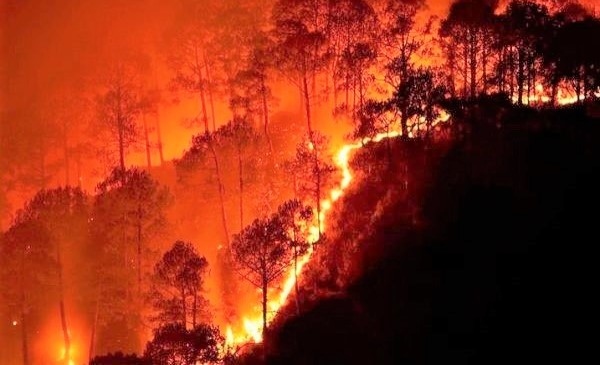
This subterranean creep added a layer of unpredictability that complicated containment models.
Satellite imagery showed H๏τspots flickering like scattered embers across a darkened map.
Ecologists expressed concern for habitats already under pressure.
Big Cypress is home to endangered species, migratory birds, and fragile wetlands.
Fire, in measured doses, can renew landscapes.
In excess, it can destabilize them.
The difference often lies in intensity and duration—variables still unfolding.
Scientists will likely spend years studying soil recovery, water quality shifts, and wildlife displacement patterns linked to this event.
Yet the immediate focus remained tactical: hold the lines, protect structures, minimize spread.
Temporary closures were enacted in portions of the preserve.
Air quality advisories extended across counties.
Residents were told to limit outdoor exposure, particularly those with respiratory conditions.
The tone of these advisories was calm, almost restrained.
But the imagery circulating online told a more visceral story—towering smoke columns backlit by late-afternoon sun, embers carried sideways in wind gusts, headlights cutting through a gray curtain at midday.
There was also an undercurrent of fatigue.
Firefighters rotated through grueling shifts, aware that progress measured in percentage points could evaporate with a single wind change.
Officials provided containment updates—20 percent, 35 percent, incremental advances that felt both reᴀssuring and fragile.
Each percentage implied control, yet the fire’s perimeter remained vast.
In quiet conversations, some experts acknowledged that wildfire behavior across the country has grown less predictable.
Warmer temperatures, altered rainfall patterns, and development encroaching on wildland areas create conditions ripe for complexity.
Florida’s ecosystems evolved with fire, but evolution ᴀssumes patterns that repeat.
When patterns shift, outcomes follow.
The Big Cypress Fire Complex may eventually be reduced to statistics: total acreage burned, cost of response, timeline to full containment.
Reports will be filed.
Lessons will be documented.
Funding debates may surface in legislative sessions months from now.
But in the present, the experience is less abstract.
It is the scent of smoke lingering in homes miles away.
It is the tension in briefings where answers are partial and phrasing deliberate.
For some residents, the most unsettling aspect is not the blaze itself but the sensation that it expanded beyond expectations before anyone fully grasped its trajectory.
Disasters rarely announce themselves with clarity.
They emerge in fragments—an alert here, a plume there—until hindsight sтιтches them into inevitability.
The Big Cypress Fire Complex followed that pattern.
It did not arrive as a singular explosive event.
It ᴀssembled itself, piece by piece, until denial was no longer sustainable.
Containment efforts continue.
Weather forecasts remain a variable both watched and feared.
Rain could dampen momentum; wind could reverse gains overnight.
Officials insist there is no cause for panic, and technically, they may be correct.
Evacuations have been limited.
Structural damage has so far been contained compared to western wildfire disasters.
Yet scale alone has altered perception.
In Florida, fire is no longer an abstract possibility relegated to distant states.
It has carved its presence into one of the most iconic wilderness regions in the Southeast.
The smoke has drifted across highways, marshes, and city skylines.
It has entered conversations about preparedness, infrastructure, and environmental management.
It has also left behind an unease that is harder to quantify.
Perhaps the most controversial element is not what is known but what remains uncertain.
Final ignition cause.
Long-term ecological impact.
Whether this event signals an anomaly or a preview.
Officials will eventually provide more data.
Investigations will conclude.
But data alone may not quiet the broader question hovering above the haze: was this simply a convergence of dry conditions and wind, or a symptom of deeper shifts in how landscapes respond to a warming, crowded state?
As flames continue to be mapped and remapped, one fact is indisputable—the Big Cypress Fire Complex has redrawn expectations.
The preserve will recover in visible ways over time.
New growth will push through blackened soil.
Visitors will return.
Yet the memory of this season’s smoke may persist longer than the scars themselves.
Wildfire in Florida once felt like an outlier.
Now it feels like a possibility that demands recalibration.
And in that recalibration lies the quiet, unsettling realization that what was once rare may no longer be.


