Rivers on the Rise: Torrential Rains Trigger Widespread Flood Emergency
Relentless rainfall has triggered a rapidly escalating flood emergency across parts of Australia, where swollen rivers have burst their banks, swallowing inland roads and isolating rural communities.
What began as days of steady downpour has now transformed into a high-alert disaster, with emergency services racing to keep pace as water levels continue to climb.
In several regions, major highways have disappeared beneath fast-moving currents, cutting off access between towns and stranding motorists.
Authorities confirmed that dozens of inland routes have been closed after floodwaters surged over bridges and low-lying crossings.
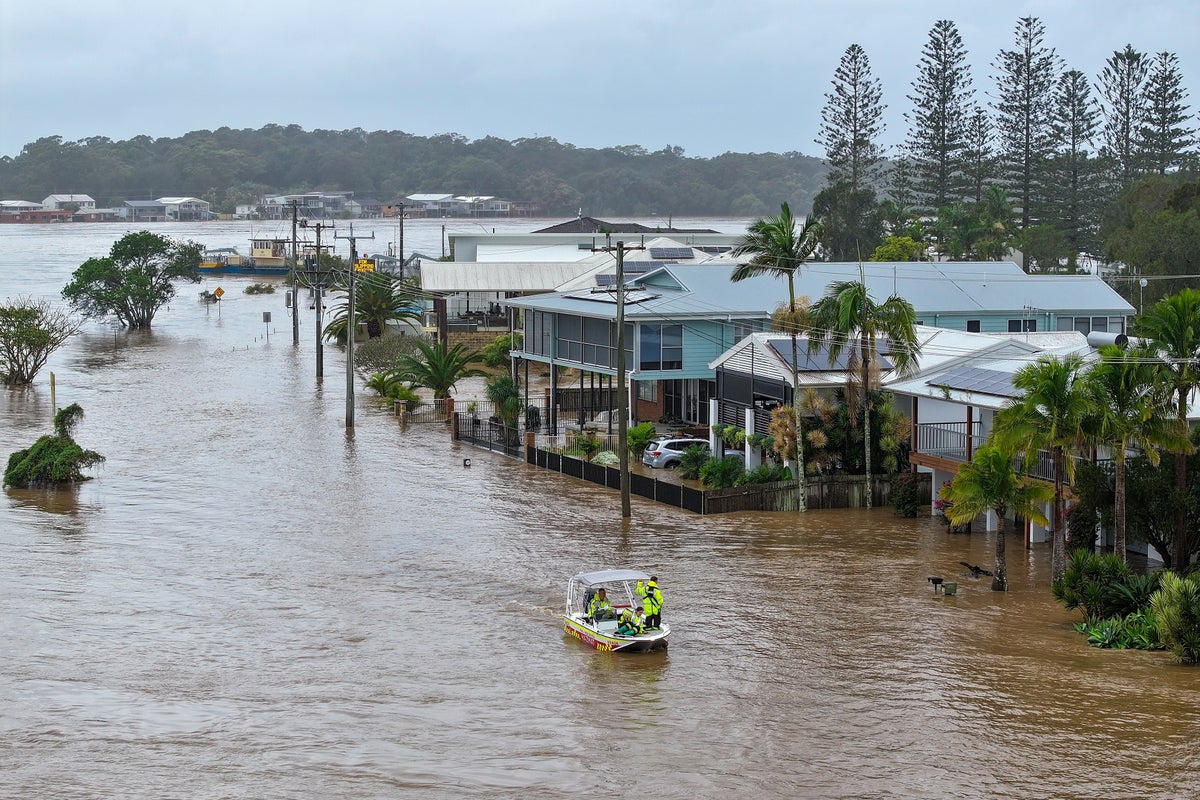
Drone footage released by local officials shows vast stretches of countryside turned into temporary lakes, with only treetops and fence lines visible above muddy waters.

The crisis intensified as river systems across affected areas surged simultaneously.
Hydrologists monitoring gauges reported levels rising at alarming speed overnight, fueled by saturated soil that could no longer absorb incoming rainfall.
Once runoff overwhelmed natural channels, rivers spilled into adjacent farmland and residential zones.
Communities near major waterways braced as emergency alerts were issued, urging residents to prepare for possible evacuation.
In some towns, volunteers worked alongside emergency crews to stack sandbags in a race against the rising tide.
Others moved livestock to higher ground, navigating waterlogged paddocks under dark, rain-heavy skies.
Emergency services in states including New South Wales and Queensland reported hundreds of calls for ᴀssistance within hours.
Swift-water rescue teams were deployed after vehicles became trapped attempting to cross flooded causeways.
Officials repeatedly warned drivers not to enter submerged roads, emphasizing that even shallow-looking water can conceal dangerous currents or washed-out surfaces.
Inland rail services were also disrupted, with sections of track inundated and freight routes suspended.
Supply chains into remote communities have been temporarily halted, raising concerns about access to essential goods should flood conditions persist.
Supermarket shelves in isolated towns began to thin as residents prepared for potential extended closures.
Meteorologists attribute the extreme conditions to a slow-moving weather system funneling moisture across broad regions.
With catchments already saturated from earlier rainfall, additional downpours quickly translated into river surges.
Forecasts indicate that while the heaviest rains may ease in coming days, downstream flooding could intensify as runoff travels through interconnected waterways.
Local councils activated evacuation centers in schools and community halls for residents forced to leave their homes.
Volunteers distributed blankets, H๏τ meals, and emergency supplies to families displaced by rising waters.
Authorities emphasized that while some flood-prone communities are accustomed to seasonal inundation, the scale and speed of the current surge have exceeded typical patterns in certain districts.
Farmers face mounting losses as crops sit submerged and fencing infrastructure is swept away.
Agricultural experts warn that prolonged standing water can damage soil health and delay planting cycles, compounding economic strain.
Rural residents described watching helplessly as access roads vanished under swirling brown water, severing connections to neighboring towns.
Utility providers reported localized power outages after floodwaters impacted substations and downed lines.
Crews are ᴀssessing damage where safe to do so, though officials caution that restoration efforts may be delayed in areas still under water.
Residents have been advised to avoid contact with floodwaters due to contamination risks and hidden debris.
Climate scientists note that extreme rainfall events have become more intense in parts of Australia in recent years, increasing the likelihood of flash flooding and river overflow.
Urban expansion into low-lying floodplains has also amplified vulnerability, placing more infrastructure in the path of rising water.
As night fell over affected regions, emergency alerts continued to ping mobile phones, warning of further river level rises downstream.
Helicopters equipped with thermal imaging surveyed isolated properties to identify residents who may require ᴀssistance.
In some communities, neighbors formed ad hoc support networks, checking on elderly residents and sharing resources.

Officials stress that while floodwaters may recede quickly in certain areas once rainfall subsides, recovery will take time.
Roads damaged by erosion must be inspected and repaired before reopening.
Agricultural losses will need ᴀssessment, and insurance claims are expected to mount in the weeks ahead.
For now, the priority remains safety.
Authorities are urging residents to stay informed through official channels and to heed evacuation instructions promptly.
“Floodwater can rise faster than you expect,” one emergency coordinator warned.
“If you’re told to leave, leave early.”
The sight of inland highways transformed into rivers underscores the sheer power of nature when weather systems converge with saturated landscapes.
What were once busy routes connecting communities now lie silent beneath swirling currents, a stark reminder of how quickly routine life can be disrupted.
As rainfall gradually shifts and rivers begin their slow descent, Australia will move from response to recovery.
Yet the images of submerged roads and surging waterways will linger—a powerful testament to the force of floodwaters and the resilience of the communities facing them.


