“Reinvention and Regret: Demi Moore Reflects on Her Most Talked-About Relationship”
For years, the marriage between Demi Moore and Ashton Kutcher fascinated Hollywood.
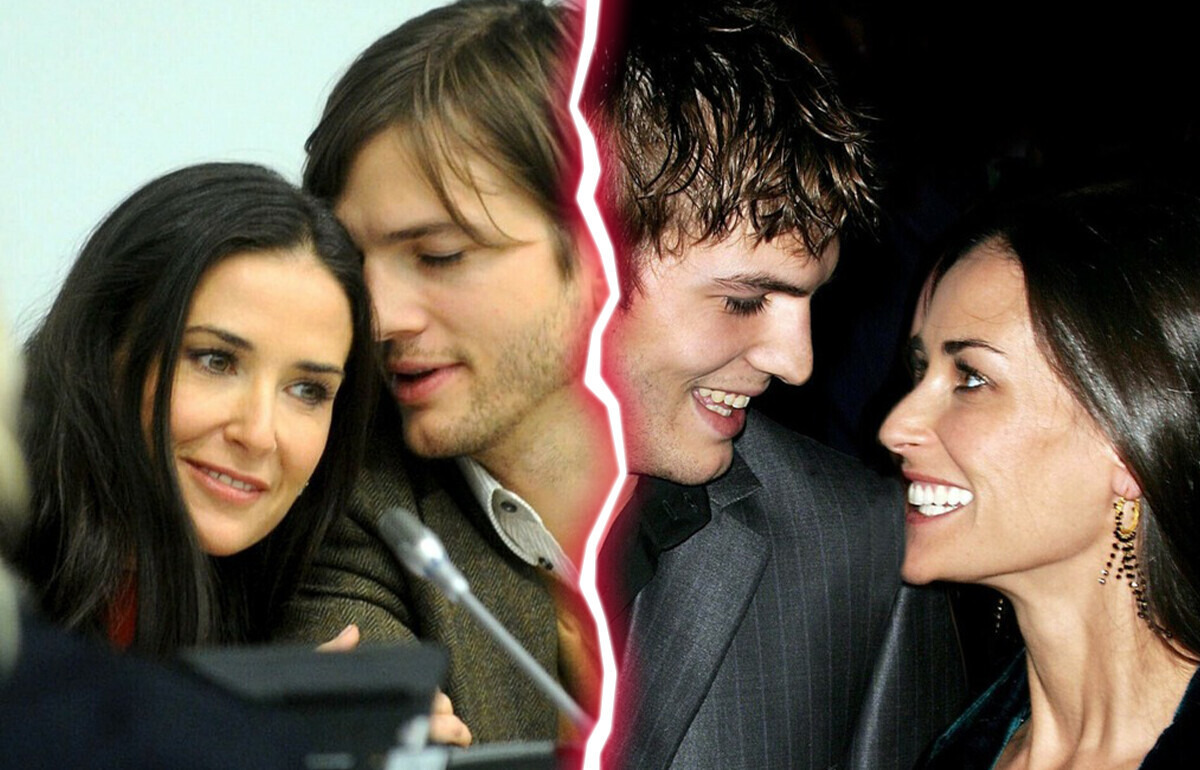
It wasn’t just the 15-year age gap that captured attention — it was the collision of eras.
She was already an established icon, a star forged in the blockbuster machine of the 1990s.
He was the fresh-faced television heartthrob who had risen to fame on That ’70s Show.
When they married in 2005, tabloids treated the relationship like a cultural experiment.
Now, at 63, Moore has once again reflected publicly on that chapter of her life — and her candid words are reigniting conversations many thought had settled years ago.
Their relationship began under a spotlight few couples could withstand.
Paparazzi tracked their vacations.
Magazine covers dissected their body language.

Late-night hosts joked about their age difference.
Yet behind the flashbulbs, Moore has described something far more personal: a deep desire to rewrite her own narrative.
At the time she met Kutcher, Moore had already lived through a high-profile marriage to Bruce Willis and years of navigating fame’s volatile currents.
She was a mother of three, balancing family with a career that had seen dizzying highs and painful scrutiny.
Kutcher represented, in many ways, a fresh start — youthful energy, optimism, and the possibility of reinvention.
But reinvention often comes at a cost.
In recent interviews reflecting on that period, Moore has spoken with striking honesty about the emotional dynamics that shaped the relationship.
Rather than portraying herself as a victim of circumstance, she frames the experience as a mirror — one that forced her to confront insecurities she had long carried.
She has acknowledged that she sometimes tried to mold herself into what she believed Kutcher wanted.
That meant pushing her body to extremes, chasing a sense of desirability, and attempting to keep pace with a partner at a different life stage.
The pressure wasn’t solely external; much of it came from within.
Hollywood has always been unforgiving toward aging women.
Moore, once celebrated as one of the industry’s highest-paid actresses, understood the machinery of image better than most.
Being in a relationship scrutinized for its age gap intensified that awareness.
The “shocking truth,” as some headlines frame it, isn’t scandal — it’s vulnerability.
Moore has openly discussed struggling with self-worth during the marriage.
She has described moments of bending her boundaries in hopes of maintaining connection.
She has admitted to ignoring her own intuition at times, prioritizing the relationship over her emotional stability.
Kutcher, for his part, has rarely spoken in detail about their marriage since their divorce in 2013.
He later married Mila Kunis, his former That ’70s Show co-star, and the two have built a family life largely shielded from tabloid drama.
Moore’s recent reflections don’t aim to ᴀssign blame.
Instead, they highlight growth.
She has emphasized that the end of the marriage forced her into a period of reckoning.
Facing public divorce while navigating personal disappointment became a catalyst for deeper self-examination.
In interviews over the past few years, she has spoken about sobriety, therapy, and rebuilding her relationship with herself and her daughters.
The fascination with Moore and Kutcher’s relationship has always been layered.
On the surface, it was celebrity spectacle.
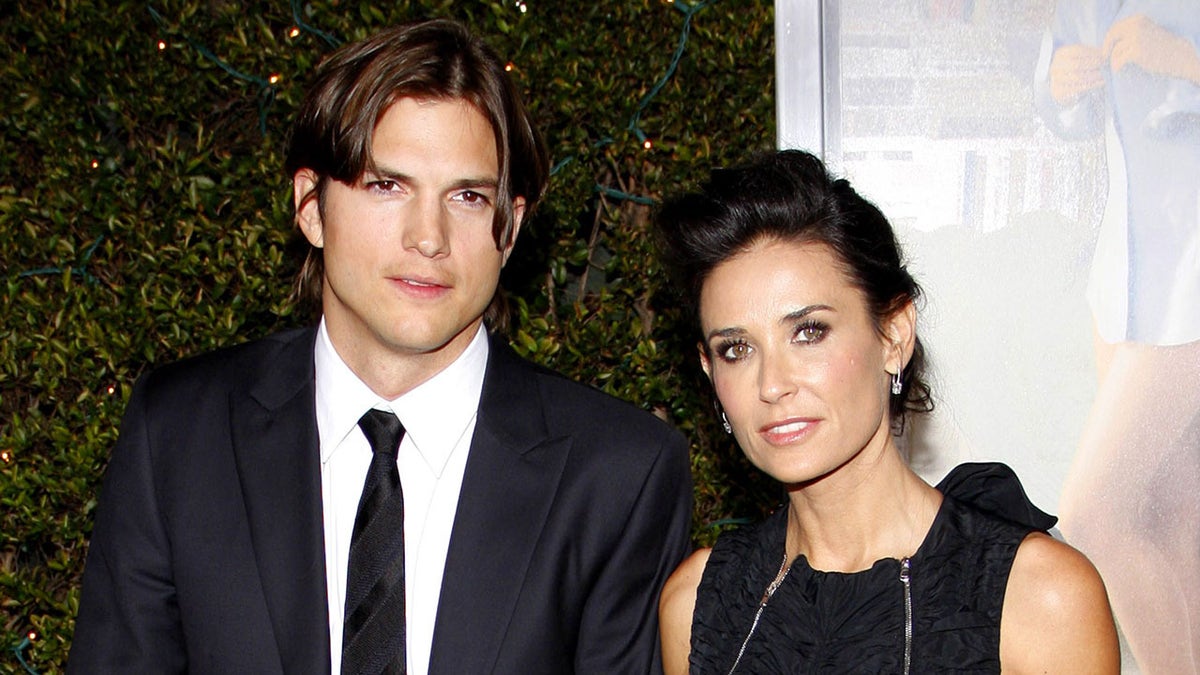
Beneath that, it was a story about age, power, reinvention, and expectation.
When they first appeared together at red-carpet events, their chemistry seemed effortless.
Kutcher often praised Moore publicly, describing her as intelligent and inspiring.
She, in turn, appeared revitalized, embracing social media early and engaging with fans in ways that felt modern and unguarded.
But high visibility magnifies cracks.
Rumors of infidelity and strain surfaced in the later years of their marriage.
Tabloids speculated relentlessly.
Moore has since acknowledged that trust issues and personal struggles compounded the challenges they faced.
The end, when it came, unfolded publicly — legal filings, statements, and the inevitable media autopsy.
What makes her present-day reflections resonate is their tone.
At 63, Moore speaks not with bitterness but with clarity.
She recognizes patterns she once couldn’t see.
She identifies the ways she compromised herself in pursuit of love.
For many fans, that honesty feels radical.
Hollywood narratives often frame relationships in binary terms: fairy tale or disaster.
Moore’s account occupies a more nuanced space.
She doesn’t deny the love they shared.
Nor does she romanticize the pain.
Instead, she describes the marriage as a chapter that revealed uncomfortable truths about her own fears.
One of those truths, she has said, was her tendency to seek validation externally.
Being with a younger partner amplified that instinct.
She wanted to prove she was enough — vibrant enough, attractive enough, relevant enough.
That pursuit, she now sees, distracted her from nurturing internal confidence.
Age-gap relationships often trigger public judgment.
In Moore and Kutcher’s case, the reversal of traditional gender dynamics — older woman, younger man — intensified scrutiny.
Moore has acknowledged feeling the weight of that narrative, even when she tried to dismiss it.
In a culture still grappling with double standards, her reflections extend beyond personal history.
They touch on broader themes of aging, female agency, and the myths surrounding reinvention.
Today, Moore’s career has experienced a renaissance of sorts.
She continues to act, produce, and engage in projects that highlight depth rather than spectacle.
Her social media presence exudes a mix of humor and introspection.
The image feels grounded.
Kutcher, meanwhile, has built a parallel path — acting, investing in tech ventures, and advocating for anti-trafficking initiatives.
Their lives have diverged significantly from the tabloid frenzy of the late 2000s.
And yet, public curiosity remains.
Perhaps it’s because their relationship symbolized something larger than romance.
It represented a cultural moment when boundaries seemed fluid — when Hollywood experimented with age narratives and digital transparency.
Moore’s willingness to revisit that era underscores a central theme of her current philosophy: ownership.
She has spoken about reclaiming her story rather than allowing headlines to define it.
By articulating her emotional truths, she shifts the narrative from scandal to self-awareness.
For readers searching for explosive revelations, the reality may feel subtler than expected.
There is no secret conspiracy, no dramatic confession of hidden betrayal beyond what was already speculated publicly.
The “shock” lies in the depth of self-critique.
It takes courage to admit, especially decades into fame, that you lost yourself in pursuit of love.
At 63, Moore appears less interested in defending past decisions and more focused on understanding them.
That evolution transforms a once-sensational marriage into a case study in growth.
The enduring lesson of her reflections isn’t about Kutcher alone.
It’s about idenтιтy.
It’s about how even powerful, successful individuals can struggle with insecurity.
It’s about recognizing when reinvention becomes self-erasure.
In revisiting her marriage, Moore doesn’t reopen wounds; she reframes them.
And in doing so, she offers a perspective that feels unexpectedly grounding in a culture addicted to spectacle.
Sometimes the most shocking truth isn’t betrayal or scandal.
It’s self-realization.


