SPAIN SUBMERGED IN SILENCE: The Great Flood No One Predicted
The rain did not arrive with spectacle.
There were no cinematic lightning strikes splitting cathedral skies, no single moment that could later be replayed as the instant everything changed.
It began as a steady fall over Spain — persistent, unremarkable, almost routine.
Forecasts predicted heavy showers.
Warnings were issued.
Life continued.
Then the water refused to leave.
By the time the true scale of the flooding became visible, entire neighborhoods were already submerged.
Streets that had carried morning commuters only hours earlier had dissolved into slow-moving canals.
Vehicles drifted aimlessly, colliding with traffic lights and storefronts.
Basement apartments filled in minutes.
Emergency lines lit up, then went silent in certain districts altogether.
Officials described it as a “historic event.
” Meteorologists reached for phrases like “unprecedented rainfall totals” and “atmospheric instability.
” But the numbers, as staggering as they were, failed to capture the mood spreading across the country — a mood that felt less like shock and more like disorientation.
Because something about this flood felt wrong.
Satellite images showed swollen rivers pushing beyond their banks with startling aggression.
Drainage systems, engineered for what planners once called worst-case scenarios, surrendered quickly.
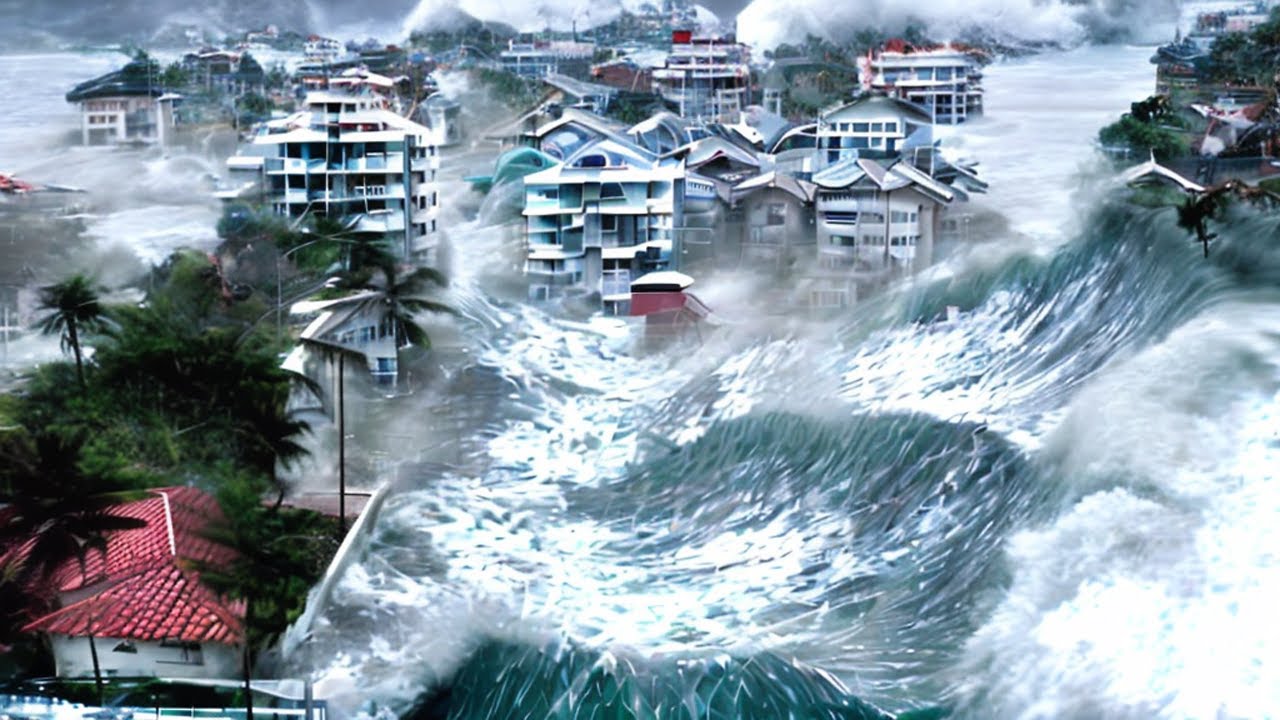
In some towns, the water did not rise gradually; it surged.
Witnesses spoke of a sound first — a deep, rolling roar — before brown torrents appeared at the end of streets, advancing faster than anyone expected.
In Valencia, entire ground floors vanished beneath opaque currents.
In smaller municipalities inland, bridges that had stood for decades twisted under pressure and gave way.
Rescue teams deployed boats where ambulances once parked.
Families climbed onto rooftops, clutching pets and plastic bags filled with documents.
Helicopters circled overhead, their blades scattering rain into spirals that blurred the horizon.
And still it rained.
Spain is no stranger to seasonal storms.
Autumn systems have tested its infrastructure before.
But veteran responders admitted privately that this was different.

The rainfall totals shattered local records in multiple regions within hours.
Reservoirs designed to control overflow approached capacity simultaneously.
Rivers that rarely share headlines began trending worldwide.
The first fatalities were reported cautiously.
Then more followed.
Each confirmation landed heavily, yet numbers alone did not explain the creeping unease.
Social media filled with footage — doorbell cameras capturing walls of water slamming into homes, drivers abandoning cars as currents swallowed roadways, supermarket aisles transformed into reflective pools under flickering fluorescent lights.
Some clips were verified.
Others were not.
The line blurred quickly.
Authorities urged calm, emphasizing that emergency protocols were active.
Military units were mobilized to ᴀssist with evacuations.
Temporary shelters opened in schools and sports arenas.
Public statements focused on resilience, on solidarity, on recovery plans already forming.
But outside official briefings, questions multiplied.
Why had certain flood barriers failed so abruptly? Why did warning alerts in some districts arrive after water levels were already knee-deep? Residents in low-lying neighborhoods claimed they had little time to react.
Others insisted the severity of the system had been understated days before landfall.
Meteorologists pointed to a rare convergence of atmospheric conditions — a slow-moving low-pressure system colliding with unusually warm Mediterranean waters, generating relentless moisture.
Climate researchers noted that rising sea temperatures amplify extreme rainfall events.
Statistically, they said, such floods are becoming more probable.
Yet probability offers little comfort when furniture floats past bedroom windows.
Insurance analysts began calculating projected losses, numbers stretching into the billions.
Infrastructure experts ᴀssessed highways undermined by erosion.
Rail lines buckled.
Power grids faltered in isolated pockets.
The economic shockwaves, analysts warned, could linger long after the water recedes.
Still, amid the data and damage reports, there was an undercurrent of speculation.
Spain has invested heavily in climate adaptation in recent years.
Flood defenses were upgraded.
Urban drainage systems modernized.
So how did entire districts succumb so quickly? Engineers cautioned against simplistic conclusions; no system is infallible under record-breaking rainfall.
But residents standing ankle-deep in mud were less patient with nuance.
Late-night talk shows featured heated debates.
Some commentators framed the disaster as a grim preview of a warming world.
Others accused regional planners of complacency.
A few voices — amplified online — hinted at darker explanations: infrastructure mismanagement, neglected maintenance, warnings softened to avoid panic.
Conspiracy thrives in uncertainty.
Meanwhile, the human toll expanded quietly.
Hospitals treated cases of hypothermia and minor injuries.
Mental health H๏τlines reported surges in calls from displaced families.
Volunteers formed chains to distribute bottled water and blankets.
In submerged streets, neighbors who had barely exchanged greetings before the storm now shared generators and phone chargers.
Then came the pH๏τographs.
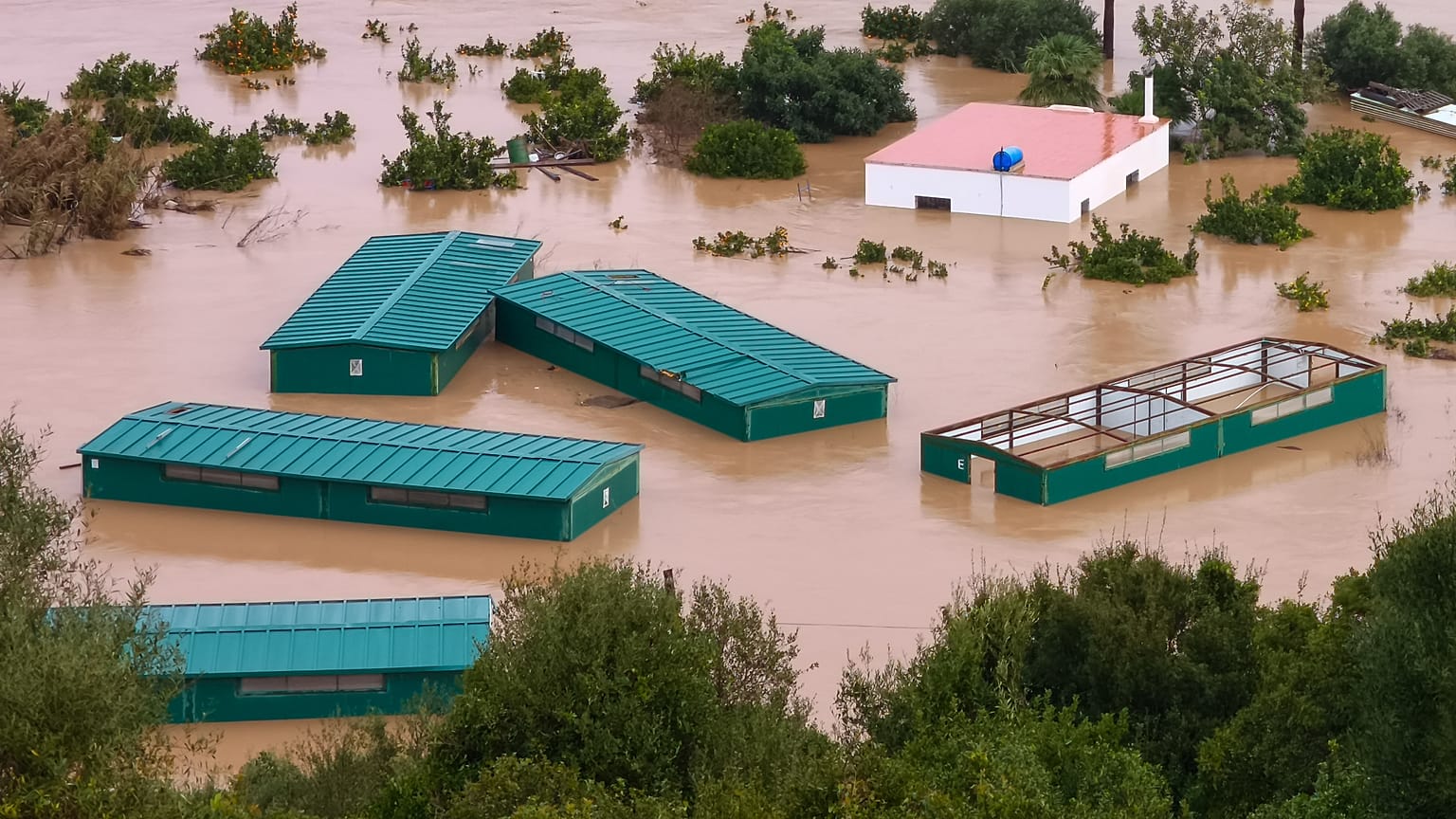
Drone footage revealed geometric patterns where neighborhoods once stood — rooftops protruding from muddy expanses like islands in a temporary sea.
Cars clustered in unnatural formations against collapsed walls.
In one widely circulated image, a playground slide emerged from brown water, its bright red plastic absurd against the devastation.
Experts emphasized that attributing a single event to climate change requires caution.
Extreme weather has multiple drivers.
But privately, some climatologists admitted that the intensity aligned with broader trends.
Warmer air holds more moisture.
When that moisture releases, it does so violently.
The rain finally slowed after days that felt longer than calendars could measure.
Skies cleared unevenly, revealing a landscape altered in ways both visible and subtle.
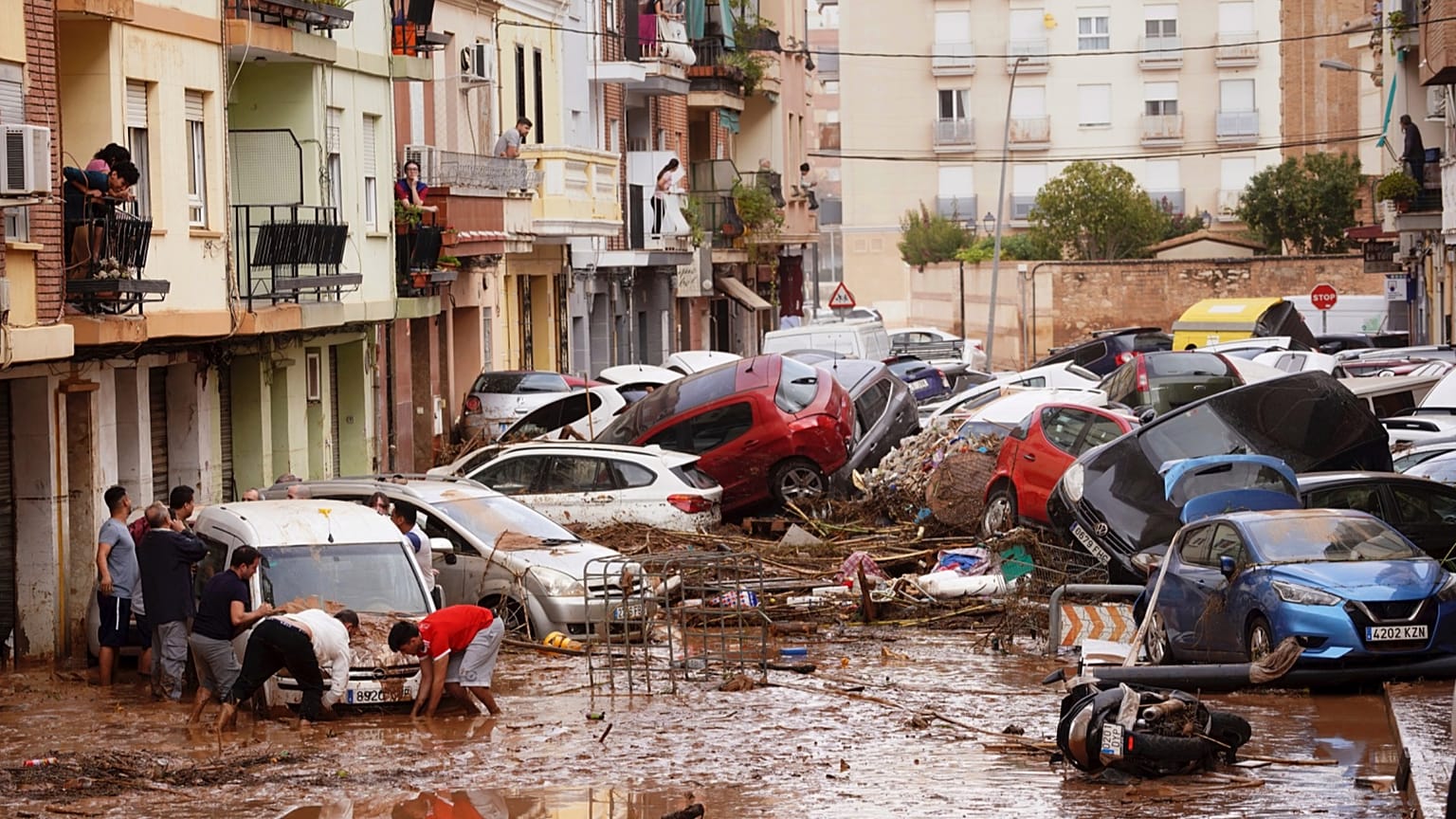
Mud coated facades.
Debris lined sidewalks.
The smell — a mix of damp concrete, fuel, and silt — lingered.
Recovery began almost immediately, but it unfolded under tension.
Financial aid packages were announced.
Reconstruction funds promised.
Politicians toured affected areas in rubber boots, offering condolences.
Yet skepticism simmered.
In community meetings, residents demanded transparent investigations into drainage failures and emergency response timing.
In quieter corners, another fear surfaced: that this flood would not remain an anomaly.
Climate projections for southern Europe have long warned of intensifying extremes — longer droughts punctuated by heavier rainfall.
If this event represents a threshold rather than an outlier, then infrastructure standards may require radical revision.
Urban planners may need to rethink zoning in flood-prone areas entirely.
Insurance markets are already recalibrating risk models.
But beyond policy and planning lies something less tangible: trust.
Trust in forecasts.
Trust in preparedness.
Trust that warnings will arrive early enough next time.
As waters receded, stories emerged of narrow escapes.
A family rescued minutes before their staircase collapsed.
An elderly couple guided through waist-high currents by neighbors they had known for decades.
A bus driver who rerouted instinctively, avoiding what later became an impᴀssable torrent.
These narratives offered relief, but they also underscored fragility.
Spain’s flooding is being cataloged as historic.
Records will show rainfall totals, river crest heights, financial losses.
But statistics flatten experience.
They do not capture the silence after sirens fade.
They do not measure the way people scan clouds differently now.
Some scientists argue that extreme events are communicating a message humanity has delayed interpreting.
Others caution against fatalism.
Adaptation is possible.
Mitigation remains within reach.
Yet for those who watched water swallow their streets, abstract debates feel distant.
The deeper controversy may not revolve around what happened — the meteorological mechanics are increasingly understood — but around what comes next.
Will rebuilding simply restore what was there, or will it confront the uncomfortable possibility that such floods are no longer rare interruptions but emerging patterns?
In the aftermath, Spain stands at a crossroads shaped not only by water but by narrative.
Was this a tragic anomaly, a storm amplified by unique atmospheric conditions? Or was it a preview, a stark illustration of a future edging closer than many policymakers anticipated?
Officials speak of resilience.
Experts speak of adaptation.
Citizens speak of survival.
The floodwaters have withdrawn from many streets, but they have left behind a residue of doubt that will not evaporate easily.
Because when rain falls again — as it inevitably will — Spain will not just be watching the sky.
It will be listening for that distant roar, wondering whether history is repeating itself, or accelerating.


