A Tipping Point in Tehran?
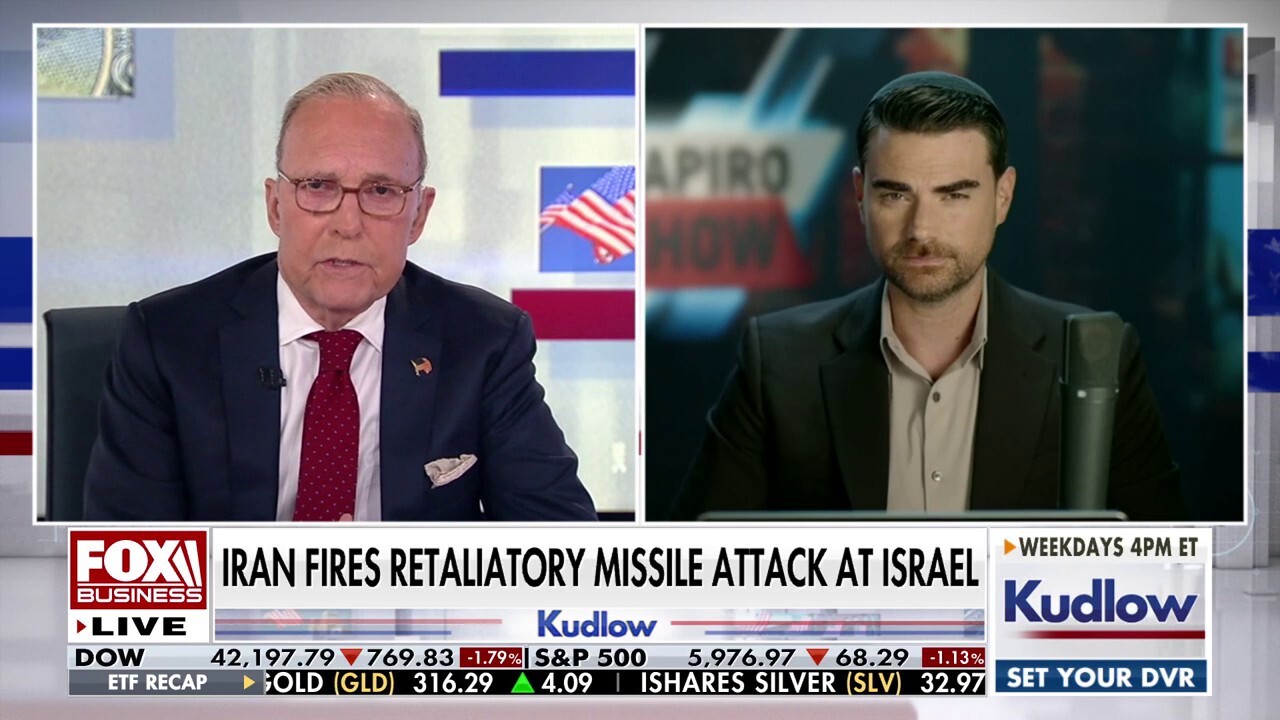
As tensions rise in the Middle East, speculation is growing over what may lie ahead for Iran — and how the United States might respond.
Recent military positioning, stalled nuclear negotiations, and increasing internal unrest inside Iran have fueled debate among policymakers and commentators alike.
Some believe the moment represents not merely another diplomatic standoff, but a rare geopolitical inflection point.
At the center of the discussion is Iran’s current vulnerability.

Economically, the country remains under heavy sanctions.
Foreign investment is scarce.
Inflation has eroded purchasing power, and the Iranian currency continues to struggle.
For many citizens, daily life has become increasingly difficult, with rising costs and limited opportunity.
This economic pressure has contributed to recurring waves of protests over the past year — protests that have been met with force rather than reform.
Supporters of a tougher U.S. stance argue that Iran’s leadership is weaker now than it has been in years.

They point to widespread dissatisfaction among the population and the regime’s growing international isolation.
From this perspective, the current moment presents a strategic opportunity — not necessarily for military invasion, but for recalibrated pressure.
The military buildup in the region has added another layer of uncertainty.
Satellite imagery reportedly showing U.S. aircraft deployments and naval presence near Iran has sparked speculation about potential strikes.
Yet most analysts emphasize that a full-scale ground invasion remains highly unlikely.

Modern military strategy favors precision action over prolonged occupation, particularly in regions with complex political landscapes.
The more immediate flashpoint remains Iran’s nuclear program.
Iranian officials have reiterated that uranium enrichment is “non-negotiable,” signaling little willingness to compromise in ongoing talks.
For Washington and its allies, the concern is less about immediate war and more about long-term destabilization.
A nuclear-capable Iran would dramatically alter regional security calculations, potentially triggering an arms race in the Middle East.
However, geopolitics rarely operates in simple binaries.
Interestingly, some regional powers — including countries historically opposed to Iran — may not necessarily welcome regime collapse.
A weakened but predictable adversary can be easier to manage than an uncertain power vacuum.
A secular, economically revitalized Iran could emerge as a formidable compeтιтor in energy markets and regional influence.
In that sense, strategic calculations extend beyond ideology and into economic rivalry.
This underscores a fundamental truth about international relations: power shifts create ripple effects.

If Iran were to undergo significant political transformation, it would not only reshape its own society but also recalibrate alliances, trade routes, and security arrangements across the region.
For the United States, the challenge lies in balancing deterrence with restraint.
Escalation risks unintended consequences — retaliatory missile strikes, proxy conflicts, or broader regional instability.
Yet inaction carries its own risks, particularly if nuclear development advances unchecked.
Some analysts advocate a “third path” approach: increasing targeted pressure on the regime’s financial networks while expanding support for the Iranian people.
This could involve strengthening digital communication access, amplifying independent journalism, and ensuring sanctions focus on elite power structures rather than ordinary citizens.
History offers sobering lessons.
Regime change imposed externally has often produced unintended chaos.
At the same time, ignoring internal movements for reform can allow repression to deepen.
The key distinction lies in empowering civil society rather than directing outcomes from abroad.
Inside Iran, the population is young, educated, and increasingly connected to the outside world.

Public frustration is driven not only by economic hardship but also by social restrictions and political limitations.
While the government maintains strong security control, public sentiment appears to be shifting in ways that cannot be permanently suppressed.
The coming months may therefore hinge less on dramatic military strikes and more on sustained strategic pressure — economic, diplomatic, and informational.
Military posturing can serve as leverage in negotiations, but the long-term outcome will likely depend on internal dynamics within Iran itself.
What makes this moment especially significant is timing.

Regional alliances are evolving.
Energy markets are shifting.
Domestic politics in both the United States and Iran are entering new phases.
When multiple pressures converge simultaneously, small decisions can produce outsized consequences.
Whether Iran’s current leadership doubles down on defiance or adjusts course remains uncertain.
What is clear, however, is that the stakes extend far beyond one nuclear negotiation or one military deployment.
The balance of power in the Middle East — and potentially global security — could be shaped by how this chapter unfolds.
In geopolitics, opportunities are fleeting.
Weakness can either entrench authoritarianism or open doors to transformation.
Much will depend on whether external actors choose escalation, strategic patience, or calibrated support for change from within.
One thing is certain: the situation in Iran is more fragile — and more consequential — than it appears on the surface.


