New York’s Political Crossroads: Crisis, Claims, and Conflicting Narratives
A wave of dramatic claims has recently surrounded Zohran Mamdani, with critics portraying his leadership as facing an immediate and severe crisis.
However, a closer look reveals a far more nuanced situation shaped by political rhetoric, policy disagreements, and competing interpretations of events.
The controversy largely stems from reactions to Mamdani’s policy positions, particularly on immigration and taxation.
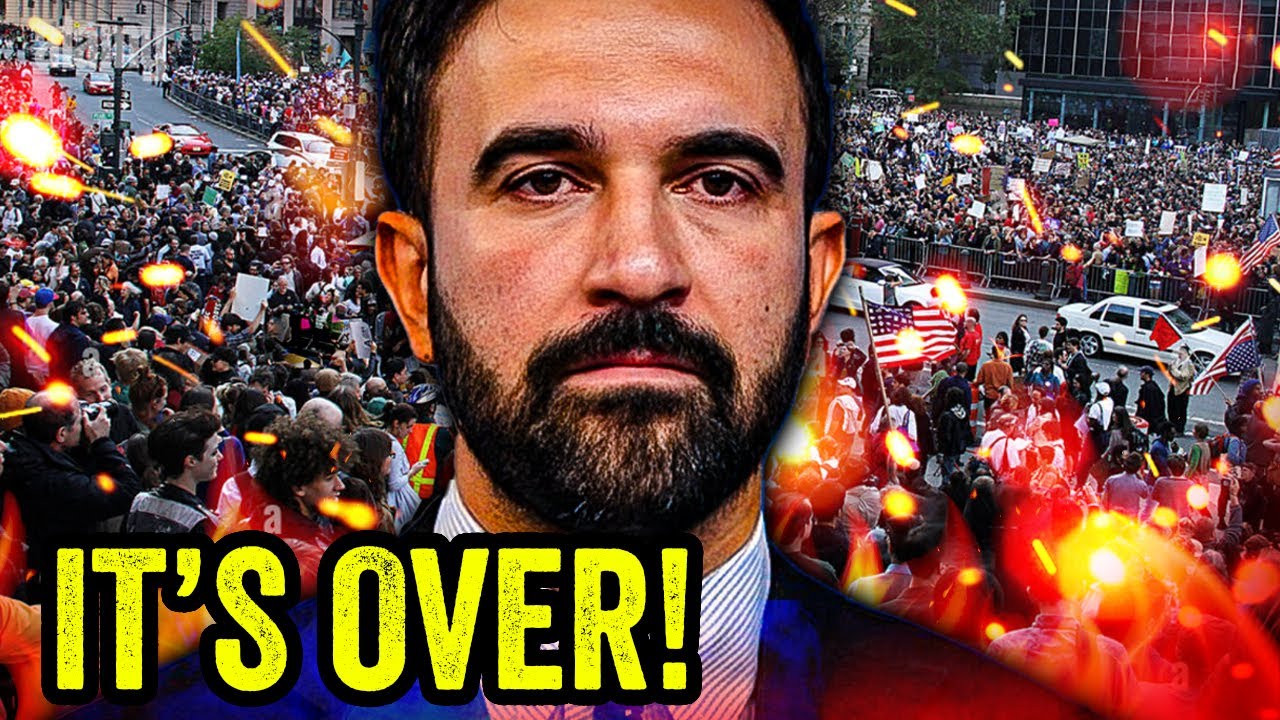
Some commentators have framed his stance on limiting cooperation with federal immigration enforcement as a direct challenge to national authority.
This has led to strong responses from political opponents, including references to potential legal consequences.
Yet, in reality, such tensions between local and federal governments are not new.
Cities across the United States have long debated the balance between local autonomy and federal enforcement, especially on immigration issues.
New York City has historically positioned itself as a place that offers certain protections to undocumented residents, a stance supported by many but criticized by others.

The recent deportation case involving a city-linked employee has further intensified the debate.
Federal authorities emphasize the enforcement of immigration law, while local leaders often highlight humanitarian concerns and community impact.
This clash reflects a broader national divide rather than a unique or unprecedented event.
At the same time, economic concerns have been amplified in public discussions.
Some voices claim that businesses are preparing to leave New York in large numbers due to proposed policies.
While it is true that companies often evaluate tax environments and regulatory conditions, large-scale economic shifts typically occur over time rather than in sudden waves.
New York remains one of the world’s largest economic centers, with deep financial, technological, and cultural infrastructure that is not easily relocated.
Another major point of criticism involves Mamdani’s proposed tax policies.
Debates have emerged around how such policies would be implemented and their potential impact.
Critics argue that misunderstandings about tax structures could lead to unrealistic expectations.
Supporters, however, view these proposals as part of a broader effort to address inequality and fund public services.
Disagreements over taxation are a central feature of political discourse, particularly in large cities where budgets and social programs are complex.
Adding another layer to the situation is the role of state leadership.
Under New York law, significant tax changes require approval at the state level, meaning that any ambitious fiscal plan depends on cooperation between city and state governments.
This dynamic often creates friction, especially when political priorities differ.
Governor-level decisions can significantly influence what policies ultimately move forward, regardless of campaign promises made at the city level.
The business community’s response is also being closely watched.
Investors and companies frequently react to uncertainty, but their decisions are influenced by a wide range of factors beyond a single political figure.
Workforce availability, infrastructure, market access, and long-term growth potential all play critical roles.
While some may consider relocating, others continue to invest heavily in New York due to its unique advantages.
What is clear is that perception plays a powerful role in shaping the narrative.
Statements about “panic” or “collapse” can spread quickly, especially in a highly polarized environment.
These narratives often reflect political positioning as much as objective reality.
For Mamdani, the current moment represents both a challenge and an opportunity.
Navigating criticism while advancing policy goals requires careful communication and strategic decision-making.
Public confidence can shift rapidly, particularly when multiple issues converge at once.
However, political careers are rarely defined by a single controversy.
Outcomes depend on how leaders respond, adapt, and engage with both supporters and critics.
New York City, with its scale and complexity, has long been a stage for intense political debate.
Moments of tension are not unusual, and they often reflect deeper questions about governance, economics, and social priorities.
As this situation continues to unfold, it serves as a reminder that political narratives are rarely as simple as they first appear.
Behind every headline lies a broader context shaped by competing interests, perspectives, and interpretations.
The real story is not just about one leader or one policy.
It is about how a city—and a country—grapples with change in an increasingly divided landscape.


