In 1956, the world watched in awe as Grace Kelly married Prince Rainier III in what was widely celebrated as the ultimate fairy tale.
An estimated 30 million people tuned in to witness the union of Hollywood royalty and European nobility.
To the public, it was a dream come true—a glamorous actress becoming a real-life princess.

But beneath the polished surface, the reality of this marriage was far more complex and far less romantic than it appeared.
Before stepping into royal life, Grace Kelly had already reached extraordinary heights in Hollywood.
At just 25 years old, she won an Academy Award and became one of the most sought-after actresses of her time.
Her collaborations with legendary director Alfred Hitchcock cemented her status as a cinematic icon.
Yet behind the scenes, her personal life was carefully managed by studios determined to preserve her image.
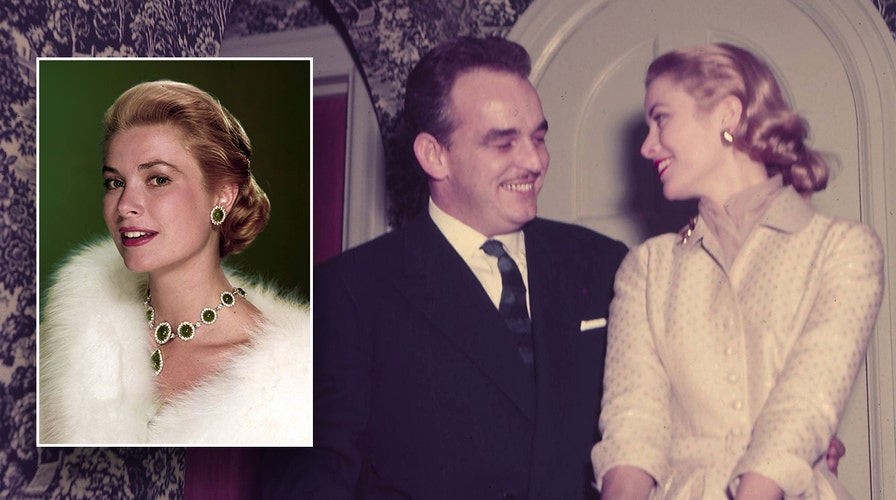
During the 1950s, Hollywood operated under strict control, shaping public perception and suppressing any scandal that could damage a star’s reputation.
Grace was not just an actress—she was a carefully curated brand.
At the same time, far from the film sets of California, Monaco faced its own challenges.
The small principality needed global attention, stability, and most importantly, an heir to secure its future.
For Prince Rainier III, marriage was not just a personal matter—it was a political necessity.

When Grace Kelly entered the picture, she represented the perfect solution.
Their meeting in 1955 has often been portrayed as romantic destiny, but many believe it was also a calculated alignment of mutual needs.
Within months, their engagement was announced, and preparations for the wedding began at an extraordinary pace.
Behind the scenes, the arrangement included expectations that extended far beyond love.
Grace underwent a medical examination to confirm her ability to bear children, highlighting the dynastic pressures placed upon her.
This was not merely a marriage—it was, in many ways, a strategic alliance.
Even the wedding itself carried hidden obligations.
Hollywood studio Metro-Goldwyn-Mayer secured the rights to film the ceremony as part of a deal releasing Grace from her contract.
Her final performance in Hollywood was, symbolically, her own wedding.
With that moment, her acting career came to an abrupt and permanent end.
Inside the palace, life was vastly different from the glamorous image presented to the world.
Grace’s films were reportedly restricted in Monaco, limiting public access to the work that had made her famous.
Opportunities to return to acting—including a potential collaboration again with Alfred Hitchcock—were ultimately declined.
Public expectations and royal responsibilities left little room for her former idenтιтy.
She transitioned into her role as princess with grace and dedication, focusing on charity work and cultural initiatives.
Yet many observers believe that a part of her—her artistic spirit—remained unfulfilled.
Her life became one of duty, where personal desires were often secondary to public expectations.
Then came the tragic turning point that would forever shape her legacy.
On September 13, 1982, Grace Kelly was driving along a winding road in Monaco when her car suddenly veered off course.
According to official reports, she suffered a stroke while driving, which led to the an accident.
She pᴀssed away the following day, leaving the world in shock.
The circumstances surrounding her death have remained a subject of speculation.
While the official explanation was accepted, some questions lingered, and the case was never extensively reopened.
For many, this lack of closure added another layer of mystery to an already complex life.
Grace Kelly’s story continues to captivate because it challenges the idea of the perfect fairy tale.
Her life was shaped by expectations—first by Hollywood, then by royalty.
In both worlds, image played a central role, often overshadowing the individual behind it.
She embodied elegance, poise, and beauty, yet her journey reveals the cost of maintaining such perfection.
Was she a star who became a princess, or a woman who sacrificed one life for another?
The answer may never be fully known.
What remains undeniable is that her story is not just one of glamour, but of transformation, compromise, and enduring mystery.
And perhaps that is why, even decades later, the world continues to look beyond the fairy tale—searching for the truth behind the legend.


