What was expected to be a historic and symbolic royal visit has instead turned into a deeply controversial episode that is raising questions about the inner workings of modern imperial diplomacy.
The planned European tour by Emperor Naruhito and Empress Masako was supposed to mark a new chapter in Japan’s international relations.
The visit, scheduled for mid-2026, would include official trips to the Netherlands and Belgium, celebrating diplomatic milestones and strengthening long-standing ties.
It was also expected to be the first time in decades that such a multi-country visit would take place under the current era.
However, behind the official announcements, a far more complex and sensitive situation was unfolding.

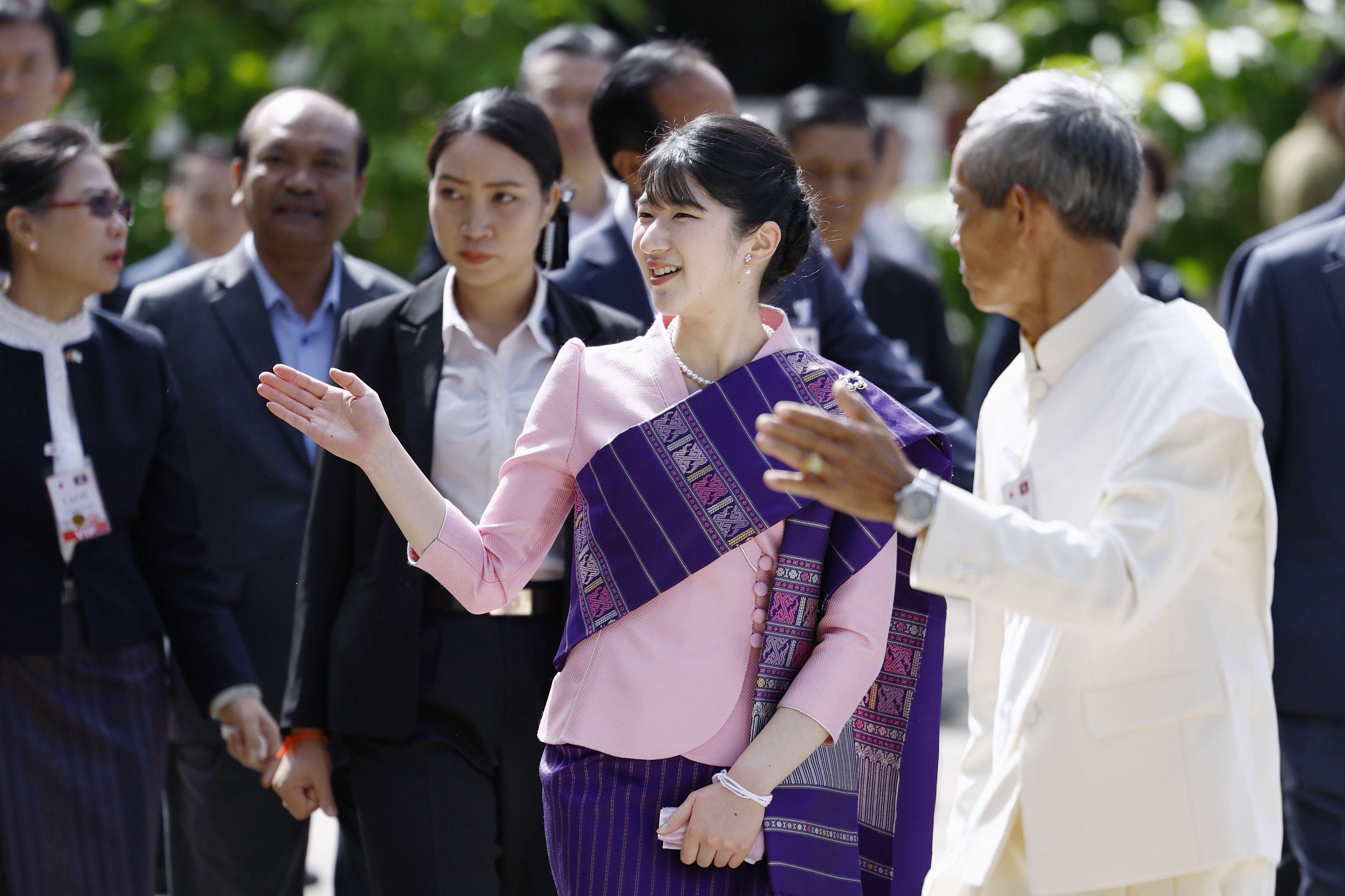
There had been serious and advanced discussions about Princess Aiko accompanying her parents on this important diplomatic journey.
This possibility carried profound symbolic meaning.
It was not merely about attendance.
It represented the emergence of a new generation in Japan’s imperial diplomacy.
To understand why this mattered so much, one must look back nearly two decades.

In 2006, during a deeply challenging period for Empress Masako, the Dutch royal family extended an extraordinary gesture of hospitality.
They invited the imperial family for a private stay, offering comfort and support away from public pressure.
During that visit, a young Princess Aiko formed a memorable bond with Princess Catharina-Amalia.
The two children, despite language differences, connected naturally and spent time together in what many described as a deeply touching moment of human connection beyond royal protocol.
That shared experience created a lasting relationship between the two royal families.

Now, nearly twenty years later, both princesses have grown into prominent figures representing the future of their respective monarchies.
A reunion during the upcoming visit would have symbolized continuity, friendship, and a shared vision for the next generation of royal diplomacy.
Belgium added another layer to this narrative.
Princess Elisabeth, close in age to Princess Aiko, represents yet another pillar of future European royalty.
A gathering of these young royals would have marked a powerful moment of generational transition on the global stage.
For many observers, this was more than ceremony.
It was history in the making.
But just as preparations appeared to be progressing smoothly, reports began to surface of internal opposition.
According to multiple sources, Crown Princess Kiko intervened behind the scenes, urging that Princess Aiko should not participate in the European visit.
This intervention reportedly came with significant pressure directed toward the Imperial Household Agency.
The atmosphere within official circles reportedly shifted dramatically.
Plans that had been moving forward quietly were suddenly thrown into uncertainty.
For the Dutch and Belgian royal families, the disappointment was said to be considerable.
They had anticipated not only a formal visit, but a meaningful personal reunion that carried deep emotional and symbolic value.
The situation highlights a rarely visible side of diplomacy.
Behind formal ceremonies and public smiles, complex human dynamics and internal power structures often shape outcomes.
This case appears to be a striking example of that reality.
Yet what followed next surprised even seasoned observers of international relations.
King Willem-Alexander of the Netherlands reportedly chose not to remain pᴀssive.
Instead, he is said to have considered an extraordinary step.
Rather than relying solely on standard diplomatic channels, he attempted to extend a direct invitation to Princess Aiko herself.
Such a move would be highly unusual in diplomatic practice.
Royal invitations are typically handled through formal insтιтutions and established protocols.
By seeking a more direct approach, the Dutch king was signaling something far more significant than simple courtesy.
It suggested determination.
It suggested urgency.
And perhaps most importantly, it suggested a willingness to bypᴀss obstacles in order to preserve a meaningful connection between royal families.
If successful, such an invitation would have been difficult to block or ignore.
It would carry both symbolic and diplomatic weight that few could easily dismiss.
Observers have described this as an exceptionally rare and bold maneuver.
It reflects not only personal goodwill, but also a deeper recognition of the stakes involved.
At its core, this situation is about more than a single visit.
It is about the direction of royal diplomacy in a changing world.
The current era has emphasized a more human, family-oriented image of the monarchy.
This approach has resonated strongly with the public.
It presents the imperial family not just as symbols, but as relatable figures navigating shared human experiences.
However, the reported internal tensions suggest that not everyone agrees on how that future should unfold.
Traditional structures and longstanding dynamics continue to exert influence.
These forces can shape decisions in ways that are not always visible to the public.
The unfolding situation places Japan’s imperial diplomacy at a crossroads.
Will it continue evolving toward a more open and generationally inclusive model?
Or will internal pressures reinforce a more controlled and traditional approach?
The answer remains uncertain.
What is clear, however, is that the actions taken by the Dutch king have added a new and unexpected dimension to the story.
His reported willingness to act outside conventional channels underscores the importance placed on this moment.
It also highlights how personal relationships between royal families can influence broader diplomatic narratives.
As the planned visit approaches, attention continues to grow.
Observers are watching closely to see whether Princess Aiko will ultimately participate.
The outcome will carry implications far beyond a single trip.
It will shape perceptions of how modern monarchy adapts to internal challenges and external expectations.
In the end, this is not just a story about protocol or politics.
It is a story about change.
About tradition confronting transformation.
And about the delicate balance between personal relationships and insтιтutional power.
Whatever the final decision may be, one thing is certain.
The quiet corridors of royal diplomacy are no longer as predictable as they once seemed.


