A Quiet Moment, A Powerful Message: The Story Stirring Royal Conversations
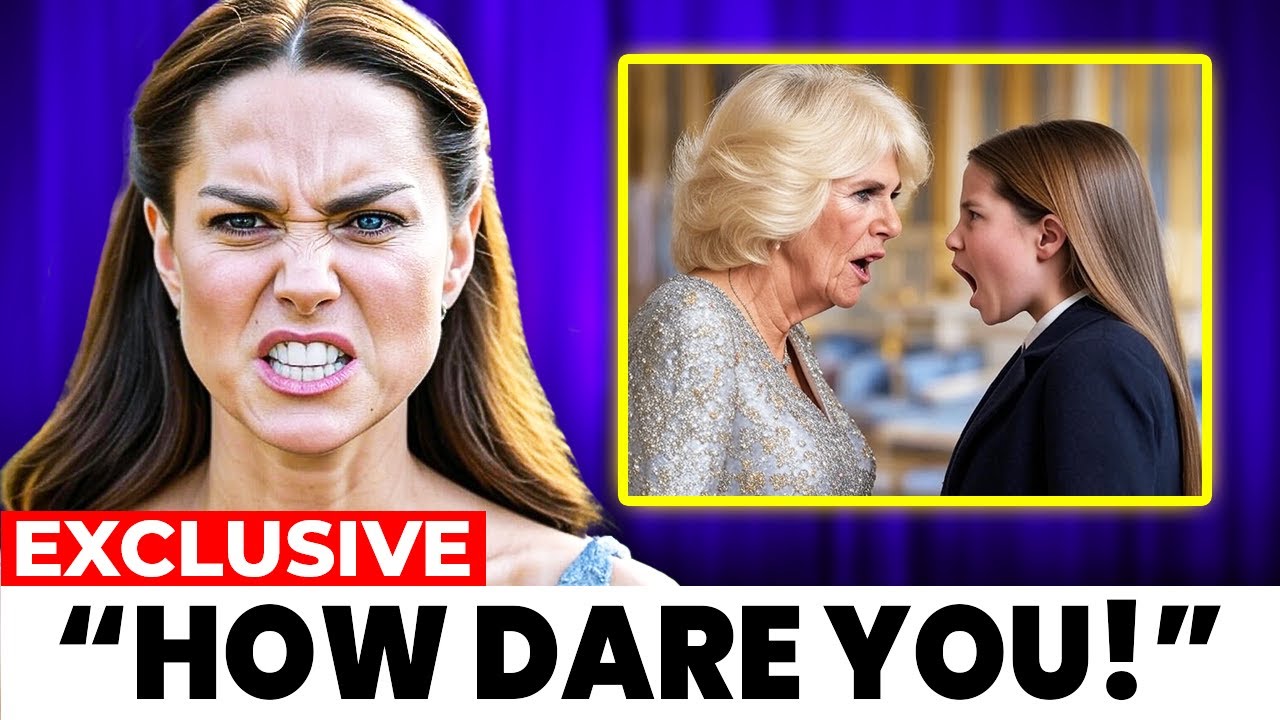
A viral narrative has taken hold online, claiming that Catherine, Princess of Wales confronted Queen Camilla after an alleged tense exchange involving Princess Charlotte at the Sandringham Estate.
According to the story, Catherine’s calm but firm response not only defended her daughter but also “changed the monarchy forever.”
It is a compelling narrative—emotionally charged, vividly detailed, and perfectly structured to capture public imagination.
However, there is a crucial distinction that must be made: there is no verified evidence from credible sources confirming that such an incident ever took place.
No official statements have been issued by Buckingham Palace or Kensington Palace.
Established royal correspondents and reputable news organizations have not reported the event.
Instead, the story appears to originate from online commentary and highly dramatized content rather than confirmed reporting.
Despite this, the reason the story resonates so strongly lies in the themes it explores.

At its core, it reflects public fascination with the personalities and relationships within the royal family—particularly between generations.
Catherine is widely perceived as a future queen who embodies composure, emotional intelligence, and modern values.
Her public image is carefully built around calm authority and dedication to family.
Stories portraying her as a protective mother standing up for her child naturally align with how many people already view her.
Similarly, Queen Camilla’s journey within the monarchy has been complex.
Once a controversial figure due to her relationship with King Charles III during his marriage to Princess Diana, she has spent years rebuilding public acceptance.
Today, she is recognized as a senior royal with an established role, yet narratives about tension or variation within the family still capture attention due to that history.
The inclusion of Princess Charlotte in the story adds another emotional layer.
As a young royal growing up in the public eye, she symbolizes the future of the monarchy.
Any suggestion involving her treatment—especially in a negative context—immediately heightens public sensitivity and interest.
What also fuels the spread of such stories is their detailed, almost cinematic storytelling.
Descriptions of quiet rooms, subtle gestures, and carefully crafted dialogue create a sense of authenticity, even when the events themselves are unverified.
This style blurs the line between narrative storytelling and factual reporting, making it harder for audiences to distinguish between the two.
In reality, the royal household operates with a high level of discretion.
Private family interactions—especially those involving children—are rarely, if ever, disclosed in such detail.
When genuine tensions arise, they are typically managed behind closed doors and communicated, if at all, through carefully controlled channels.
This does not mean that disagreements or difficult moments never occur within the royal family.
Like any family, they likely experience differences and differing perspectives.
However, transforming those possibilities into highly specific, dramatic scenes without evidence risks distorting public understanding.
Another important factor is the modern media environment.
Social media platforms and video-sharing sites often reward content that is emotionally engaging and sensational.
As a result, stories that amplify conflict, even without verification, can spread rapidly and gain credibility simply through repeтιтion.
The idea that a single private exchange could “change the monarchy forever” also reflects a broader tendency to frame royal narratives in dramatic terms.
In reality, insтιтutional change within the monarchy is gradual, shaped by long-term decisions, public expectations, and leadership over time—not by one undocumented moment.
Still, the popularity of this story reveals something meaningful.
It highlights what audiences want to see in the monarchy moving forward: compᴀssion, emotional awareness, and a willingness to challenge outdated norms.
Whether or not the incident occurred, the values attributed to Catherine in the narrative—calm strength, maternal protection, and quiet authority—are clearly admired.
Ultimately, this story should be understood not as confirmed history, but as a reflection of public perception and imagination.
It blends real figures with fictionalized events to create a powerful, shareable narrative.
As with any viral claim involving high-profile individuals, the most important approach is critical thinking.
Without credible verification, such stories remain speculative—no matter how compelling they may seem.
What remains real, however, is the ongoing evolution of the British royal family.
Figures like Catherine, William, and others will continue to shape its future, not through whispered confrontations, but through visible actions, public service, and the values they consistently demonstrate.


