The dramatic account of a televised confrontation between Senator John Kennedy and Representative Ilhan Omar has circulated widely online, framed as a decisive political takedown that left one side speechless and the other victorious.
The story is detailed, cinematic, and emotionally charged—yet it also raises important questions about how political narratives are constructed, amplified, and believed in the digital age.
At first glance, the scenario appears plausible: a high-stakes CNN town hall, a seasoned moderator, a divided audience, and two well-known political figures representing sharply different viewpoints.
The description leans heavily on familiar elements of modern political media—carefully prepared talking points, live audience reactions, and the ever-present possibility of viral moments.
However, there is no credible public record of such an event occurring in the way it is described.
No verified broadcast, transcript, or reporting from established news organizations supports the claim of a four-minute on-air silence following a confrontation of this nature.
In an era where major political exchanges are documented, analyzed, and archived almost instantly, the absence of corroboration is significant.

What this suggests is not necessarily that the themes are fictional, but that the narrative itself has been constructed—likely as a form of political storytelling designed to persuade, provoke, or reinforce existing beliefs.
The structure of the story follows a recognizable pattern.
It builds tension through vivid detail, presents a clear protagonist and antagonist, and culminates in a moment of dramatic resolution.
The use of specific numbers, documents, and procedural language adds an air of credibility, even when those elements are not independently verified within the context provided.
This technique is increasingly common in politically charged content.
By blending factual references with speculative or exaggerated claims, such narratives can create a powerful impression of authenticity.

Readers may recognize certain real-world controversies or statements, which lends weight to the overall story, even if the central event itself did not occur as described.
The portrayal of silence as a decisive outcome is particularly noteworthy.
In televised debates and town halls, silence can carry symbolic meaning, but it is rarely as absolute or prolonged as depicted here.
Broadcast formats are тιԍнтly controlled, and moderators typically intervene to maintain the flow of discussion.
A four-minute uninterrupted silence on live television would be highly unusual and almost certainly documented across multiple platforms.
Beyond the question of accuracy, the story reflects broader dynamics in contemporary political discourse.
It highlights how narratives are often framed in terms of victory and defeat, with complex issues reduced to moments of perceived dominance.
This framing can obscure the substantive policy debates that underlie political disagreements.
It also underscores the role of social media in amplifying certain types of content.
Short clips, dramatic anecdotes, and emotionally charged storytelling tend to spread more rapidly than nuanced analysis.
As a result, stories like this can gain traction even in the absence of verification, shaping perceptions before facts are fully examined.
Another important aspect is the use of selective information.
The narrative references real controversies and public statements ᴀssociated with political figures, but presents them in a curated sequence designed to support a particular conclusion.
Without broader context, such presentations can create a misleading impression of coherence or inevitability.

For readers and viewers, this highlights the importance of critical evaluation.
Questions such as “Where did this happen?”, “Is there a full recording?”, and “Have reputable sources reported this?” are essential tools for distinguishing between verified events and constructed narratives.
None of this diminishes the reality that political debates can be intense, contentious, and highly consequential.
Public officials are regularly scrutinized, challenged, and held accountable in a variety of forums.
But the line between documented घटना and dramatized storytelling is one that requires careful attention.
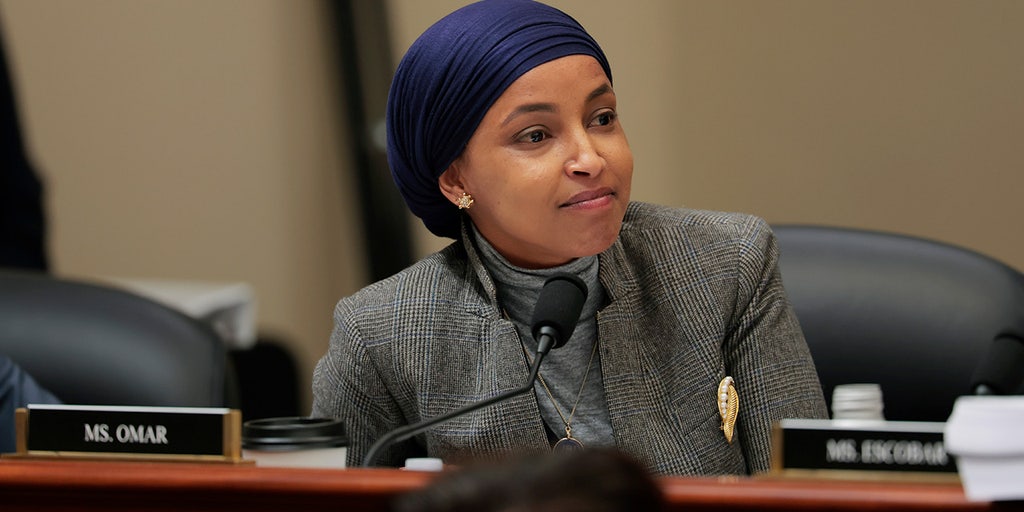
In the end, the viral story says as much about the current media environment as it does about the figures it portrays.
It reveals a landscape where perception can move faster than verification, and where compelling narratives can take hold even without a factual foundation.
Understanding that dynamic is crucial.
Because in a world saturated with information, the ability to separate what happened from what is being said to have happened is no longer optional—it is essential.


