Viral Claims and Royal Reality: Separating Fact from Fiction
In the fast-moving world of online media, sensational headlines often travel faster than verified facts.
One of the latest examples involves Meghan Markle, who has once again found herself at the center of controversy—this time over claims that she is “selling” her daughter, Princess Lilibet.
It is important to state clearly: there is no credible evidence supporting the claim that Meghan Markle is selling her child.
The phrase itself appears to be a dramatic exaggeration used to describe concerns about media exposure or commercial activity—not a literal or factual situation.
So how did this narrative gain traction?

At the heart of the discussion is the broader issue of public visibility.
Meghan and Prince Harry have maintained a relatively private approach to their children, Prince Archie and Princess Lilibet, especially compared to traditional royal practices.
However, occasional appearances in media content, documentaries, or promotional materials have sparked debate.
Some critics argue that any inclusion of children in public-facing content—especially when tied to commercial platforms—raises ethical questions about privacy.
Others counter that such appearances are limited, carefully controlled, and ultimately a personal decision made by parents.
This difference in interpretation is key.
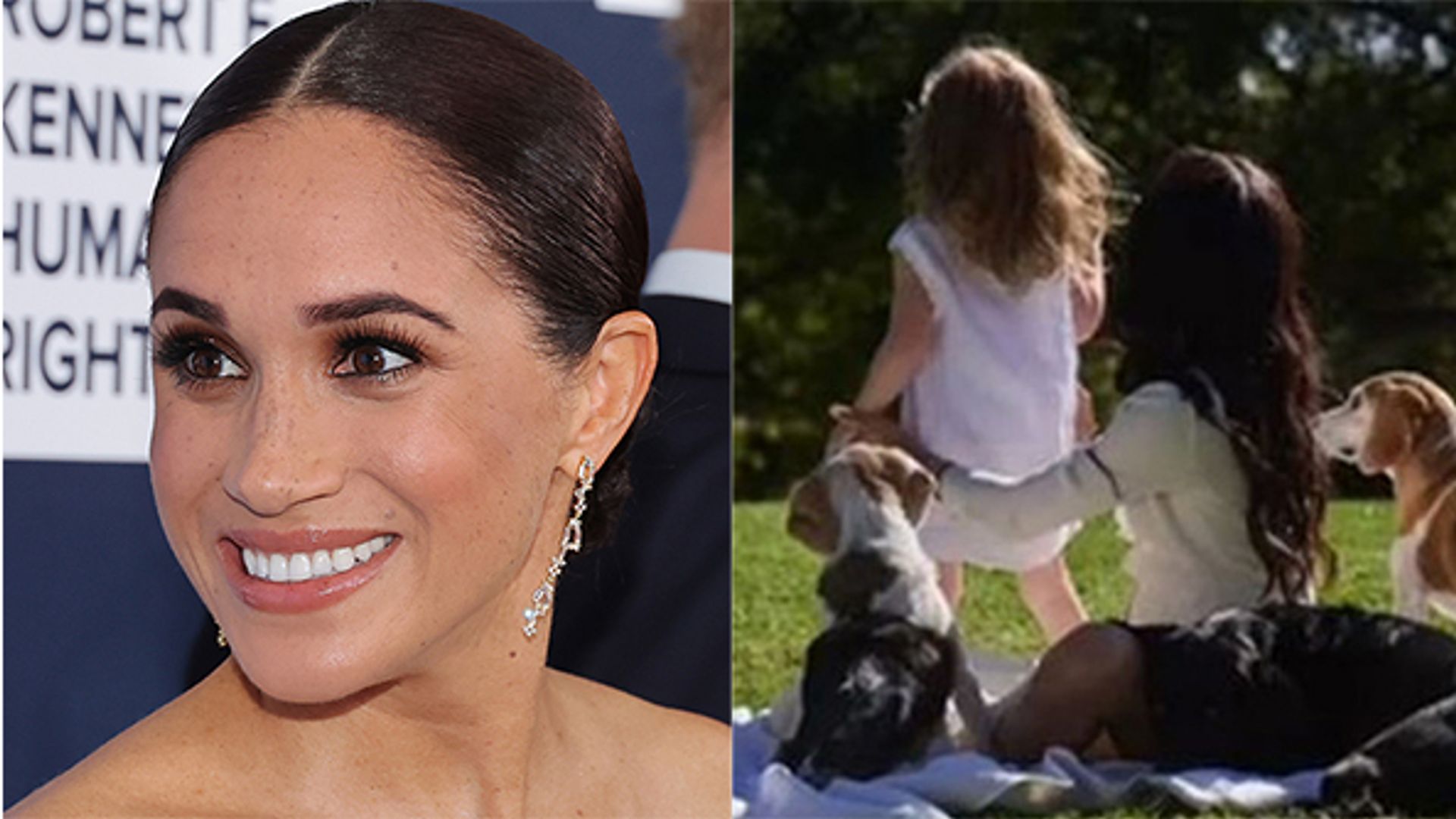
A short video clip referenced in online discussions has drawn particular attention.
Viewers have analyzed background details, audio, and editing choices, leading to a range of reactions.
However, these interpretations are subjective and often amplified by commentary channels that frame them in the most dramatic way possible.
In many cases, what appears to be controversy is actually the result of selective editing and narrative framing.
Another layer of the story involves Meghan’s professional partnerships, particularly with Netflix.
Reports suggest that her business ventures, including lifestyle branding and media production, have faced mixed results.
Some insiders have described challenges in collaboration and commercial performance.
While such developments are not unusual in the entertainment industry, they have been used by critics to construct a broader narrative about credibility and intent.
This is where the situation becomes more complex.
Public figures like Meghan operate at the intersection of personal life and public brand.
Every decision—what to share, what to withhold, how to present family moments—can be interpreted in multiple ways.
For supporters, these choices reflect independence and modern storytelling.
For critics, they may raise concerns about authenticity or boundaries.
The role of media amplification cannot be overlooked.
Online platforms reward engagement, and sensational claims—especially those involving children or family dynamics—tend to generate strong reactions.
As a result, nuanced situations are often reduced to simplified, emotionally charged headlines.
The involvement of commentators and authors, such as biographer Tom Bower, further fuels discussion.
His work has attracted both attention and criticism, illustrating how competing narratives can coexist and reinforce division in public opinion.
Meanwhile, the broader royal context continues to evolve.
Tensions between Prince Harry and other members of the royal family, including Prince William and King Charles III, remain a subject of ongoing speculation.
These dynamics add weight to any new claim, making it easier for stories—verified or not—to gain momentum.
It is also worth noting that discussions about influence—particularly involving Doria Ragland—are largely interpretive.
Close family relationships are often scrutinized in high-profile situations, but there is little concrete evidence to support many of the more dramatic ᴀssertions being circulated.
Ultimately, the claim that Meghan Markle is “selling” her daughter is not grounded in fact.
It reflects a broader pattern in which complex issues—privacy, media strategy, and public perception—are distilled into provocative narratives designed to capture attention.
This does not mean there are no valid questions.
Discussions about children’s privacy in the digital age, the boundaries between personal life and public brand, and the responsibilities of public figures are all legitimate.
But these conversations require careful consideration, not exaggerated claims.
In the end, this story reveals more about the nature of modern media than it does about Meghan Markle herself.
In a world where narratives spread instantly and opinions form just as quickly, the line between reality and interpretation can become blurred.
And in that space, the most important question is not what is being said—but what can actually be proven.


