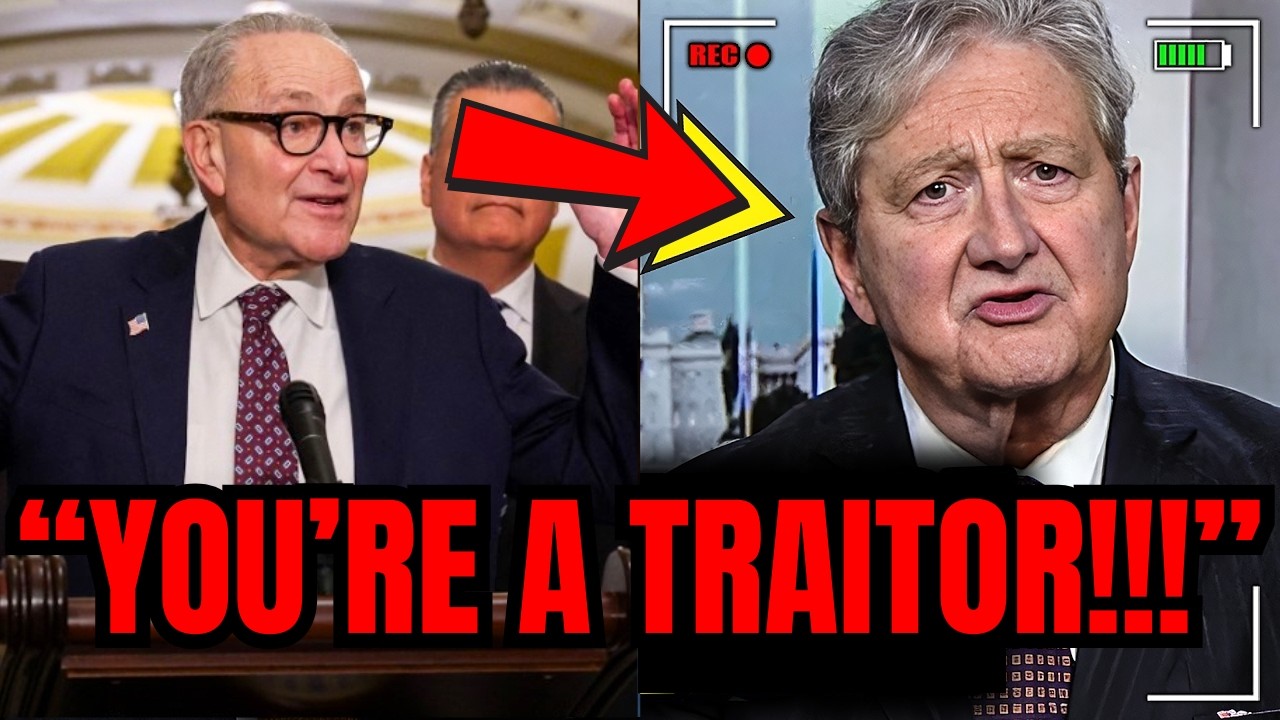
The dramatic framing of a “Washington meltdown” following Senator John Kennedy’s remarks makes for compelling content, but the underlying reality is less explosive and more procedural.
What’s happening in the Senate around the SAVE Act is part of a long-running, deeply polarized debate over election law—one that didn’t suddenly flip overnight, and certainly not because of a single speech.
Let’s start with the bill itself.
The SAVE Act, as described, focuses on requiring proof of citizenship to register to vote in federal elections.
That’s distinct from standard voter ID laws, which typically require identification at the time of voting, not necessarily documentary proof of citizenship during registration.
This distinction is central to the disagreement.
Supporters of the bill argue that verifying citizenship strengthens election integrity.
Their position is rooted in the idea that even rare instances of ineligible voting can undermine public trust.
They often compare it to other regulated systems—like age verification for alcohol—where safeguards exist even if violations are uncommon.
Opponents, however, are not simply arguing against “showing ID.
” Their concern is about the type of documentation required and the potential impact on eligible voters.
Many Americans do not have immediate access to documents like pᴀssports or birth certificates, or their documents may not match their current legal name.
This is particularly relevant for married individuals, naturalized citizens, and lower-income populations.
So when critics say the bill could “disenfranchise millions,” they’re not claiming millions of non-citizens are voting.
They’re arguing that millions of eligible citizens could face new barriers to registration if documentation requirements are too strict or inflexible.
That’s the real policy disagreement—not whether elections should be secure, but how to balance security with accessibility.
The claim that “most Americans support voter ID” is broadly true depending on how the question is asked.

Polling has consistently shown strong support for basic ID requirements.
However, support tends to drop when questions include stricter measures like proof of citizenship documents or limits on mail-in voting.
Public opinion is not monolithic—it shifts based on specifics.
As for the Senate dynamics, the 51–48 vote mentioned is likely a procedural step—such as advancing debate—not final pᴀssage.
These votes matter because they determine whether a bill is alive, but they don’t guarantee it will become law.
The filibuster remains a major hurdle.
In the Senate, most legislation requires 60 votes to advance to a final vote.
If one party doesn’t have that threshold, the minority can block progress through extended debate.
That’s not new—it’s been a defining feature of Senate politics for decades.

The suggestion that Republicans could pᴀss the bill through reconciliation is where things get complicated.
Reconciliation is a special budget process that allows certain bills to pᴀss with a simple majority.
However, it is strictly limited to budget-related provisions—taxes, spending, and debt.
Election law changes like voter registration rules typically do not qualify for reconciliation.
The Senate Parliamentarian—an unelected but highly influential official—would almost certainly rule large portions of such a bill out of order under the “Byrd Rule.
” So while the idea sounds like a workaround, in practice it’s unlikely to succeed for this type of legislation.
John Kennedy’s role in this moment is less about “flipping the script” and more about shaping messaging.
He’s known for blunt, accessible language that resonates with certain audiences.

His comments highlight the Republican argument that opposition to the bill doesn’t align with what they see as common-sense safeguards.
On the other side, Chuck Schumer’s rhetoric—such as comparing the bill to historical voter suppression—reflects Democratic concerns about access and historical patterns of disenfranchisement.
Whether one agrees with that comparison or not, it’s part of a broader narrative about protecting voting rights.
Mike Lee’s argument about trust is also important.
He’s pointing to a psychological dimension: even if fraud is rare, the perception of vulnerability can erode confidence in elections.
Critics respond that overstating fraud risks can itself undermine trust.
Both sides are, in different ways, arguing about public confidence.
Another point worth clarifying is the issue of driver’s licenses.
It’s true that some states allow non-citizens to obtain driver’s licenses.
But voter registration systems already require applicants to attest to citizenship under penalty of law, and there are existing verification mechanisms.
The debate is whether those systems are sufficient or need to be strengthened.
Zooming out, this isn’t a sudden turning point—it’s an continuation of a long-standing divide.
One side prioritizes making voting as accessible as possible, emphasizing inclusion and ease.
The other prioritizes stricter verification, emphasizing security and confidence.
Both goals—access and integrity—are legitimate, but the balance between them is where conflict arises.

The “meltdown” narrative exaggerates what is, in reality, a predictable phase of the legislative process: a bill advancing to debate, facing opposition, and encountering procedural obstacles.
What’s actually significant is not a single speech or moment, but the broader trajectory.
If the bill gains enough bipartisan support, it could move forward.
If not, it will likely stall—as many controversial bills do.
In Washington, momentum matters—but so do math and rules.
And right now, the math of the Senate still makes pᴀssage uncertain.


