Iran’s Coordinated Attack on Diego Garcia and USS Eisenhower – Complete Military Analysis
At precisely 3:47 AM on March 21, 2026, the Indian Ocean became the stage for an unprecedented military confrontation that would reverberate through the corridors of power in Washington and Tehran alike.
Two Shahab 3 Mod 6 intercontinental ballistic missiles (ICBMs) were launched from mobile transporter erector launchers hidden under camouflage in the Semnan Desert of Central Iran.
With a trajectory aimed 4,300 kilometers south-southeast, the missiles targeted Diego Garcia, the joint UK-US military installation that serves as a critical hub for American air operations in the region.
The base houses advanced aircraft such as the B-2 Spirit stealth bombers and B-52H Stratofortresses, which are vital for sustaining the ongoing Operation Epic Fury air campaign against Iranian forces.
In a move reminiscent of Cold War-era brinkmanship, Tehran attempted something that no hostile state had dared to do in decades—a ballistic missile strike on sovereign British-American soil.
As the world held its breath, Iran’s leaders were unaware that the moment those missiles were detected by the Defense Support Program DSP-23 satellite, a kill chain was already being activated.
This would culminate in the destruction of the incoming missiles in less than 11 minutes.
What Iran perceived as a desperate gamble was, in fact, a calculated escalation by the Islamic Revolutionary Guard Corps (IRGC).
Three weeks into Operation Epic Fury, Iranian military infrastructure had been severely compromised, with over 8,000 US-Israeli strikes resulting in the destruction of 130 naval vessels and a 90% reduction in ballistic missile launch capabilities.

Tehran believed it had one final card to play: if Diego Garcia were to be destroyed, the entire logistical backbone of American air power in the region would collapse overnight.
The B-2s would be grounded, and the B-52s would lose their forward base, stalling the entire campaign.
However, the IRGC’s calculations were about to be proven wrong.
At 3:48:30 AM, the Space-Based Infrared System (SBIRS) overhead sensors locked onto the rising plumes of the ICBMs and automatically transmitted launch coordinates, missile classifications, and predicted impact trajectories to the Combined Air Operations Center in Al Udeid, Qatar.
This processing took a mere 0.7 seconds.
Simultaneously, the USS Paul Ignatius, an Arleigh Burke-class destroyer conducting maritime patrol 240 kilometers southwest of Diego Garcia, received the track data via Link 16.
As its Spy-6 radar array began resolving the two inbound missile signatures, fire control computers calculated intercept solutions within four seconds.
Without waiting for verbal authorization, the tactical action officer executed the launch of two SM-3 Block 2A missiles, which erupted from the MK 41 vertical launch system cells with a violent burst of orange exhaust, climbing at Mach 4.5 into the pre-dawn darkness.
Meanwhile, at Diego Garcia, the base’s Terminal High-Alтιтude Area Defense (THAAD) battery went into full autonomous engagement mode.
The piercing alarm of an inbound missile warning tore through the sleeping quarters of the 5,000 British and American personnel stationed there, prompting emergency protocols.

At 3:52:10 AM, the first SM-3 Block 2A kill vehicle successfully intercepted ICBM-1 at an alтιтude of 480 kilometers, creating a debris field visible from the Maldives.
The explosion, while conventional, was equivalent to the force of a telephone pole fired from a cannon, breaking the missile into three major pieces that burned upon reentry.
Fourteen seconds later, the second SM-3 intercepted ICBM-2 at a slightly lower alтιтude of 430 kilometers, resulting in both missiles being destroyed with zero impact on Diego Garcia.
In the Al Udeid Air Operations Center, the atmosphere was tense, and when the confirmation of the second kill was received, a single voice broke the silence: “Go loud.”
The next phase of the American response had already been authorized 12 minutes prior to the missile interceptions.
However, Tehran’s real strategy was not solely focused on the ballistic missiles; they were merely a distraction.
As the missiles were launched, 47 IRGC Boghammer 2 fast attack craft and Zulfiqar suicide speedboats surged from concealed inlets along Qeshm Island, Hormuz Island, and the Bandar Abbas naval complex.
Moving at 70 knots in a coordinated swarm formation, these vessels were armed with anti-ship rockets and RPGs, targeting the escort screen of the USS Dwight D. Eisenhower carrier strike group.
This was the IRGC’s version of a blitzkrieg—distracting American defenses with missile launches while simultaneously launching a swarm attack.
The execution of this plan, however, was flawed.
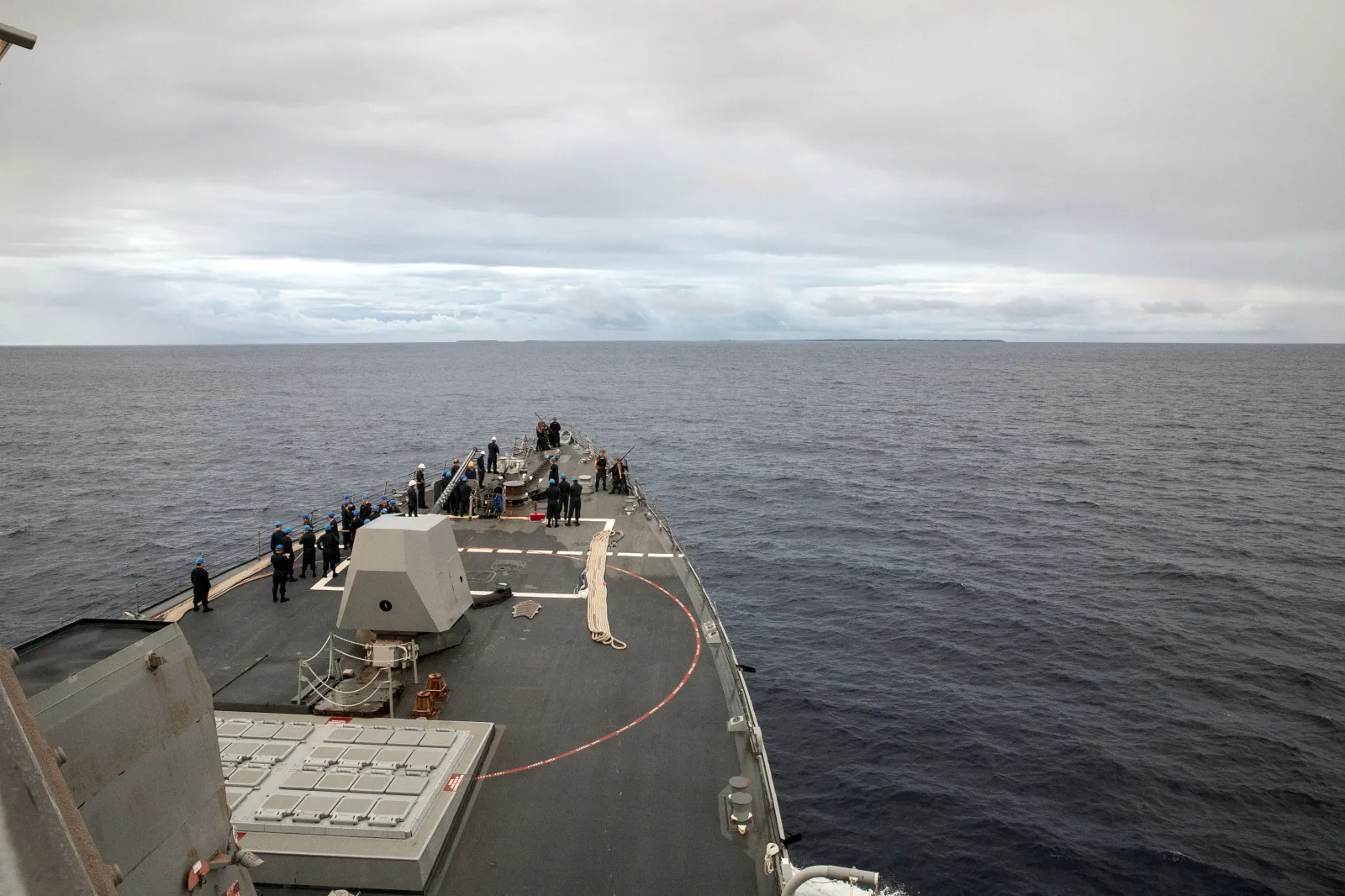
Rear Admiral James Hollis, the USS Eisenhower’s escort commander, had anticipated such an ᴀssault and had pre-positioned two Arleigh Burke-class destroyers, the USS Gravely and USS Farragut, in a picket formation designed to counter fast swarm threats.
Both destroyers were equipped with advanced electronic warfare suites and had been integrated into a joint naval fire control network with AH-1Z Viper attack helicopters from Marine Expeditionary Force ᴀssets.
At 3:54 AM, the USS Gravely activated its surface search radar, detecting the entire swarm of boats in a single sweep.
The Mark 15 Phalanx close-in weapon systems on both destroyers began tracking the highest-speed contacts.
Simultaneously, the two AH-1Z Vipers initiated their attack runs from the northwest, masked by sea clutter.
The Gravely opened fire first, its naval gun cycling at 20 rounds per minute, targeting the lead Boghammer formation.
Within 40 seconds, the first four boats were destroyed.
The IRGC formation attempted to disperse but was tactically irrelevant.
The Vipers hit the right flank, destroying 11 boats in the first pᴀss.
As the surviving Boghammers closed in, the Phalanx systems engaged, creating overlapping walls of fire across the water’s surface.
By 4:02 AM, just 11 minutes after the swarm’s launch, 39 of the 47 Iranian vessels had been destroyed or disabled.
Eight boats turned and fled back toward Qeshm Island, pursued by the Seahawks, who documented the aftermath.
No American lives were lost, and no ships were damaged, but the battle was far from over.
At 4:05 AM, U.S. SIGINT aircraft intercepted an encrypted transmission from an IRGC command center in Khuzestan province, revealing activation codes for an additional wave of Shahab 2 medium-range ballistic missiles targeting the USS Eisenhower’s last known position.
CENTCOM’s response was swift.
General Brad Cooper authorized a strike package that would define the final chapter of this confrontation.
At 4:08 AM, two B-2A Spirit stealth bombers, already airborne from Diego Garcia, were re-tasked with updated target coordinates.
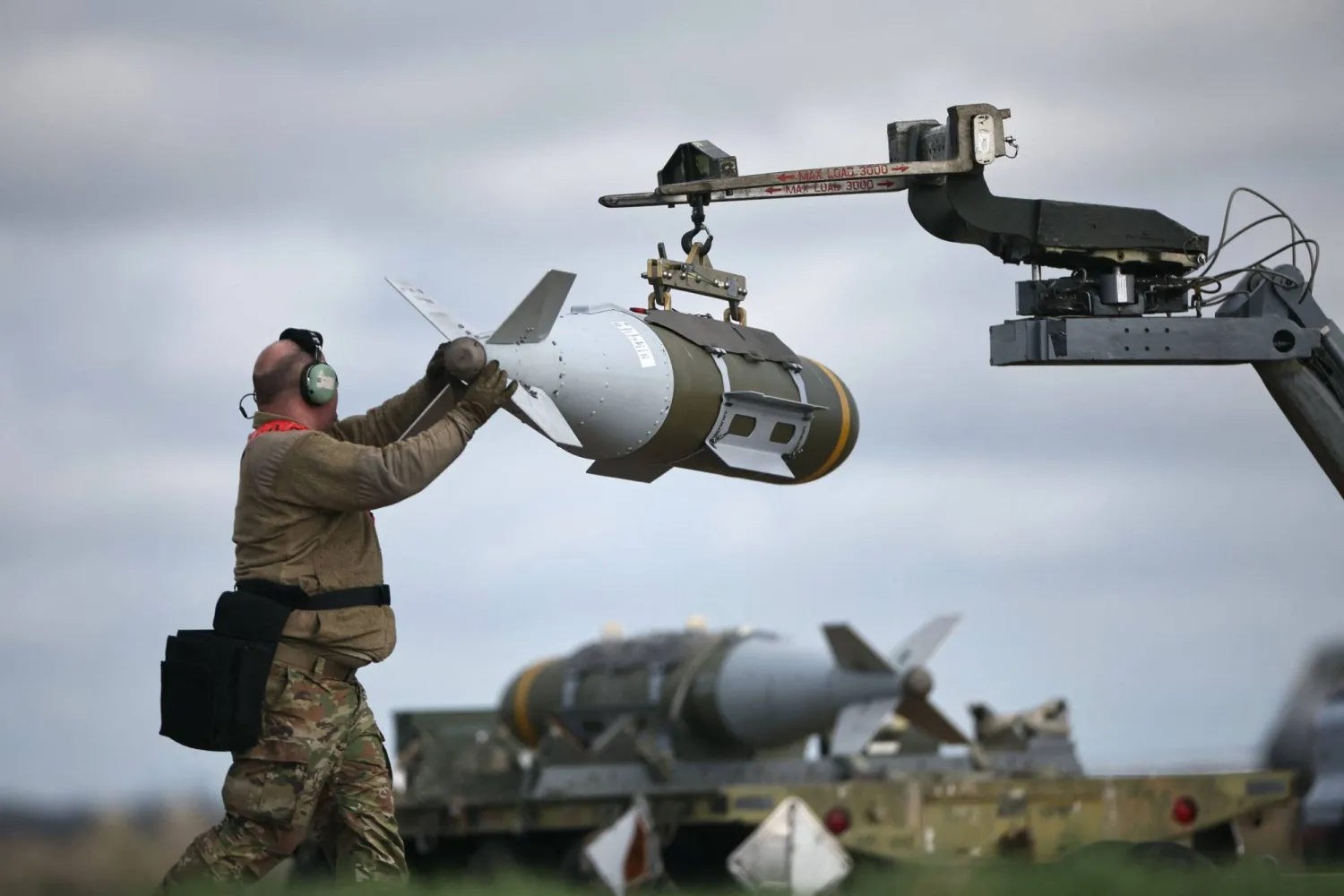
Each bomber carried two GBU-57 Mᴀssive Ordnance Penetrators, capable of destroying deeply buried targets.
The IRGC command center was unaware of its impending doom as the first GBU-57 impacted the site at 4:14:20 AM, generating a seismic event felt as far away as Pakistan.
The second launcher was destroyed moments later, leaving no chance for a second wave of missiles.

The Strait of Hormuz fell silent at 4:17 AM, March 21, 2026.
The aftermath of this coordinated ᴀssault was staggering: two Iranian ICBMs destroyed in space, 41 fast attack craft eliminated, and two mobile launchers vaporized—all within 30 minutes of contact.
Secretary of Defense Pete Hegseth addressed reporters at the Pentagon at 9:00 AM, stating, “Iran launched intercontinental ballistic missiles at sovereign British-American soil tonight.
Every single missile was destroyed before it came close.
Every single fast boat that entered the strait was eliminated.
The United States military is winning decisively, and today is proof of why.”
Yet, the silence that followed his words was not one of triumph.
It was a silence understood by men who knew the implications of the morning’s events.
Iran had revealed it still possessed long-range ICBM capabilities, which American planners believed had been significantly diminished.
The question that loomed large was whether the United States could locate and eliminate every last mobile launcher before Iran unleashed a more devastating strike.
For now, the Strait of Hormuz, which carries 20% of the world’s oil supply, and Diego Garcia, the logistics chain for American air power, remained precarious.
Somewhere in the Semnan desert, a launch crew was undoubtedly receiving new orders.
As tensions escalate, the question remains: what would you do if you were commanding the next American strike package?
The men at CENTCOM are grappling with this same question tonight, as the war is far from over, and the next escalation is already being planned.


