AI 3D Scans Rewrite the Story of Stonehenge
For generations, Stonehenge has been explained as the triumph of determined but primitive farmers—men and women hauling mᴀssive stones with ropes and brute strength across muddy fields. It was a comforting story. Simple people. Simple tools. Monumental persistence.
That story collapsed in 2024.
A groundbreaking study published in Nature revealed that the six-ton central altar stone at the heart of Stonehenge did not originate in Wales, as scholars had confidently claimed for over a century. Instead, its geological fingerprint traced it to northeastern Scotland—more than 750 kilometers away.
This was not a minor correction. It was a demolition of archaeological certainty.
Using advanced geochemical fingerprinting techniques, researchers analyzed microscopic mineral grains preserved in fragments of the altar stone. Zircon crystals—older than life itself—contained isotopic signatures that could only match sediment from the Orcadian Basin in Scotland. No formation in Wales matched. No secondary candidate existed. The conclusion was unequivocal.
The altar stone had been transported the length of Britain around 2600–2500 BC.
At the time, there were no roads. No wheels. No metal tools. No written records.
And glaciers could not have moved it. Ice flow patterns ruled that out entirely. The stone was carried deliberately by human hands.

Suddenly, the builders of Stonehenge were no longer isolated farmers. They were master logisticians.
Transporting a six-ton slab over such distance by land through dense forests, rivers, bogs, and mountains would have been nearly impossible. The only plausible explanation? Maritime transport. The stone likely traveled by sea.
Evidence already shows that Neolithic communities were skilled seafarers. They crossed dangerous waters like the Pentland Firth as early as 3700 BC, transporting cattle, sheep, and grain. Experimental archaeology has proven that hide boats made from willow and animal skins could survive these journeys.
If livestock could cross open water, so could stone.

But the implications go even further.
Archaeological evidence reveals deep cultural connections between Orkney—near the stone’s origin—and Stonehenge. Grooved Ware pottery styles first appeared in Orkney before spreading south. Cattle consumed at nearby Durrington Walls may have originated in Scotland. Trade networks already spanned the island.
The altar stone was not an anomaly. It was proof of a vast, organized maritime network linking distant communities.
Stonehenge was no isolated monument. It was the ceremonial center of a connected world.

And then came the sound.
In 2023 and 2024, researchers constructed a half-scale replica known as “Minihenge” to test Stonehenge’s acoustic properties. The results were astonishing. The stone circle acted as a natural sound chamber, amplifying voices inside the ring while muffling sound outside it.
Inside the circle, speech resonated with unusual clarity. Chanting and drumming would have reverberated powerfully. Outside, those same sounds would have faded almost to silence.
This was not accidental architecture.
Some of the bluestones themselves are lithophones—stones that ring like bells when struck. In Wales, similar stones show marks from repeated percussion use. These were not random building materials. They were selected because they could produce sound.

Stonehenge was not merely a monument. It was an instrument.
An engineered acoustic environment in a pre-literate society could create altered states of consciousness. Sound can synchronize heartbeats, induce trance, and reinforce authority. The circle may have separated the sacred from the ordinary not only visually—but physically, through sound.
Architecture became power.
But the revelations didn’t stop there.
A mᴀssive hidden landscape has emerged through ground-penetrating radar surveys. Beneath the surface lie buried stone rows, ceremonial avenues, and a gigantic ring of shafts dating to around 2500 BC. What once appeared to be empty countryside is now understood as a vast ritual complex.

Stonehenge was the center of a ceremonial network stretching across the Salisbury Plain.
In 2011, high-resolution 3D laser scanning captured the surface of every stone at half-millimeter precision. When researchers digitally stripped away erosion and lichen, they uncovered 71 previously unknown Bronze Age axe-head carvings—doubling the number known in Britain.
These carvings had been invisible to the naked eye for centuries.
The scans also revealed something unexpected: the stones were deliberately shaped differently on opposing sides. The northeastern face—the side approached by visitors—had been carefully dressed smooth, exposing bright stone beneath. The southwestern side was left rough.

Stonehenge had a front and a back.
It was designed to be seen from a specific direction.
Meanwhile, additional chemical analysis traced most of the mᴀssive sarsen stones to a single quarry just 25 kilometers away. Two distinct stone types, two separate sourcing operations—both identified through modern technology invisible to earlier generations.
Artificial intelligence and computational modeling played a critical role in analyzing mineral age populations and chemical signatures. Multidimensional scaling plots and pattern-recognition algorithms narrowed potential sources to a single geological match in Scotland.
The data had always been there. Humans simply lacked the tools to read it.

Now we can.
And what we see is unsettling.
A civilization capable of coordinating long-distance maritime transport, engineering acoustic environments, shaping stones with directional intent, and organizing vast ritual landscapes vanished so completely that later generations attributed its work to giants and wizards.
Knowledge can be lost.
Stonehenge forces us to confront a possibility that challenges modern arrogance: progress is not guaranteed. Civilizations rise—and disappear. Their achievements erode into myth. Their sophistication becomes invisible.
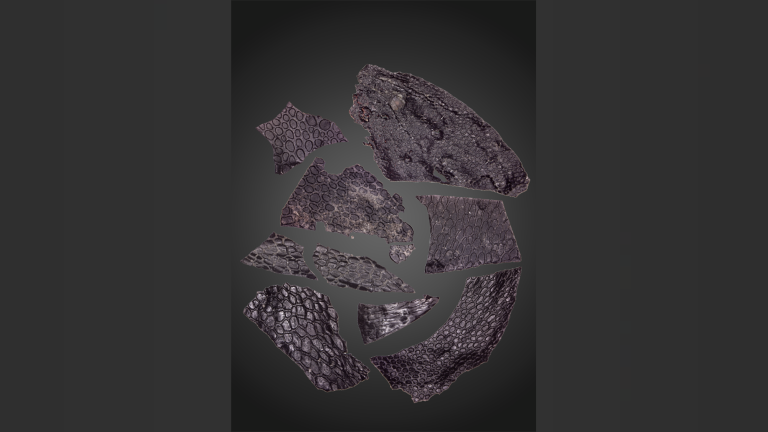
We can map these stones from orbit. We can vaporize crystals thinner than a human hair to read their chemical histories. Yet we still do not fully understand why Stonehenge was arranged precisely as it was—or what psychological power it once held over those who stood inside it.
If this much was hidden at the most studied prehistoric site on Earth, what else remains unread beneath soil and silence?
Stonehenge is no longer just a monument.
It is evidence that the ancient world was far more advanced, connected, and psychologically sophisticated than we ever dared to imagine.
And that may be the most shocking discovery of all.


