Few figures in modern history have left behind a legacy as powerful and complex as Princess Diana.
Known as the “People’s Princess,” she captivated the world with her compᴀssion, vulnerability, and defiance of royal tradition.
Yet beyond the public image and emotional connection she built with millions, Diana was also quietly making calculated decisions—especially when it came to her estate.
When she tragically died in 1997, many ᴀssumed her wealth and possessions would naturally fall back under royal control.
Instead, the opening of her will revealed a very different story—one that would not only secure her sons’ futures but also subtly challenge expectations within royal circles.
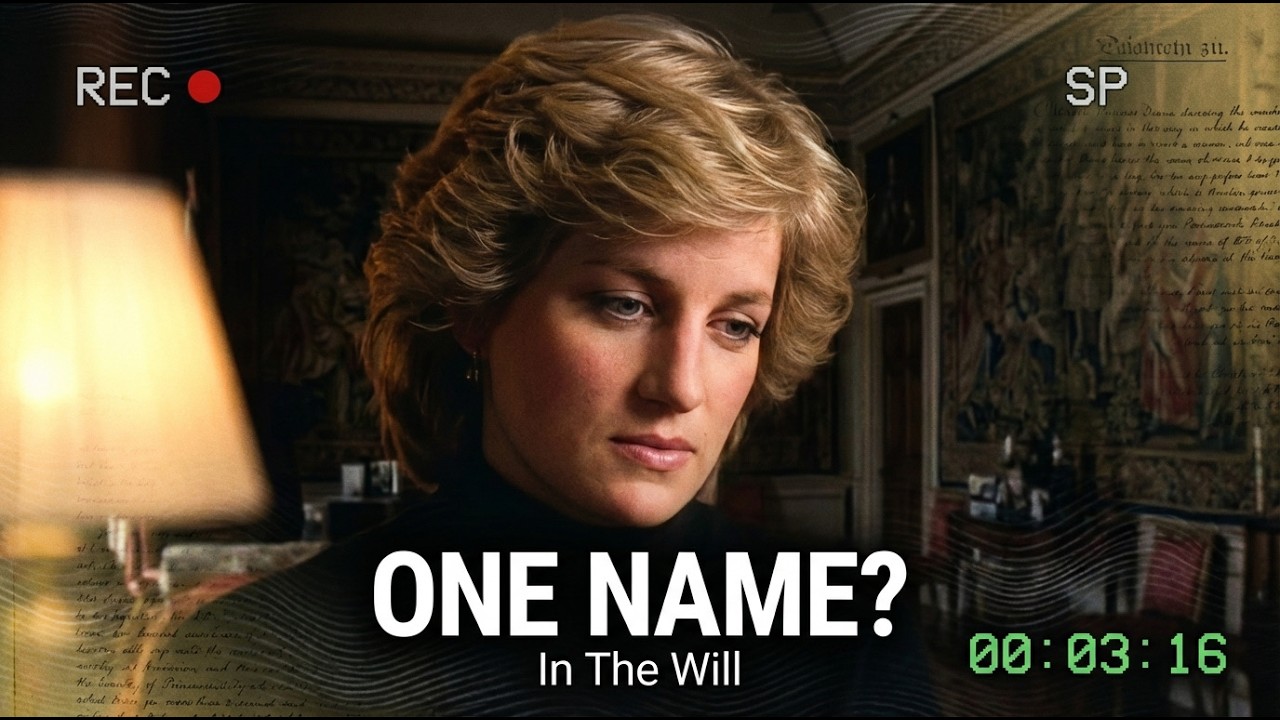
Diana’s estate, estimated at over £21 million at the time of her death, consisted of her divorce settlement, personal investments, jewelry, and treasured belongings.
At the center of her plan were her two sons, Prince William and Prince Harry, who were named as the primary beneficiaries.
But this was never just about money.
Her will, originally written in 1993 and left largely unchanged after her divorce from King Charles III, was structured to ensure that her sons would not only inherit wealth but also independence.
After taxes and legal fees significantly reduced the total, each son ultimately received approximately £10 million upon reaching the age of 30.

While substantial, the inheritance was carefully managed through trusts, delaying full access until they were mature enough to handle it.
This decision alone reflected Diana’s deep awareness of both privilege and pressure.
She understood that wealth without preparation could be as damaging as it was empowering.
However, the emotional core of her legacy lay not in financial ᴀssets, but in her personal possessions—particularly her iconic jewelry.
In a private “letter of wishes,” Diana expressed her desire for 75% of these items to be shared between William and Harry, with the hope that their future wives would wear them.
This wish became reality in the years that followed.
Perhaps the most famous example is her sapphire engagement ring.
Originally chosen by Diana herself—an unusual break from royal tradition—this ring later pᴀssed into the hands of Prince William, who gave it to Catherine, Princess of Wales.
It became more than a piece of jewelry; it became a symbol of continuity, memory, and emotional inheritance.
Meanwhile, Prince Harry honored his mother in a different way.
When he proposed to Meghan Markle, he incorporated diamonds from Diana’s collection into the engagement ring, ensuring her presence remained part of his own new chapter.
Yet not all of Diana’s wishes were carried out exactly as she intended.
In her letter, she had also expressed a desire for 25% of her personal belongings to be distributed among her 17 godchildren.
However, because this letter was not legally binding, the executors of her estate chose not to follow that request.
Instead, the majority of her possessions remained within the immediate family.
This decision led to quiet controversy and even legal challenges from members of the Spencer family, highlighting the tension between personal intent and legal authority.
What Diana envisioned as a broader sharing of her legacy ultimately became more concentrated.
To understand the true impact of Diana’s estate, one must look beyond the numbers.
Her decisions reflected a larger philosophy—one that challenged traditional royal norms.
Throughout her life, Diana consistently broke with convention.
She worked before marriage, chose her own engagement ring, removed the word “obey” from her wedding vows, and redefined royal motherhood by raising her children with a sense of normalcy rarely seen in the monarchy.
She brought Prince William and Prince Harry into public schools, took them on everyday outings, and exposed them to life beyond palace walls.
Her estate mirrored that same mindset.
By ensuring her sons had financial independence, she gave them the freedom to shape their own paths—whether within the royal insтιтution or beyond it.
In fact, Prince Harry himself later acknowledged that his mother’s inheritance played a crucial role in allowing him and Meghan to step back from royal duties and build a new life abroad.
Even in death, Diana was enabling choice.
Interestingly, despite widespread ᴀssumptions, her sons did not inherit Althorp—the Spencer family estate.
That property remained within her family line and is set to pᴀss to her brother’s descendants.
Diana’s legacy, therefore, was never about land or тιтles—it was about influence, values, and personal agency.
Today, the ripple effects of Diana’s decisions are still visible across the royal family.
From the way younger royals approach public engagement to the openness around mental health championed by both William and Harry, her influence continues to redefine what it means to be royal in a modern world.
Her will was not just a legal document.
It was a final act of authorship over her own story.
Rather than allowing tradition to dictate the fate of her legacy, Diana took control—ensuring that her voice, her values, and her vision would endure through the people she trusted most.
And in doing so, she left behind something far more powerful than wealth.
She left a blueprint for change.


