Shocking Revelation? Allen Parr, Fraternities, and a Viral Faith Debate
A fresh wave of controversy has erupted online after a video resurfaced discussing Christian content creator and teacher Allen Parr’s past affiliation with the Alpha Phi Alpha fraternity.
The revelation has sparked strong reactions, with critics questioning whether such involvement is compatible with Christian beliefs, while others argue the situation is being misrepresented or exaggerated.
At the center of the discussion is Allen Parr’s own testimony, where he openly shares that he joined Alpha Phi Alpha as a 19-year-old college student in 1995.
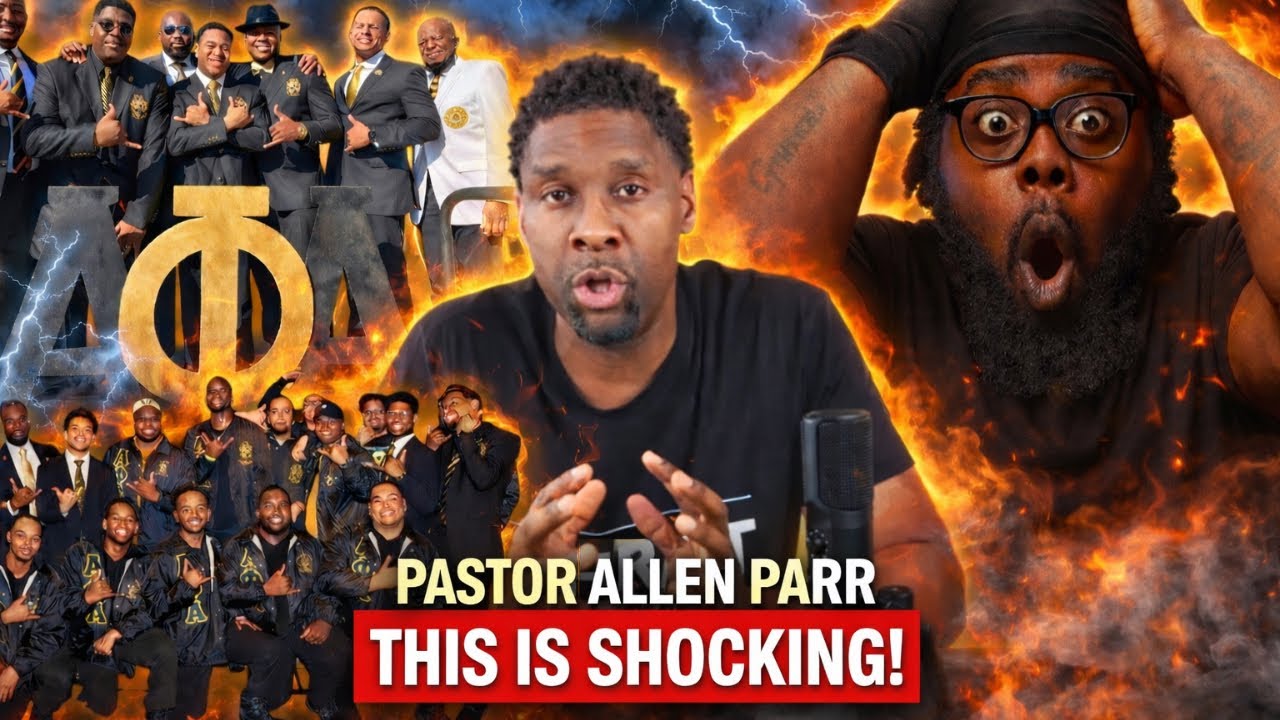
He describes his decision as one made without fully understanding the deeper implications, something he now encourages others to carefully consider before making similar commitments.
Rather than outright condemning fraternities, Parr’s message in the clip is more reflective.
He urges viewers to examine their motivations, evaluate whether joining such organizations aligns with their faith, and think critically about the commitments they are making—especially when it comes to pledges and oaths.
However, not everyone received his approach positively.
Critics argue that Parr did not go far enough.

They believe that instead of presenting fraternities as something to cautiously evaluate, he should have clearly warned against them altogether.
For these critics, the issue is not merely about college life or social organizations—it is about spiritual allegiance.
Much of the concern revolves around the concept of pledging.
In many fraternities, joining involves taking oaths of loyalty and participating in initiation rituals.
Some viewers interpret this as conflicting with biblical teachings that caution against making binding vows or aligning oneself with systems that may compete with one’s devotion to God.
This is where the controversy intensifies.
The video reacting to Parr’s testimony goes further, claiming that certain fraternities are rooted in traditions influenced by ancient philosophies or symbolic practices.
These claims are presented as evidence that such organizations are incompatible with Christian faith.
However, it’s important to note that these interpretations are highly debated and not universally accepted.
Supporters of Parr push back strongly against these accusations.
They argue that Alpha Phi Alpha, like many historically Black fraternities, was founded with goals centered on leadership, scholarship, and community service.
From their perspective, equating these organizations with spiritual corruption is both unfair and inaccurate.
They also emphasize that Parr himself does not promote blind participation.
In fact, he highlights the importance of discernment, encouraging individuals to ask serious questions before joining any group.
His focus, they argue, is on helping believers make informed decisions rather than issuing blanket condemnations.
Still, critics remain unconvinced.
One major point of tension is Parr’s continued acknowledgment of fraternity connections.
Some interpret this as ongoing allegiance, while others see it simply as recognition of past relationships.
This difference in interpretation fuels much of the disagreement, as people debate what it truly means to separate from something spiritually or socially.
The broader issue extends beyond one individual.
This controversy touches on a larger conversation within Christian communities about how believers should engage with secular insтιтutions.
Where should the line be drawn between participation and compromise? Can someone be part of an organization with non-religious roots while maintaining a strong, uncompromised faith?
There are no easy answers.
For some, the safest path is complete separation from anything that might conflict with biblical teachings.
For others, engagement with the world—while maintaining personal convictions—is both possible and necessary.
Social media has amplified these tensions, turning what might have been a niche theological discussion into a widely shared debate.
Clips are analyzed, statements are scrutinized, and strong opinions are formed—often without full context.
In the end, Allen Parr’s testimony seems to be less about promoting fraternities and more about encouraging thoughtful decision-making.
Yet the reaction to it reveals just how sensitive and complex these issues have become.
As the conversation continues, it highlights a deeper challenge facing many believers today: navigating faith in environments that are not always clearly defined as right or wrong.
And in that gray space, disagreements are inevitable.


