The Truth Behind the Tragedy at Gene Hackman’s Santa Fe Estate
On February 26, 2025, a chilling 911 call came from a gated community nestled in the Sangre de Cristo Mountains outside Santa Fe, New Mexico. A security officer had peered through the window of a sprawling estate and spotted two motionless bodies inside. What authorities would soon confirm stunned Hollywood and saddened fans around the world: Gene Hackman, the two-time Academy Award–winning actor, and his wife of more than three decades, Betsy Arakawa, had both died inside their home.
Hackman was 95 years old. Betsy was 65.
The initial details were unsettling. The front door was slightly ajar. A prescription pill bottle lay open on a bathroom counter. A space heater had fallen near one of the bodies. One of the couple’s three dogs was found ᴅᴇᴀᴅ in a crate, while the other two had survived. Signs of decomposition indicated the pair had been deceased for nearly two weeks.
When Santa Fe County Sheriff Aiden Mendoza described the circumstances as “suspicious enough” to warrant a thorough investigation, speculation exploded across social media. Within days, viral videos claimed investigators had uncovered a secret underground tunnel beneath the mansion — complete with sealed iron doors, mysterious symbols, and hidden vaults.
None of it was true.
Fact-checking organizations quickly debunked the stories. There was no tunnel. No hidden chambers. No FBI involvement. The conspiracy theories were entirely fabricated, created to exploit public curiosity surrounding the death of a beloved celebrity. The real story, investigators revealed, was both simpler and far more tragic.
Before understanding his final days, it is essential to remember who Gene Hackman truly was.
Born in 1930 in California, Hackman endured a difficult childhood after his father abandoned the family. At 16, he lied about his age to join the U.S. Marine Corps, serving three years before pursuing acting. Despite being voted “least likely to succeed” at the Pasadena Playhouse — where he studied alongside Dustin Hoffman — Hackman rose to become one of the most respected actors of his generation.

He won his first Oscar for The French Connection (1971), delivering an unforgettable performance as Detective Jimmy “Popeye” Doyle. His second Academy Award came two decades later for Unforgiven (1992), where he portrayed the brutal sheriff Little Bill Daggett. From Lex Luthor in Superman to emotionally layered roles in The Conversation and The Royal Tenenbaums, Hackman’s range was extraordinary.
Yet behind the scenes, his health had been deteriorating for years. Hackman suffered from severe heart disease, undergoing multiple cardiac procedures including bypᴀss surgery, stent placements, and an aortic valve replacement. In 2019, he received a pacemaker. By 2004, doctors advised him to retire from acting due to the strain it placed on his heart.

More devastating still was his diagnosis of advanced Alzheimer’s disease. His memory steadily declined. Family members later revealed that he sometimes needed reminders about significant dates — including his own birthday.
Throughout it all, Betsy Arakawa was his constant caregiver and companion. The couple lived privately on their 53-acre estate, largely cut off from regular social contact. They had no surveillance cameras, no household staff, and Hackman did not even own a cell phone.
Their isolation would prove fatal.
Investigators determined that Betsy Arakawa likely died first, around February 11 or 12. In the days before her death, she had searched online for symptoms including dizziness and congestion. She scheduled a medical appointment but never arrived.

Her cause of death was later confirmed as hantavirus pulmonary syndrome — a rare and often fatal disease transmitted through contact with infected rodent droppings or urine. The virus attacks the lungs, causing fluid buildup and respiratory failure. In New Mexico, the fatality rate can reach up to 50%.
Environmental ᴀssessments found evidence of rodent activity in several outbuildings on the couple’s large property. A single inhalation of contaminated dust may have been enough to infect her.
Hantavirus does not spread from person to person. Hackman did not contract it.

According to data from his pacemaker, Hackman survived approximately one week after his wife’s death. His final recorded heart rhythm occurred on February 18. He ultimately died from hypertensive atherosclerotic cardiovascular disease — essentially, his weakened heart gave out.
Investigators believe Hackman, suffering from advanced Alzheimer’s, may not have understood that his wife had died. Toxicology reports suggested he had not eaten for several days. Without Betsy’s care, he was left alone and confused in the house they had shared for decades.
Nearly two weeks pᴀssed before a concerned contractor, alarmed by the lack of communication, went to check on the property — leading to the discovery.

The news sent shockwaves through Hollywood. Tributes poured in from Clint Eastwood, Dustin Hoffman, and countless others who had worked alongside Hackman over five decades.
But for his family, grief was complicated by legal challenges. Hackman’s will, written in 1995, named Betsy as sole beneficiary. Her will stipulated that if they died within 90 days of each other, ᴀssets should go to charity. Since Hackman survived her by a week, complex probate issues arose. His estate, estimated at $80 million, remains entangled in legal proceedings.
The Santa Fe estate has since been listed for sale. Auctions of Hackman’s personal belongings drew global interest, raising millions.
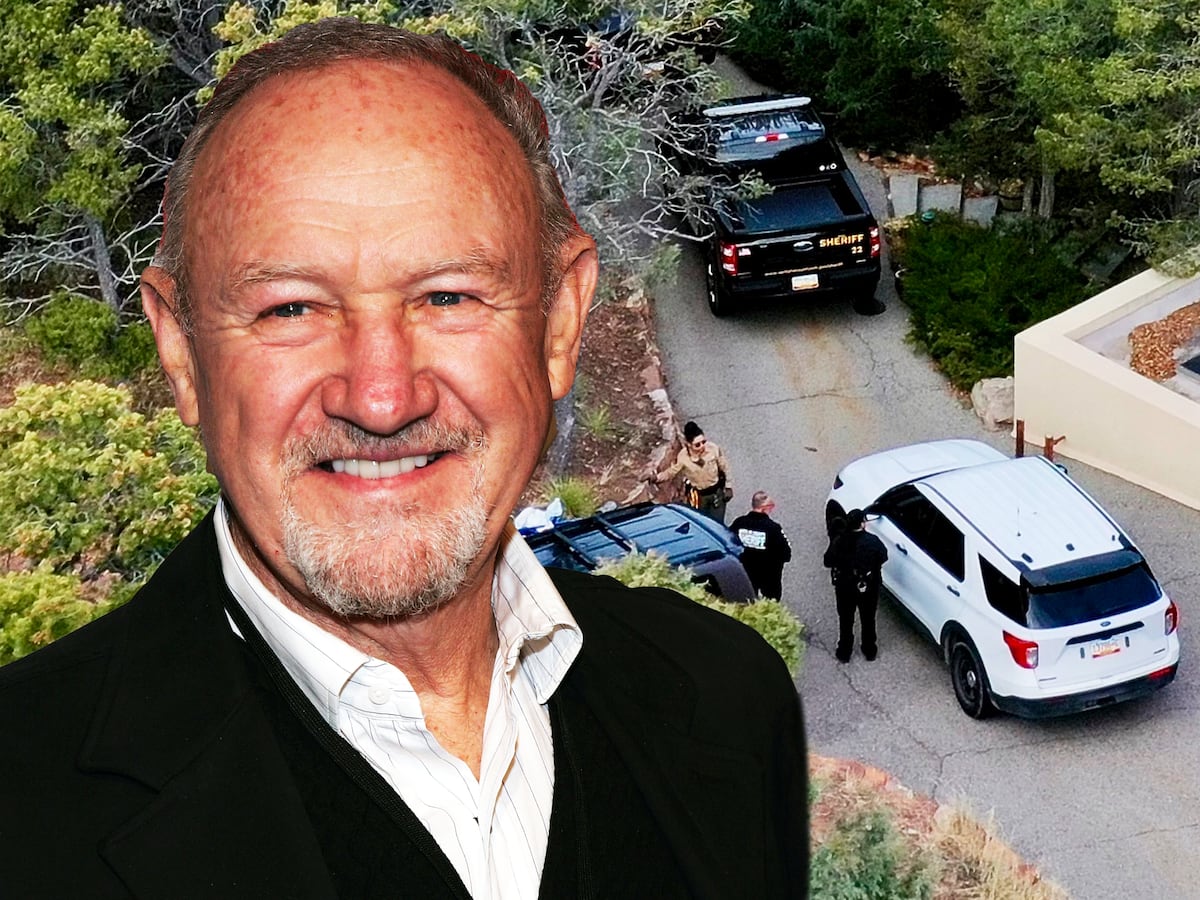
Yet beyond the estate battles and online conspiracies lies the simple truth: two elderly people, deeply devoted to one another, died alone in the mountains they loved.
There were no secret tunnels. No hidden vaults. No dark mysteries.
Only illness. Isolation. And heartbreak.


