The Ethiopian Bible and the Cosmic Christ: What’s Fact, What’s Faith, and What’s Speculation
In recent months, a provocative claim has circulated widely: that the Ethiopian Bible preserves a radically different, more cosmic vision of Jesus Christ—one supposedly removed from the Western canon because it was “too powerful” or “too dangerous.” The idea has been amplified by references to ancient texts like the Book of Enoch and the Ascension of Isaiah, and even connected to Mel Gibson’s planned sequel to The Pᴀssion of the Christ.
But what does history actually say?
First, it is true that the Ethiopian Orthodox Tewahedo Church possesses the largest biblical canon in Christianity.
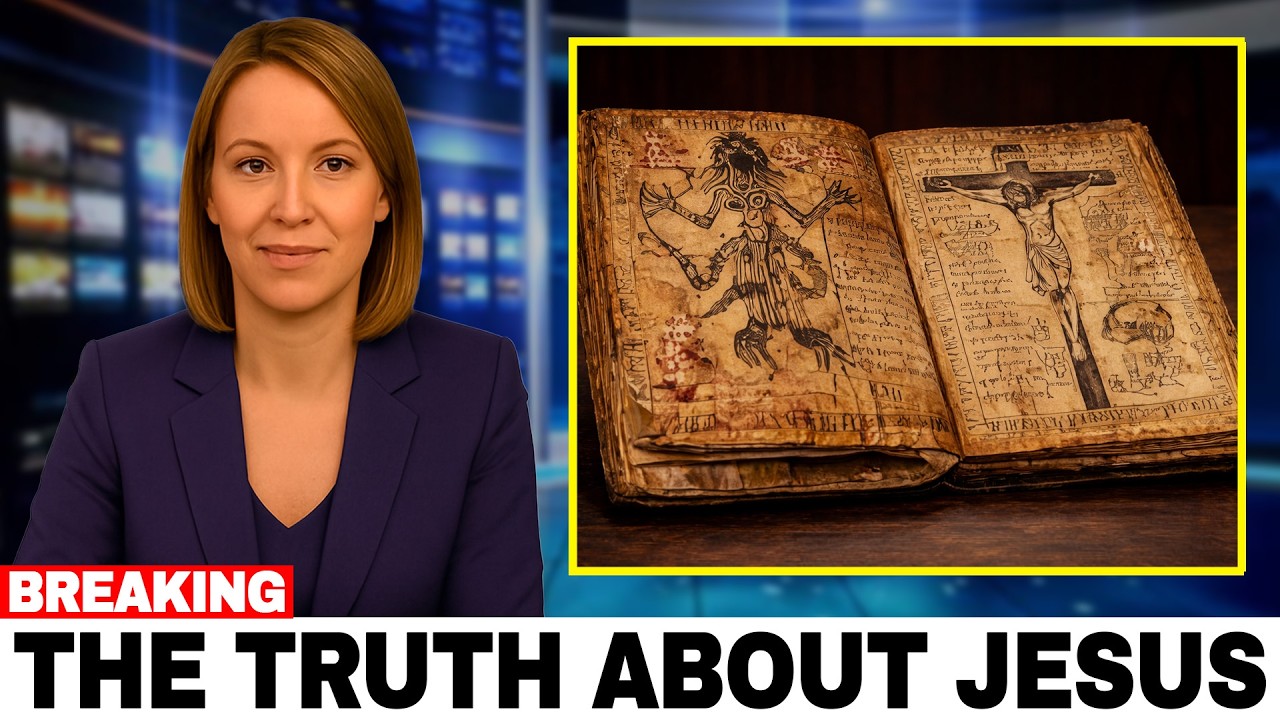
While most Protestant Bibles contain 66 books and Catholic Bibles 73, the Ethiopian canon includes 81 books. Among these are 1 Enoch and Jubilees—ancient Jewish texts that are not included in most Western Christian Bibles.
This difference, however, does not mean that Ethiopia preserved a “secret” version of Christianity hidden from the world. Rather, it reflects a distinct historical development.
Christianity reached the Kingdom of Aksum (in present-day Ethiopia and Eritrea) in the 4th century. Due to geographic distance from Rome and Constantinople, Ethiopian Christianity developed with relative independence. While Western Christianity gradually narrowed its canon through church councils and theological consensus, Ethiopia maintained a broader scriptural tradition rooted in earlier Jewish and Christian writings.
The Book of Enoch, for example, was widely known in ancient Judaism and early Christianity. It is even quoted in the New Testament Epistle of Jude (Jude 1:14–15). However, over time, most Jewish and Christian communities chose not to include Enoch in their formal canon. The reasons were theological and practical—questions about authorship, consistency, and doctrinal clarity—not necessarily a coordinated suppression.
The idea that Enoch was removed because it threatened insтιтutional power oversimplifies a far more gradual and complex process. Canon formation took centuries and involved debates across diverse communities. There was no single moment where authorities “erased” cosmic Christianity.
That said, the Ethiopian canon does preserve a more expansive apocalyptic worldview.
Texts like 1 Enoch describe elaborate angelic hierarchies, cosmic judgment, and a pre-existent “Son of Man” figure who judges kings and restores order. These themes strongly resonate with parts of the New Testament, particularly Revelation and certain sayings of Jesus in the Gospels.
In this sense, the Ethiopian tradition maintains a fuller continuity with Second Temple Jewish apocalyptic thought—the religious environment in which Christianity was born.
However, it is important to clarify something crucial: the Ethiopian Bible does not present a completely different Jesus. The core beliefs—Christ’s incarnation, crucifixion, resurrection, and divinity—remain consistent with historic Christianity. The difference lies in emphasis and cosmology, not in idenтιтy.
The viral narrative also connects these ancient texts to Mel Gibson’s upcoming film The Resurrection of the Christ. Gibson has indeed stated in interviews that he intends to explore metaphysical dimensions of the resurrection, possibly including Christ’s descent into hell and cosmic spiritual conflict.
But there is no verified evidence that Gibson is directly adapting Ethiopian canonical texts such as the Ascension of Isaiah. His ideas are equally rooted in traditional Catholic theology, medieval mysticism, and long-standing Christian doctrines like the “Harrowing of Hell,” which has existed in Western Christianity for centuries.
The suggestion that Western Christianity deliberately replaced a “radiant cosmic Christ” with a softened, insтιтutional version also requires nuance. Early Christian art and theology consistently portrayed Christ as both gentle and sovereign—Lamb and Judge, Shepherd and King. The “cosmic Christ” is not exclusive to Ethiopia; it appears in the Gospel of John, the Letter to the Colossians, and Revelation.
What Ethiopia preserved uniquely was not a different Christ—but a different scriptural scope.
Another popular claim is that these texts teach humans already possess a divine spark that eliminates the need for insтιтutional mediation. While some early Christian writings contain mystical language about participation in divine life, mainstream Ethiopian Orthodox theology remains sacramental and ecclesial. It does not promote radical individualism detached from church structure.
The romantic narrative of suppressed knowledge often appeals to modern audiences because it frames history as a dramatic struggle between truth and power. But real history is less cinematic and more layered.
Yes, the Ethiopian Orthodox Church preserved ancient texts lost elsewhere.
Yes, 1 Enoch influenced early Christianity.
Yes, apocalyptic Jewish cosmology shaped early Christian thought.
But no credible historical evidence supports a grand conspiracy to hide a “terrifying cosmic Jesus.”
What makes the Ethiopian tradition so compelling is not secrecy—it is continuity. In monasteries carved into rock and written in the ancient Ge’ez language, Ethiopian scholars and monks preserved manuscripts through war, invasion, and isolation. Their devotion ensured that certain ancient perspectives survived.
Modern scholarship is now studying these manuscripts more carefully, not because they overturn Christianity, but because they enrich our understanding of its origins.
In the end, the Ethiopian Bible does not replace the Western one. It expands the historical conversation about how early believers understood heaven, angels, judgment, and divine authority.
And perhaps that is powerful enough on its own—without the need for hidden narratives.


