Germany’s Secret NATO Plan: 800,000 Troops Could Move Across Europe
Imagine a scenario where Europe finds itself on the brink of war once again.
It is not a distant memory but a looming possibility as tensions rise between NATO and Russia.
Picture this: Russian tanks rolling into the Baltic states, drones buzzing ominously over Finnish towns.
The alarm sounds across Europe, and a military machine begins to mobilize, unlike anything seen since the Cold War.
Ports become bustling hubs, highways transform into arteries of armored vehicles, and railways creak under the weight of heavy military columns heading east.
This is not a hypothetical situation or a war game; it is the heart of a classified 200-page German military document that has recently come to light.
This plan reveals how seriously Europe is taking the threat posed by Vladimir Putin and the potential for conflict on the continent.
Welcome to World Brief Daily, where we provide in-depth analysis that goes beyond the headlines.
Today, we will delve into Germany’s secret war plan, its implications, and its feasibility when it matters most.

The backdrop to this plan is a series of aggressive maneuvers by Russia, employing hybrid warfare tactics that have included drone incursions, signal jamming, and sabotage operations on NATO territory.
Earlier this year, investigators uncovered evidence of a remotely detonated explosive device on the Warsaw Lublin rail line, a crucial route for military aid to Ukraine.
Putin’s strategy appears to be one of relentless probing, testing the limits of Europe’s resolve, operating under the ᴀssumption that the West would absorb these provocations without retaliation.
However, this ᴀssumption has proven dangerously misguided.
While Putin has been busy executing his hybrid warfare playbook, Germany has been quietly formulating a remarkable response.
Approximately two and a half years ago, a group of senior German military officers convened at a military compound near Berlin, tasked with developing a strategy for a potential war against Russia.
Their mission was not to issue diplomatic protests or compose stern letters to the Kremlin; rather, it was to devise a plan to ensure that Germany and its NATO allies could effectively fight and win should conflict arise.
The outcome of their deliberations is a classified document known as Oppland DEU.
According to the Wall Street Journal, which first reported on this plan, it encompᴀsses more than 120 pages detailing troop deployments, logistical chains, infrastructure needs, medical planning, civilian mobilization, and counter-sabotage measures.
At its core lies an ambitious goal: to ᴀssemble a combined NATO force of 800,000 soldiers and funnel them through Germany to the Eastern Front.
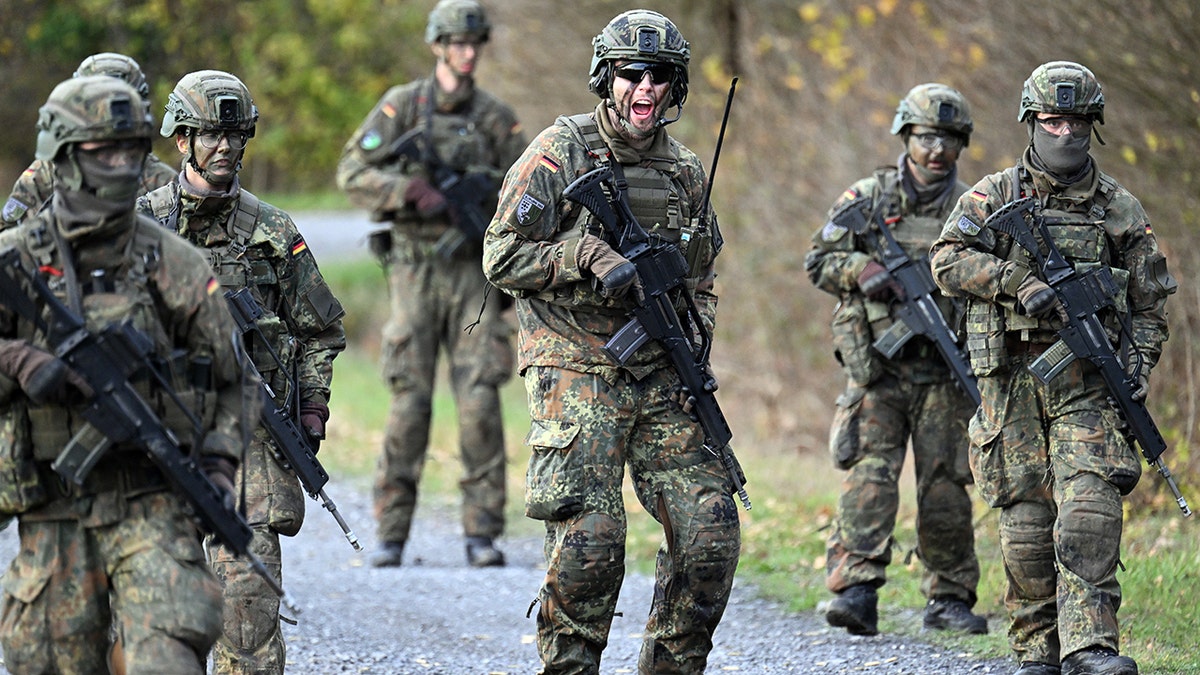
This staggering figure is reminiscent of World War II troop levels.
Germany’s consideration of such a large force underscores the seriousness with which Berlin views the Russian threat.
However, a critical question arises: where will these soldiers come from?
Germany’s own military is far from sufficient to meet this demand.
As of 2025, Germany’s active military personnel numbers around 181,600, with an additional 34,000 reservists.
Even if these numbers are combined, they barely represent a quarter of the required troops.
Recognizing this shortfall, German Army Chief General Alansm stated in a recent letter that Germany must prepare for war by 2029, necessitating an increase of 100,000 active soldiers.
While this recruitment drive is substantial, it still leaves the 800,000 figure looking unattainable if Germany acts alone.
Yet, Germany is not alone in this endeavor.
The entire premise of the plan is rooted in NATO’s collective strength.
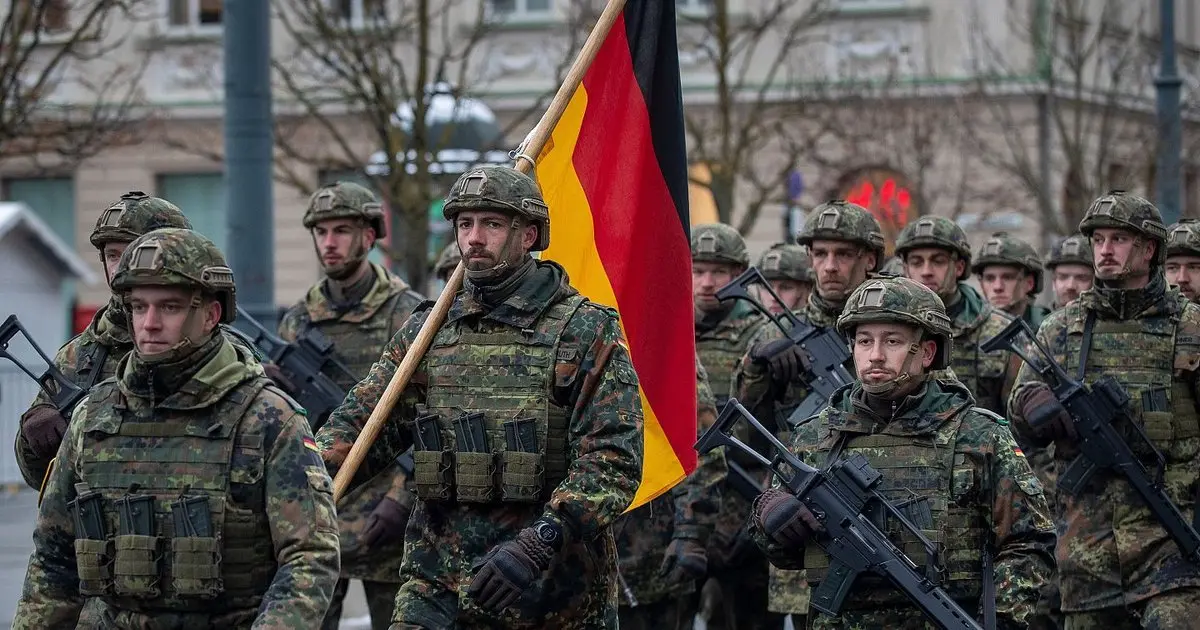
NATO’s total military personnel currently stands at approximately 8.6 million, with around 3.4 million active troops ready for deployment.
Germany’s strategy effectively calls for about a quarter of those active NATO troops to converge on the Eastern Front in the event of a Russian invasion.
This ambitious request, while daunting, is historically not impossible, especially if triggered by an attack on a NATO member, which would invoke Article 5 of the North Atlantic Treaty.
What makes Germany’s plan particularly intriguing is that it is not solely about the sheer number of soldiers.
The real challenge lies in the logistics of moving those troops swiftly to where they are needed most.
Germany’s geographical position at the heart of Europe plays a crucial role in this logistical framework.
As Tim Stoy, head of the Brandenburg Insтιтute for Society and Security, pointed out, the Alps create a natural barrier to troop movements from southern Europe.
For forces from the UK, France, and the US stationed in Western Europe, crossing German territory is essential to reach the Eastern Front.
Thus, Germany is not merely a participant in this plan; it is the critical corridor through which NATO’s response would flow.
The plan meticulously details troop movement strategies, leveraging Germany’s extensive network of ports, rivers, highways, and railways.
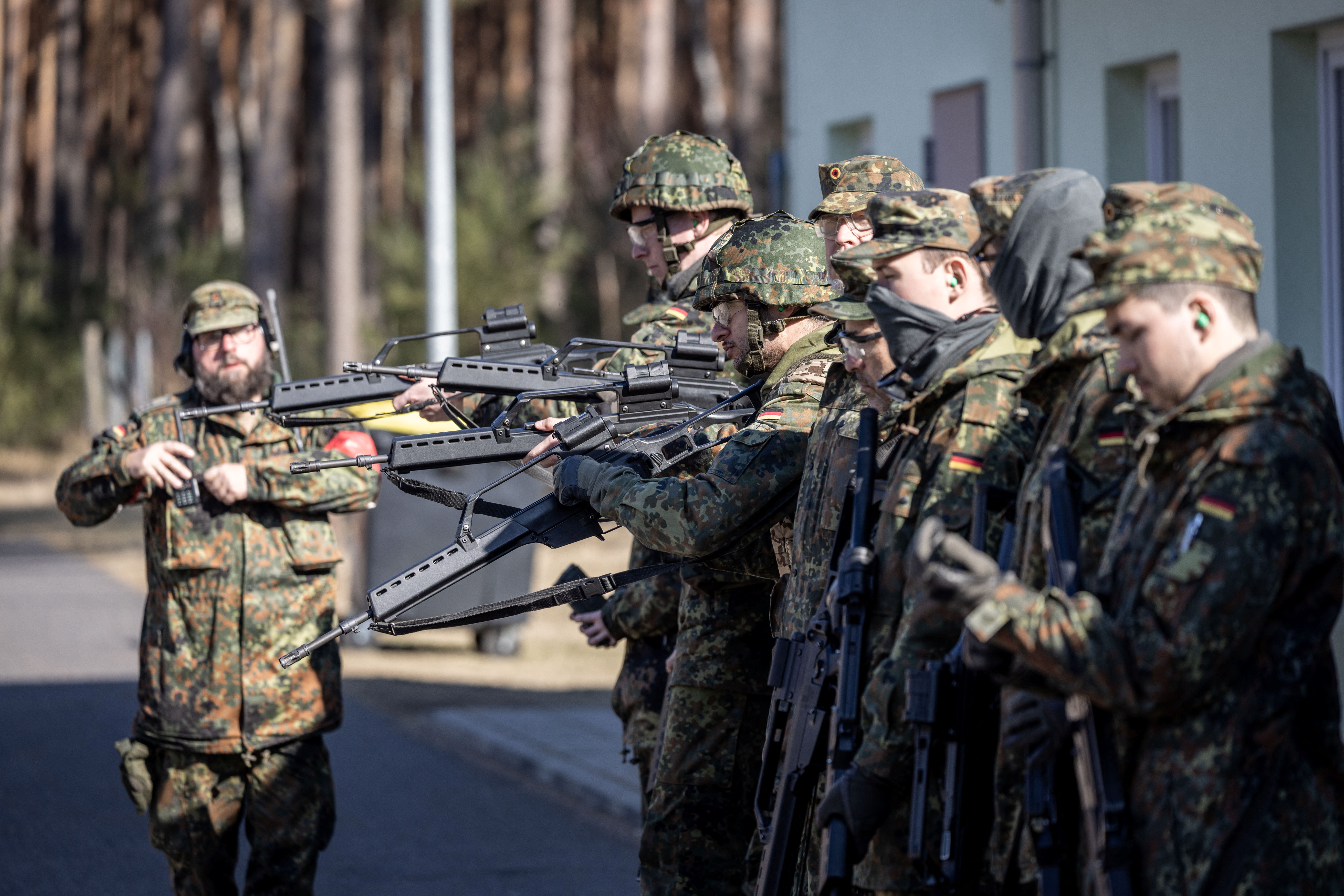
Special attention is given to key infrastructure, particularly bridges, which are likely to be primary targets for Russian attacks in any conflict.
Moreover, the plan includes comprehensive logistical and protective measures for military convoys, addressing everything from refueling and resupply to counter-sabotage tactics.
A revealing exercise, known as Red Storm Bravo, conducted by the German military in late September, tested some of these logistical concepts on a smaller scale.
In this exercise, 500 NATO soldiers were to move east from Hamburg in a convoy of 65 vehicles.
However, the exercise faced significant delays when protesters, acting as reservists, glued themselves to the road, halting the convoy for two hours and covering only 10 kilometers.
This stark gap between theoretical planning and practical execution highlights the challenges that Oppland DEU aims to address.
Germany’s military planners have adopted an “all of society” approach to war, integrating civilian infrastructure and resources into military operations.
This concept, reminiscent of Cold War defense strategies, has been largely absent from Western thinking for decades.
Germany is now reviving this notion, expecting hospitals, police forces, logistics companies, and energy providers to play vital roles in wartime operations.
However, the plan also acknowledges vulnerabilities, with approximately 20% of German highways and over a quarter of highway bridges requiring urgent repairs.

The urgency of these repairs is underscored by intelligence ᴀssessments indicating that Russia might be gearing up for a conflict by 2029.
German Foreign Minister Yan Vatiful has stated that Russia is actively preparing for a potential war against NATO, a reality that Germany can no longer ignore.
With military experts estimating that Russia could strike a NATO member by 2029, the stakes have never been higher.
Putin’s recent order to expand the Russian military by 180,000 personnel, bringing its active force to approximately 1.5 million, further complicates the situation.
Germany’s plan, which calls for 800,000 NATO troops, reflects a strategic calculation that a third of Russia’s total force may be necessary to hold the line.
NATO’s advantages lie not in raw troop numbers but in technology, air power, and naval capabilities.
The challenge remains in deploying these advantages effectively and swiftly, which is the essence of Oppland DEU.
Germany is not merely drafting plans; it is actively building capacity.
Ryan Mattel, Germany’s largest defense manufacturer, is ramping up production to meet the demands of this new military paradigm.
With a target of producing 350,000 artillery shells annually by 2027, Ryan Mattel represents a significant shift in Germany’s defense industrial base.

NATO Secretary General Mark Ruda has praised this expansion, calling for similar efforts across the alliance to bolster military capabilities.
Germany is also addressing the medical aspect of potential warfare.
Surgeon General Ralph Hoffman has projected that Germany should prepare for up to 1,000 casualties daily in a conflict with Russia.
This reality underscores the need for a robust medical response, requiring the mobilization of hospital beds and an expanded military medical service.
These preparations reflect a serious commitment to readiness, moving beyond theoretical exercises to concrete, funded operational strategies.
Yet, a significant caveat looms over this ambitious plan.
The Wall Street Journal’s reporting raises questions about whether Germany developed Oppland DEU in coordination with its NATO allies or if it is primarily a German initiative.
If this plan is a unilateral effort, it could face significant obstacles due to NATO’s internal decision-making processes, which are often slow and contentious.
Conversely, if NATO members are aware of and have contributed to the plan, Russia may be confronted with a united front that is operationally prepared to act swiftly.
The overarching goal of Oppland DEU is to deter potential aggressors by demonstrating that any attack would be met with formidable resistance.
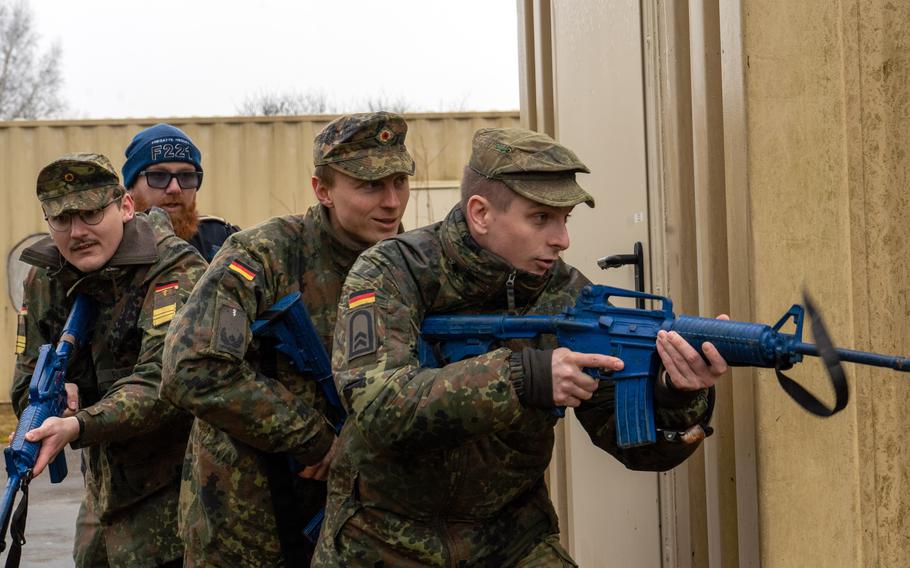
Germany’s defense budget for the coming year reflects this newfound commitment, reaching an unprecedented 108.2 billion euros.
By 2029, projections suggest that military expenditures could exceed 150 billion euros annually.
This transformation marks a historic shift for a nation that has long kept its defense spending at minimal levels.
In summary, Germany’s secret plan, Oppland DEU, is a comprehensive blueprint for establishing Germany as the logistical backbone of a NATO response capable of deploying 800,000 soldiers to the Eastern Front.
It recognizes the urgency of preparing for a potential Russian offensive by 2029, integrating civilian infrastructure and private companies into military operations.
While the plan acknowledges vulnerabilities, it also sends a clear message to Putin: Europe is no longer unprepared.
As we look to the future, critical questions remain about NATO’s cohesion, the feasibility of infrastructure upgrades, and the adequacy of troop numbers against Russia’s formidable military.
These uncertainties will shape European security dynamics for the next decade.
World Brief Daily will continue to monitor developments, providing insights into the evolving security landscape in Europe.


