The Viral Political Storm: Fact, Fiction, and the Power of Online Narratives
In the fast-moving world of digital media, few things spread as rapidly as politically charged content.
A recent viral video has captured widespread attention with sensational claims involving Ilhan Omar, Donald Trump, and JD Vance.
The video paints a dramatic picture of investigations, executive orders, and even allegations that a sitting member of Congress is “in hiding” and facing deportation.

However, a closer examination reveals that many of these claims are either exaggerated, misleading, or entirely unsupported by verified evidence.
At the center of the narrative is Ilhan Omar, a Somali-born refugee who became one of the first Muslim women elected to the U. S. Congress.
Her political career has often placed her in the spotlight, both for her outspoken views and for the controversies surrounding her statements.
Critics frequently point to remarks she has made about U.S. policy, while supporters argue that her voice represents an important perspective within American democracy.
The viral content attempts to frame her as the target of a sweeping federal crackdown allegedly ordered by Donald Trump and executed by JD Vance.
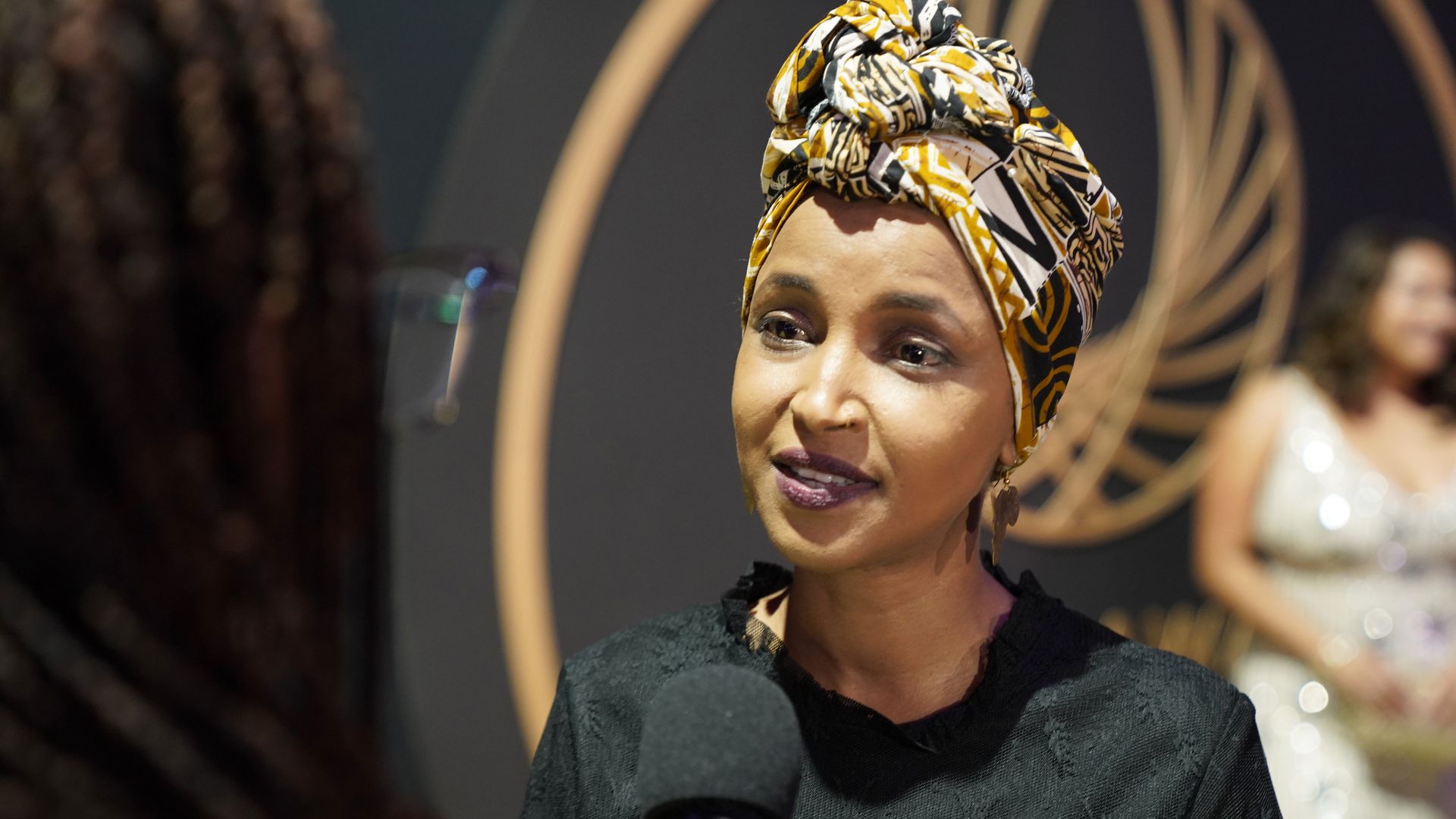
It further claims that she is fleeing or hiding due to imminent legal consequences.
Yet, there is no credible public record confirming that any such directive has been issued, nor that a member of Congress is being pursued in the manner described.
In reality, the U.S. political and legal system places strict limits on executive power.
A president cannot simply order the deportation of a U.S. citizen, and Ilhan Omar, as a naturalized citizen, is protected under the Consтιтution.
Any criminal investigation involving a sitting lawmaker would require due process, clear evidence, and judicial oversight—not unilateral executive action.
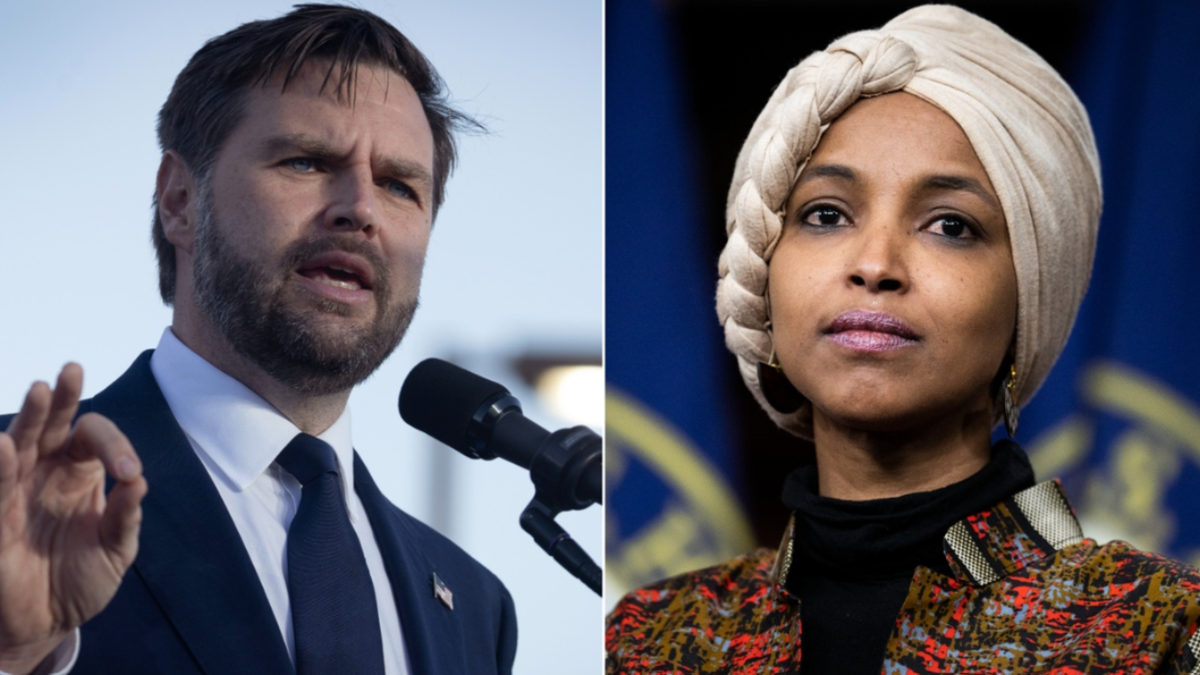
The video also blends real issues with unverified accusations.
For instance, it references fraud cases in Minnesota, including the widely reported “Feeding Our Future” scandal, where individuals were charged with misusing federal funds intended for child nutrition programs.
While these cases are real and serious, there is no verified evidence directly linking Ilhan Omar to those crimes.
This blending of fact and fiction is a hallmark of modern viral content.
By anchoring a narrative in real events and then extending it with speculation or false claims, creators can produce stories that feel believable—even when they are not.
Another striking feature of the video is its highly emotional tone.
Rather than presenting evidence or balanced analysis, it relies on dramatic language, personal anecdotes, and appeals to patriotism.
Viewers are encouraged to feel outrage, relief, or even triumph, often without being given verifiable information.
This style of communication is designed to maximize engagement, not accuracy.
The broader context is a deeply polarized political environment, where figures like Donald Trump and JD Vance are frequently portrayed as either defenders or disruptors of the system, depending on one’s perspective.
Similarly, Ilhan Omar is often depicted in sharply contrasting ways—either as a critic of systemic issues or as a controversial figure challenging traditional norms.
Such polarization creates fertile ground for viral misinformation.
Audiences are more likely to accept claims that align with their existing beliefs, especially when those claims are delivered in a compelling and emotionally charged format.
It is also important to consider the role of social media platforms.
Algorithms tend to amplify content that generates strong reactions, regardless of its accuracy.
As a result, sensational videos can reach millions of viewers before fact-checking efforts catch up.
This raises a critical question: how should viewers navigate an information landscape where truth and fiction are often intertwined?
The answer lies in critical thinking and verification.
Checking multiple reputable sources, distinguishing between opinion and fact, and being cautious of emotionally manipulative language are essential steps.
In an era where anyone can publish content, credibility must be earned—not ᴀssumed.
Ultimately, the story surrounding Ilhan Omar, Donald Trump, and JD Vance is less about a single viral video and more about the dynamics of modern media.
It highlights how quickly narratives can be constructed, amplified, and believed—even in the absence of solid evidence.
As political discourse continues to evolve, the ability to separate fact from fiction will become increasingly important.
In a world saturated with information, discernment is not just a skill—it is a necessity.


