Mono Lake in Crisis: The Vanishing Waters of California’s Ancient Icon
For over 760,000 years, Mono Lake has stood as a natural marvel in California’s eastern Sierra.
Its strange beauty—marked by towering limestone formations and shimmering alkaline waters—has drawn scientists, pH๏τographers, and travelers alike.
But today, this ancient lake is facing a slow and dangerous decline that raises a troubling question: can it still be saved?
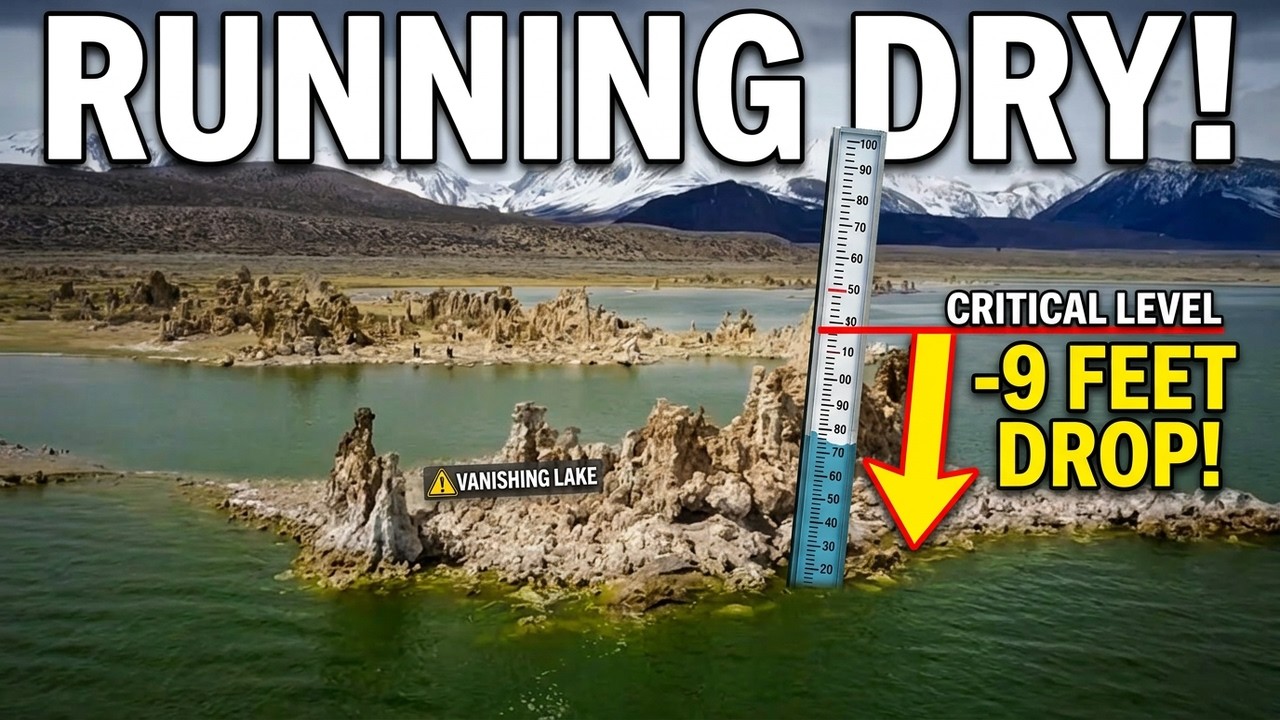
The lake currently sits about nine feet below the level mandated by California law.
That may not sound dramatic at first glance, but in ecological terms, it represents a critical threshold.
The target water level, established decades ago to restore the lake’s health, has never been reached—and now, it may be slipping further out of reach.
At the center of this crisis is a long-standing relationship between Mono Lake and the city of Los Angeles.
Since the early 20th century, water from streams feeding the lake has been diverted south through the Los Angeles Aqueduct system.

This diversion helped fuel the growth of one of America’s largest cities—but it came at a significant environmental cost.
By the mid-20th century, Mono Lake had lost nearly half its volume.
The falling water levels exposed vast areas of lakebed, increased salinity, and disrupted the delicate balance of life within the ecosystem.
Recognizing the damage, California regulators issued a landmark ruling in 1994 requiring Los Angeles to reduce diversions and allow the lake to recover.
More than 30 years later, that recovery remains incomplete.
The issue lies partly in the structure of the rules themselves.
The system allows water exports to increase whenever the lake rises above a certain level.
In practice, this has created a cycle: when water levels improve, more water is diverted, preventing sustained recovery.
Over time, the lake has become trapped in a pattern where progress is repeatedly undone.
Even in years of heavy snowfall—when the lake receives a natural boost—those gains can quickly disappear.

A record wet year in 2023 briefly raised hopes, but increased diversions soon reversed much of that progress.
Adding to the complexity is the growing impact of climate change.
New scientific models suggest that the Sierra Nevada snowpack, which feeds the lake, could decline significantly in the coming decades.
Less snow means less water flowing into the lake, while rising temperatures increase evaporation.
In the worst-case scenario, even eliminating water diversions entirely might not be enough to restore the lake to its target level.
But the consequences of Mono Lake’s decline are not just numerical—they are ecological.
The lake supports a unique and fragile food web built on microscopic algae, brine shrimp, and alkali flies.
These organisms, in turn, sustain millions of migratory birds each year.
Species such as California gulls and eared grebes depend on Mono Lake as a critical breeding and feeding ground.
As water levels drop and salinity rises, this system begins to break down.
Brine shrimp struggle to survive in increasingly salty conditions, reducing the food available for birds.
In recent years, scientists have documented alarming declines in bird populations, including near-total breeding failures in some colonies.
Lower water levels also expose islands that once protected nesting birds from predators.
When land bridges form, animals like coyotes can reach nesting sites, further threatening vulnerable populations.
The environmental impact extends beyond wildlife.
Exposed lakebed creates dust storms that carry fine particles into surrounding communities, posing serious health risks.
Similar conditions at nearby Owens Lake—also affected by water diversions—have already resulted in billions of dollars spent on mitigation efforts.
Mono Lake now risks following the same path.
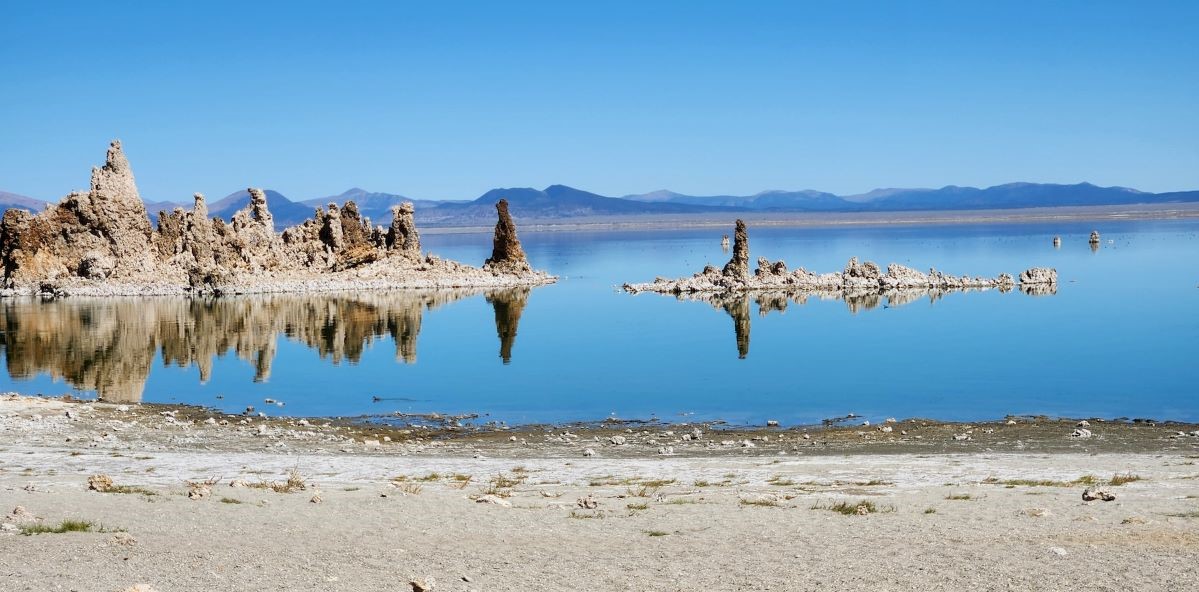
The iconic tufa towers that rise from the shoreline offer a visible reminder of this transformation.
Formed underwater over centuries, these structures now stand exposed due to the lake’s decline.
While they have become a symbol of the lake’s beauty, they also represent how much water has been lost.
For Indigenous communities, the crisis carries an even deeper meaning.
The Kutzadika’a people have lived in the Mono Basin for generations, relying on its natural resources and maintaining a cultural connection to the land.
For them, the lake is not just an ecosystem—it is home, history, and idenтιтy.
Efforts to address the crisis continue, but progress has been slow.
Regulatory reviews have been delayed, and debates over water use remain unresolved.
Meanwhile, Los Angeles has begun expanding alternative water sources, including recycling programs, raising questions about whether continued reliance on Mono Lake is necessary at all.
The numbers suggest that the city could replace the lake’s contribution at a relatively modest cost.
Yet diversions continue, and the lake continues to fall.
Mono Lake’s story is not just about water—it is about choices.
It reflects the tension between development and preservation, between short-term needs and long-term responsibility.
And as the lake edges closer to a point of no return, it serves as a powerful reminder: even the oldest landscapes are not immune to change—especially when that change is driven by human hands.


