The Strait of Hormuz, a narrow waterway that is only about 21 miles wide at its narrowest point, has once again become the focus of global attention due to rising tensions with Iran.
This strategic pᴀssage is not just a geographical feature; it serves as a crucial artery for the world’s oil supply, carrying nearly 20% of it every day.
However, the greatest threat in this region is not the missiles or warships that often capture headlines.
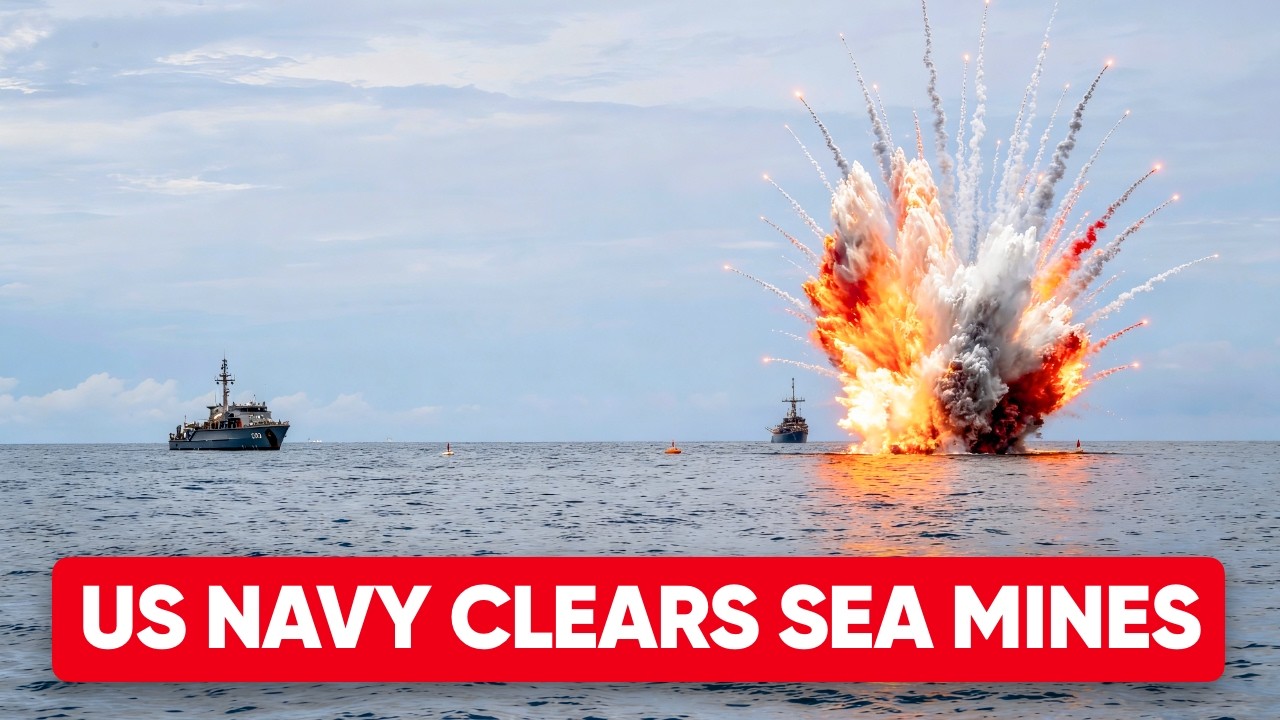
Instead, it is the hidden menace of naval mines that poses a significant risk to maritime security.
In this article, we will delve into how the United States Navy detects and neutralizes these underwater threats, exploring the sophisticated technologies and strategies employed in mine countermeasure operations.
The Threat of Naval Mines
Naval mines are among the most dangerous and insidious weapons in modern warfare.
They are designed to be stealthy, lying in wait beneath the surface until a ship inadvertently triggers them.
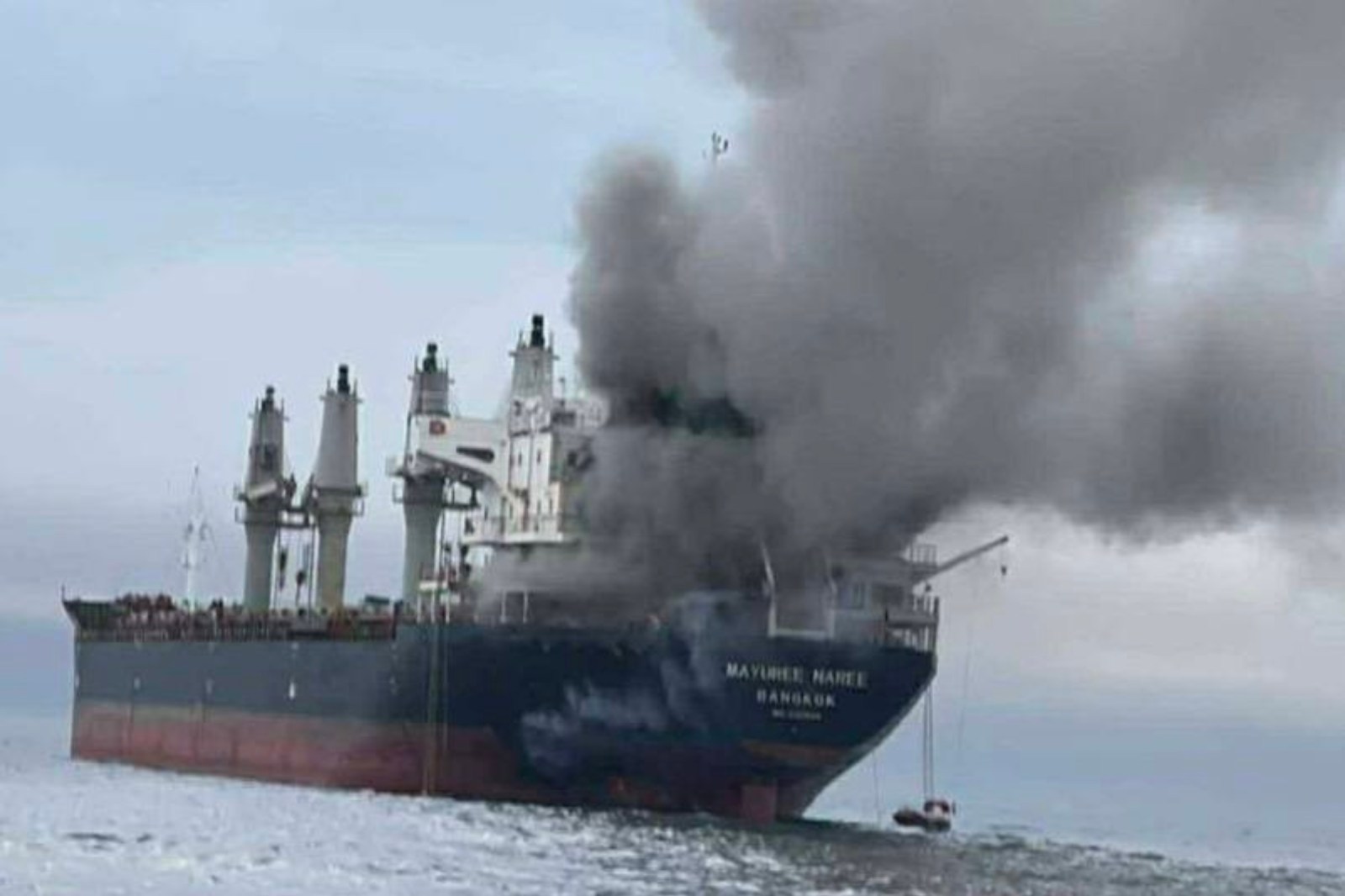
Once activated, these mines can cause catastrophic damage to naval vessels and commercial shipping alike.
The potential for disruption in the Strait of Hormuz is immense; a single mine can threaten not only individual ships but also the stability of global oil markets.
As tensions escalate in the region, understanding the methods used to combat this threat becomes increasingly critical.

The Role of the US Navy
The United States Navy plays a pivotal role in ensuring that shipping lanes remain open and safe.
With its advanced technology and specialized vessels, the Navy is equipped to detect and destroy sea mines effectively.
The complexity of modern mine warfare necessitates an array of tools and tactics, which we will explore in detail.
Specialized Ships: The Avengers of Mine Warfare
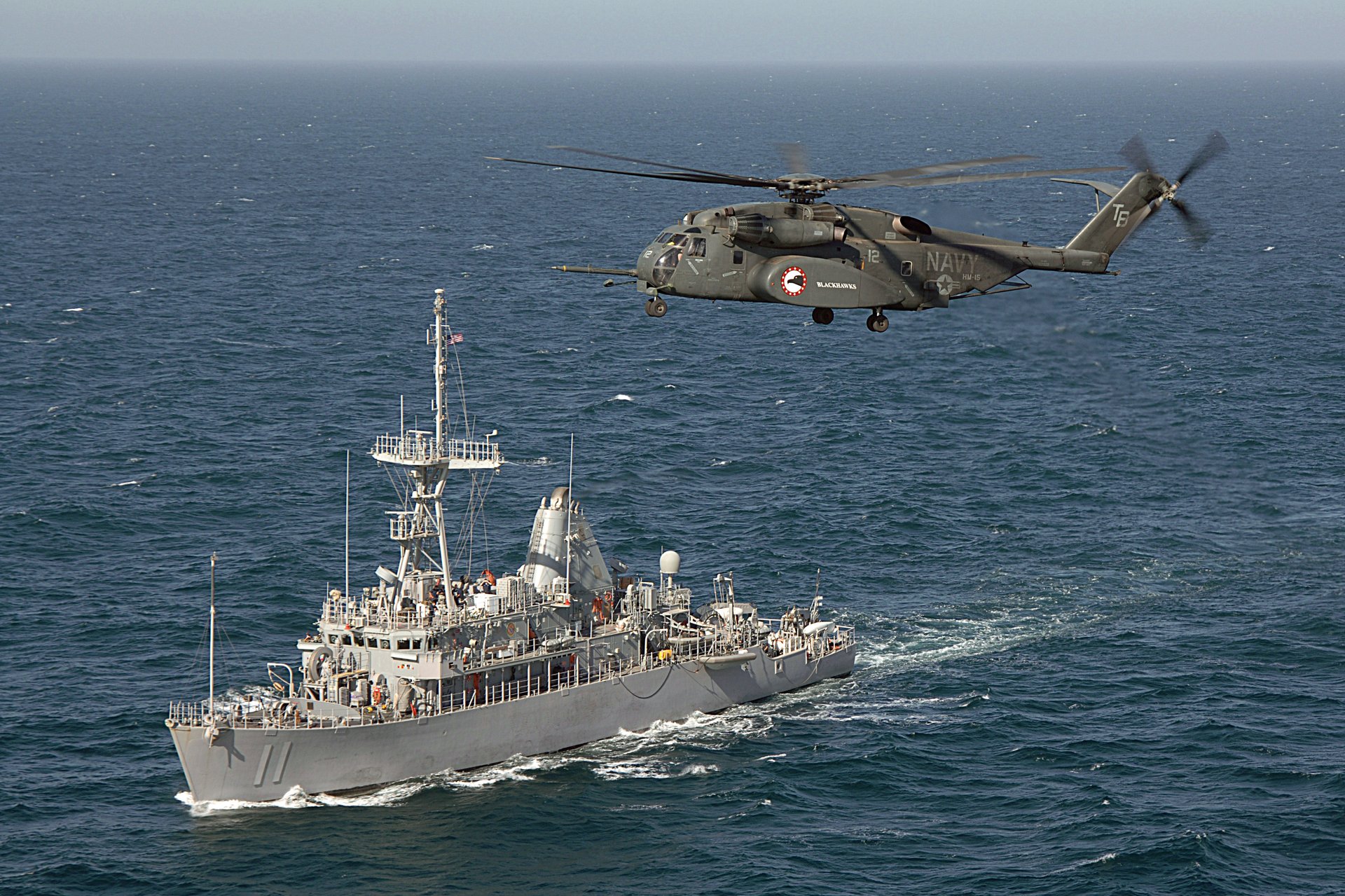
One of the cornerstones of the Navy’s mine countermeasure operations is the Avenger-class mine countermeasures ship.
These vessels are specifically designed for the purpose of finding and neutralizing mines.
Equipped with advanced sonar systems and remotely operated vehicles (ROVs), Avenger-class ships can detect mines from a safe distance.
Their shallow draft allows them to operate in coastal waters where many mines are laid, making them invaluable ᴀssets in the Navy’s arsenal.
Helicopters and Underwater Drones
In addition to specialized ships, the Navy employs helicopters and underwater drones to enhance its mine detection capabilities.
Helicopters, such as the MH-53 Sea Dragon, are equipped with sophisticated mine-detection systems that can cover large areas quickly.
These aircraft can deploy sonar buoys that send back data to the crew, allowing for real-time analysis of potential minefields.
Underwater drones, like the AN/SLQ-48 Mine Neutralization Vehicle, are another crucial component of the Navy’s strategy.
These unmanned vehicles can navigate through hazardous waters to locate and neutralize mines without risking human lives.
How Mines Are Deployed
Understanding how mines are deployed is essential to grasping the full scope of the threat they pose.
Mines can be laid in various ways, including from ships, submarines, or even aircraft.
Once deployed, they can remain dormant for years, waiting for unsuspecting vessels to trigger them.
This makes them particularly dangerous, as their presence can go undetected until it is too late.
The U.S. military is constantly adapting its strategies to counter these evolving threats, employing intelligence and reconnaissance to identify potential mine-laying activities.
The Process of Detection and Neutralization
When the Navy receives intelligence about potential mine threats, a series of steps are initiated to ensure the safety of shipping lanes.
First, reconnaissance missions are conducted to gather information about the area in question.
Once a potential minefield is identified, specialized ships and aircraft are deployed to ᴀssess the situation further.
The Navy uses a combination of sonar technology and visual inspections to locate mines accurately.
Once detected, the neutralization process begins.
Neutralization Techniques
Neutralizing a mine can involve several techniques, each chosen based on the type of mine and its location.
One common method is to use explosives to destroy the mine from a safe distance.
This can be done using remotely operated vehicles that approach the mine and detonate a charge.
Alternatively, some mines can be disarmed using specialized tools that allow Navy personnel to safely disable them without causing an explosion.
The choice of technique depends on the specific circumstances and the type of mine being dealt with.
Reopening Shipping Lanes
After a mine threat has been neutralized, the process of reopening shipping lanes begins.
This involves extensive surveys of the area to ensure that all mines have been accounted for and removed.
Once the area is declared safe, the Navy coordinates with commercial shipping companies to resume normal operations.
The Navy’s ability to quickly and effectively clear mines is crucial for maintaining the flow of oil and goods through the Strait of Hormuz.
The Future of Mine Warfare
As technology continues to evolve, so too does the nature of mine warfare.
The U.S. Navy is investing in new technologies and strategies to enhance its capabilities in this area.
This includes developing more sophisticated drones and improving detection systems to stay ahead of potential threats.
The ongoing tensions in the Strait of Hormuz serve as a reminder of the importance of these efforts.
A sudden escalation in conflict could see mines laid in the waterway, threatening not only military vessels but also global economic stability.
Conclusion
The Strait of Hormuz remains a critical chokepoint for global trade and energy supplies.
As tensions with Iran continue to simmer, the threat of naval mines looms large.
The United States Navy’s commitment to detecting and neutralizing these threats is essential for ensuring the safety of shipping lanes.
With advanced technology and specialized training, the Navy is prepared to face the challenges of modern mine warfare.
As we look to the future, the importance of maintaining secure maritime routes cannot be overstated.
The Navy will continue to adapt and evolve, ensuring that the Strait of Hormuz remains open for the flow of commerce and energy around the world.
In a world where every moment counts, the stakes are high, and the efforts of the U.S. Navy in this arena are more crucial than ever.


