Texas’s Biggest Lake DROPS 90% As 500,000 People Face TOTAL Water Shutdown — Corpus Christi RUNS DRY
Something strange is happening at Lake Corpus Christi in South Texas.
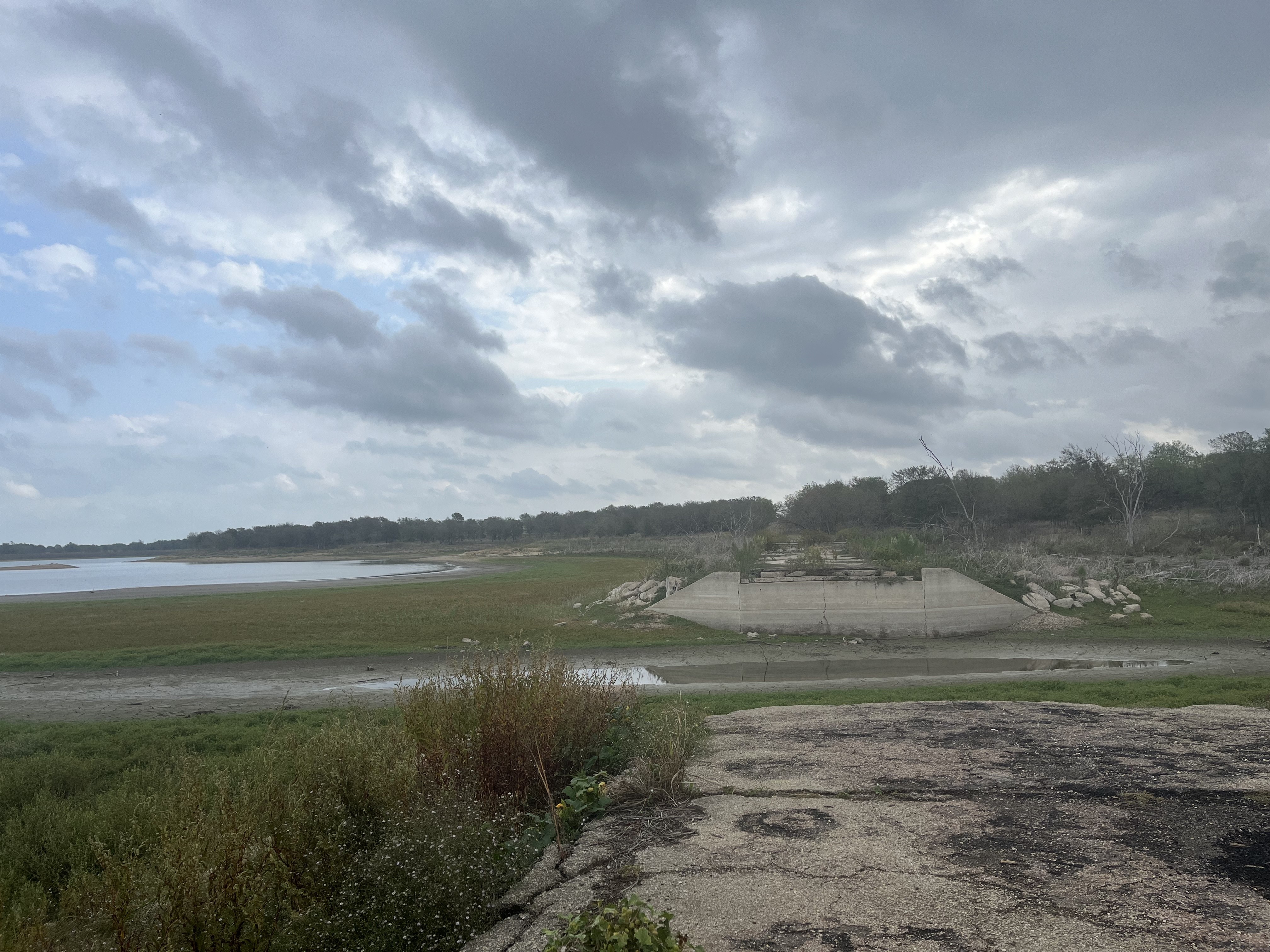
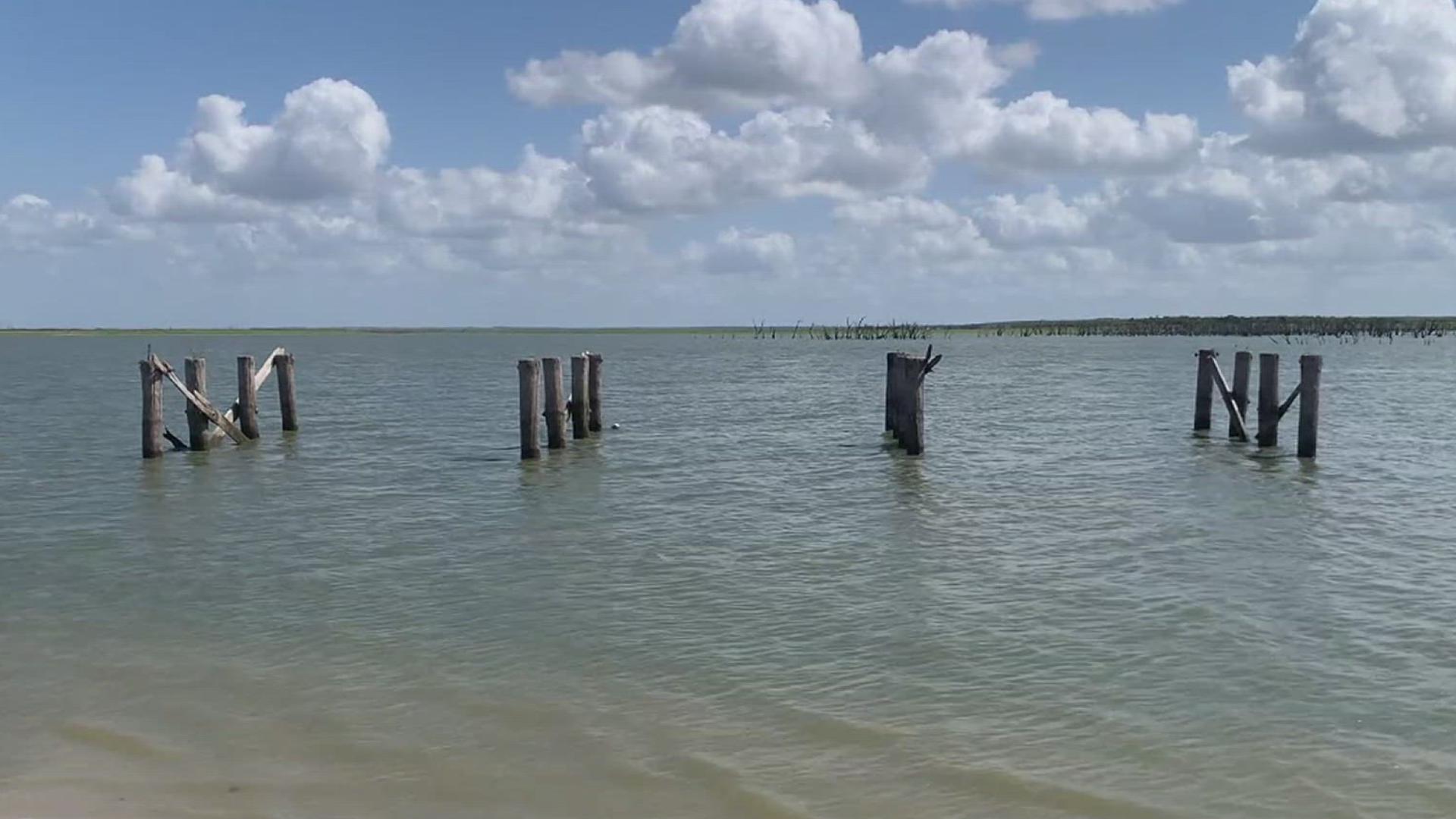
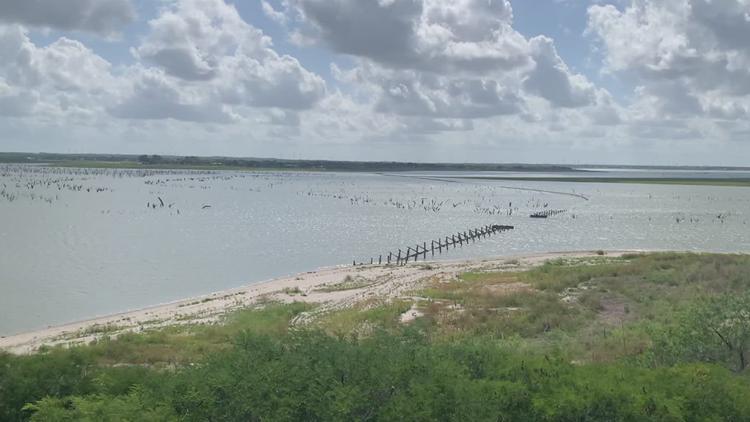
As the water pulls back from the shore, things are showing up that nobody alive has seen in decades.
Concrete car bridges, old roads, a boathouse built by the Civilian Conservation Corps in the 1930s.
They were all swallowed when the lake was created behind Wesley Sealed Dam in 1958.
And now they are coming back into view because the lake has lost 90% of its water.
This is not just an odd piece of history.
This is a city of half a million people watching its water supply vanish in real-time, with state officials warning that the taps could run dry by 2027.
That boathouse sat under 60 feet of water for over six decades.
The fact that you can walk up to it today and touch the concrete tells you something about what is happening in South Texas.
The numbers back it up.
Lake Corpus Christi is at 9.8% of its total storage.
Choke Canyon Reservoir, the larger of the two lakes that feed the city, is at 8.2%.
Together, they hold roughly 79,700 acre-feet out of 918,000.
That is an 8.7% combined level, the lowest ever recorded.

Just five years before, in October 2021, Lake Corpus Christi was at 87%.
Choke Canyon was at 47%.
The drop has been steady and unbroken.
No single storm, no seasonal rain, no tropical system has turned it around.
Every month, the line falls further.
Every month, the gap between the city and a full water emergency gets thinner.
On March 5th, 2026, Lake Corpus Christi fell below 10% for the first time in its history.
City manager Peter Zenoni held a press event at Wesley Seal Dam.
He stood in front of water that barely looked like the lake on the maps.
The detail that got buried in the headlines is the one that matters most.
The lake did not lose 90% of its water overnight.
There was no sudden collapse, no dam break.
It happened slowly, over five years, in plain sight while the city argued about what to do.
So, how did half a million people end up here?
Corpus Christi sits on the southern Texas coast along the Gulf of Mexico.
It is the eighth-largest city in Texas, home to over 500,000 people, and the driving force behind the largest crude oil export port in the country.
Despite all of that, it depends on a water system built around two man-made lakes and one very long pipeline.
The western supply draws from Lake Corpus Christi, built in 1958 on the Nueces River, with a storage of 256,000 acre-feet, and Choke Canyon Reservoir, built upstream in 1982 on the Frio River, with a much larger storage of 662,000 acre-feet.
Together, they were supposed to be more than enough.
For decades, they were.
The eastern supply comes through the Merry Roads pipeline, a 101-mile line from Lake Texana to the northeast.
A second phase added a 42-mile stretch linking to the Colorado River.
All raw water flows to the O Stevens water treatment plant.
That is the whole system.
Two lakes on one side, one pipeline on the other.
Right now, both sides are in trouble.
The western lakes are running on fumes because of the basic physics of South Texas.
It is H๏τ, it is flat, and it is dry.
Average yearly rainfall runs around 30 inches, which sounds fine until you learn that yearly water loss from a South Texas lake can reach nearly 7 feet just from the sun cooking it off the surface.
During drought years, those lakes lose water to the sky faster than any rainfall can put back.
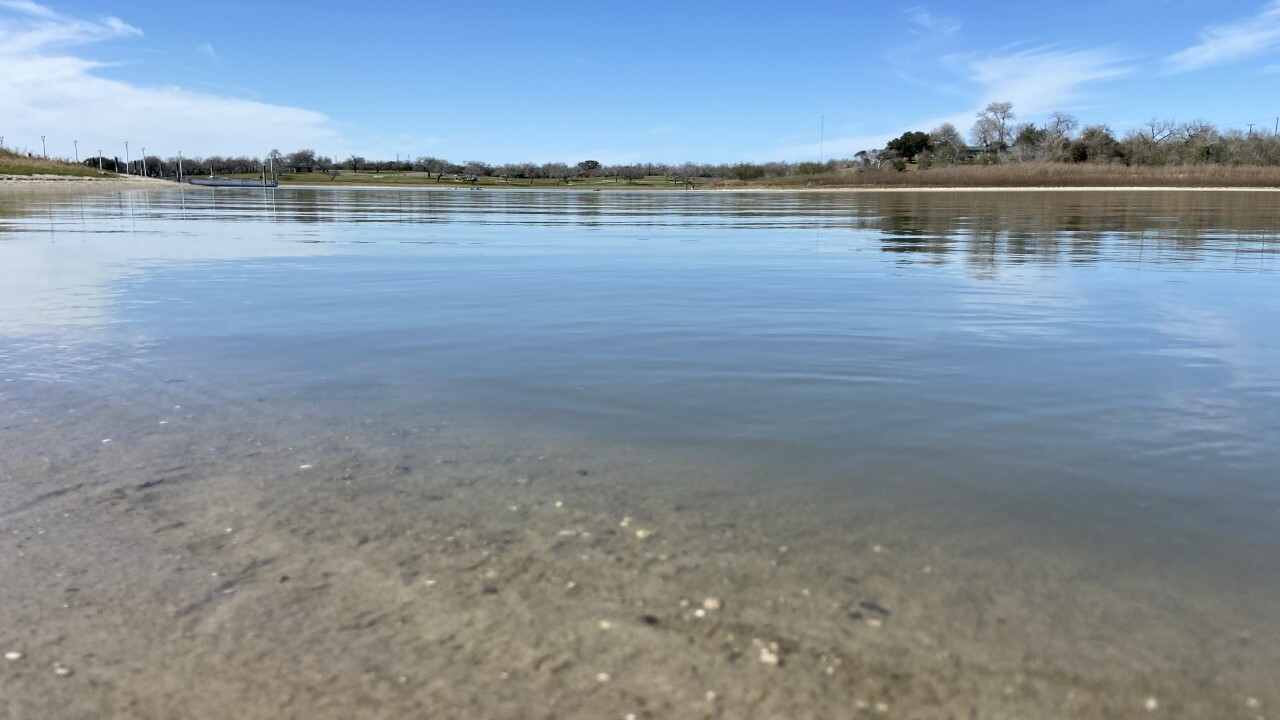
Texas as a whole loses 2.04 million acre-feet of lake water every year to the sun and heat.
During the 2011 drought, that number hit 5.42 million acre-feet, more than the total city water use for the entire state.
The sun drank more water than every city in Texas combined.
Right now, 80% of Texas is in some stage of drought.
That number has been climbing fast.
Four months ago, it was 33%.
February 2026 was the warmest February on record for San Antonio, Austin, and Dallas.
The Edwards Aquifer, one of the most important underground water sources in central Texas, dropped below its stage 5 drought line for the first time since the authority was set up in 1993.
Stage 5 is the most extreme level they have.
The drought is not just hitting Corpus Christi; it is covering the southern half of the state.
The lakes that feed this city sit right in the center of it.
Here is the part that drove water experts crazy in 2025.
In July, ᴅᴇᴀᴅly floods tore through central Texas and killed more than 100 people.
Huge amounts of rain fell, and none of it helped Corpus Christi’s lakes.
Not a drop.
The reason comes down to where the rivers flow.
Lake Corpus Christi is fed by the Nueces River.
Choke Canyon is fed by the Frio.
The floods hit the Colorado and Guadalupe basins, which are totally different water systems.
The rain fell in the wrong place.
Even where some rain reached the right basins, the ground was so dry that the soil soaked up most of it before it could flow downstream.
To fill Lake Corpus Christi back up, you would need about 250,000 acre-feet of inflow.
That means 20 to 40 inches of steady rainfall over the Nueces basin over weeks, not days.
State weather experts are not expecting that anytime soon.
So, the lakes keep dropping.
We cover water crises, earthquakes, and earth science events like this every week with the full picture you need to actually follow what is going on.
By March 2026, the towns closest to the lakes were feeling it first and worst.
Mathis is a small town of about 5,000 people in San Patricio County, right next to Lake Corpus Christi.
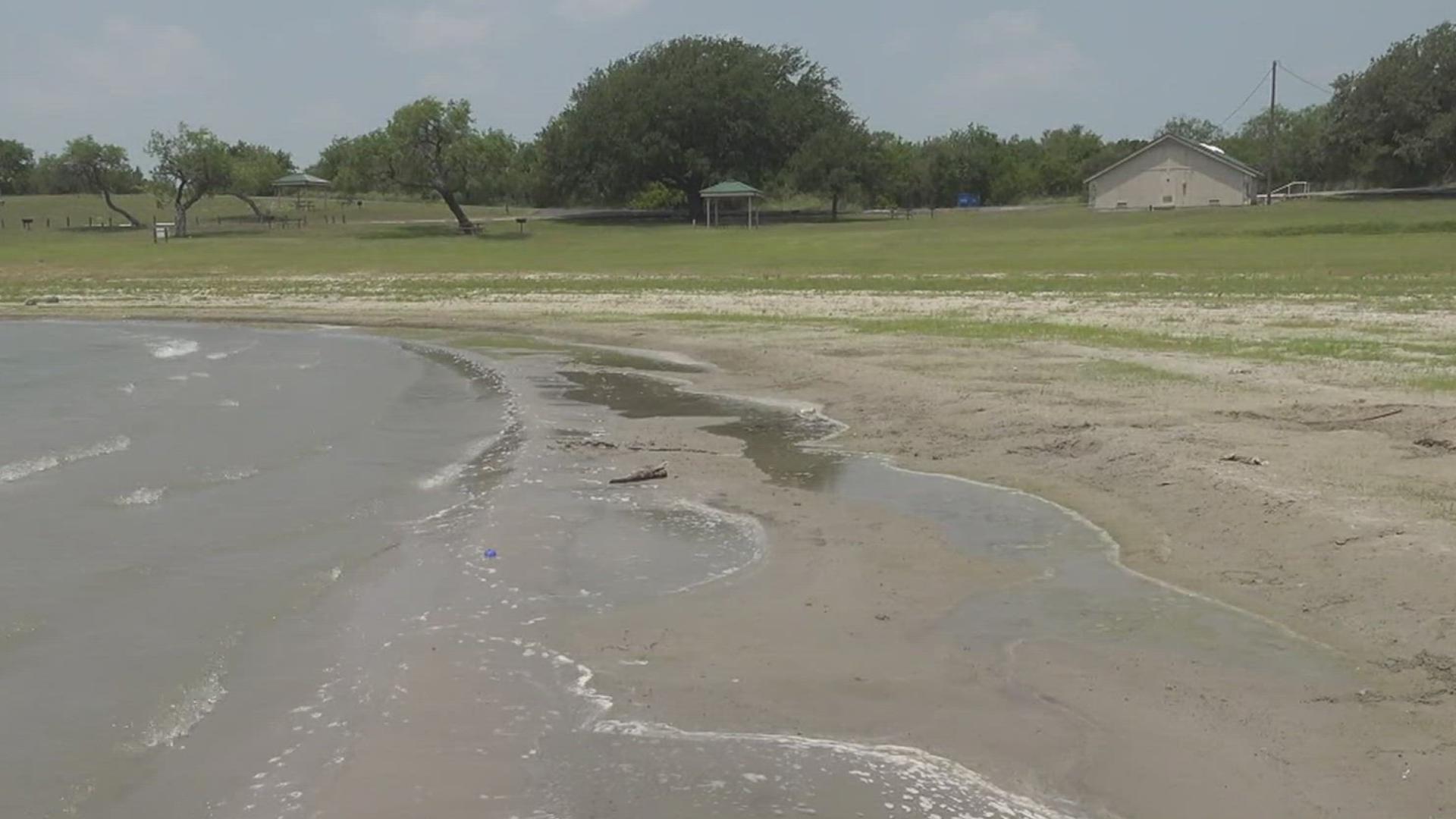
People there have watched the shoreline become something they can barely recognize.
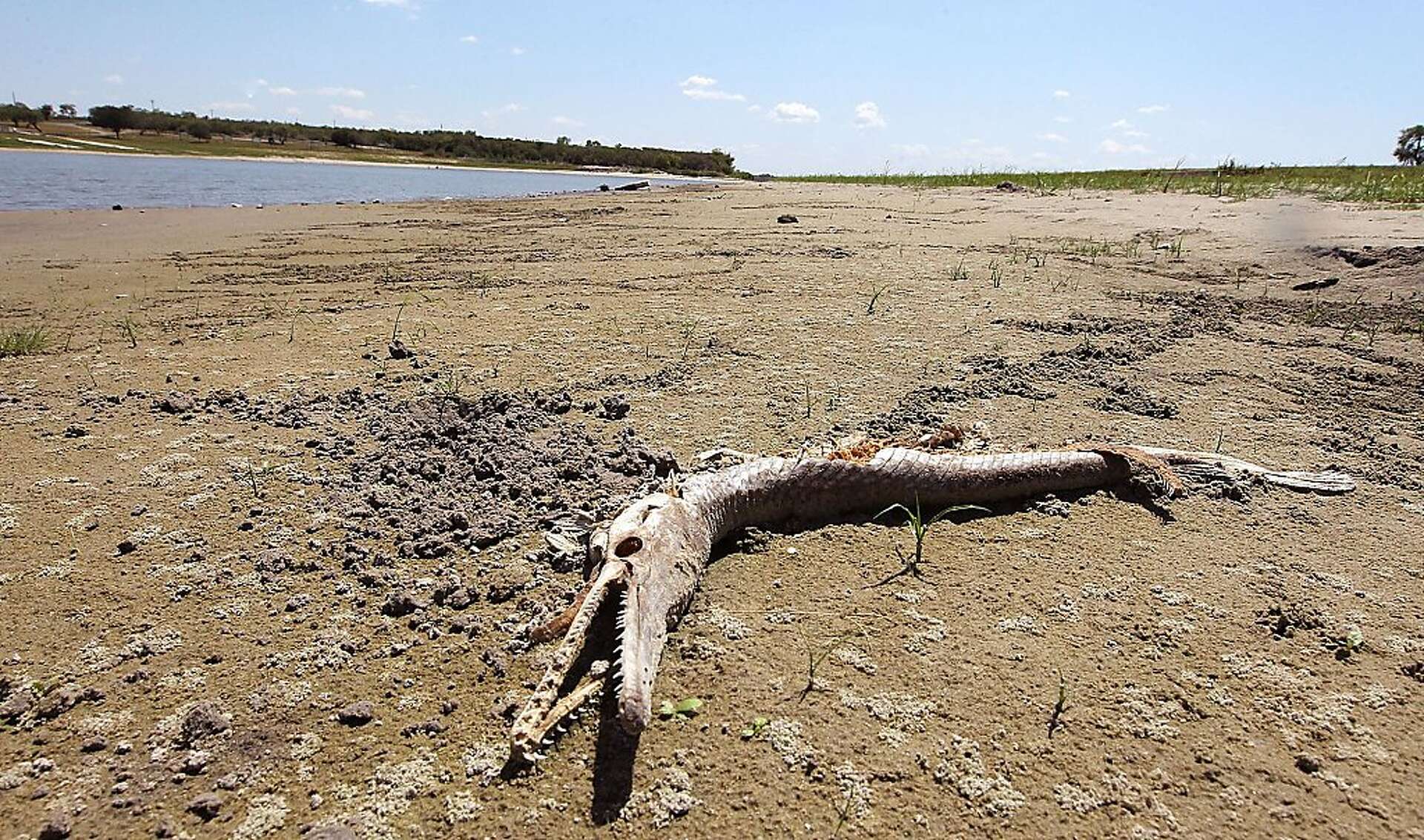
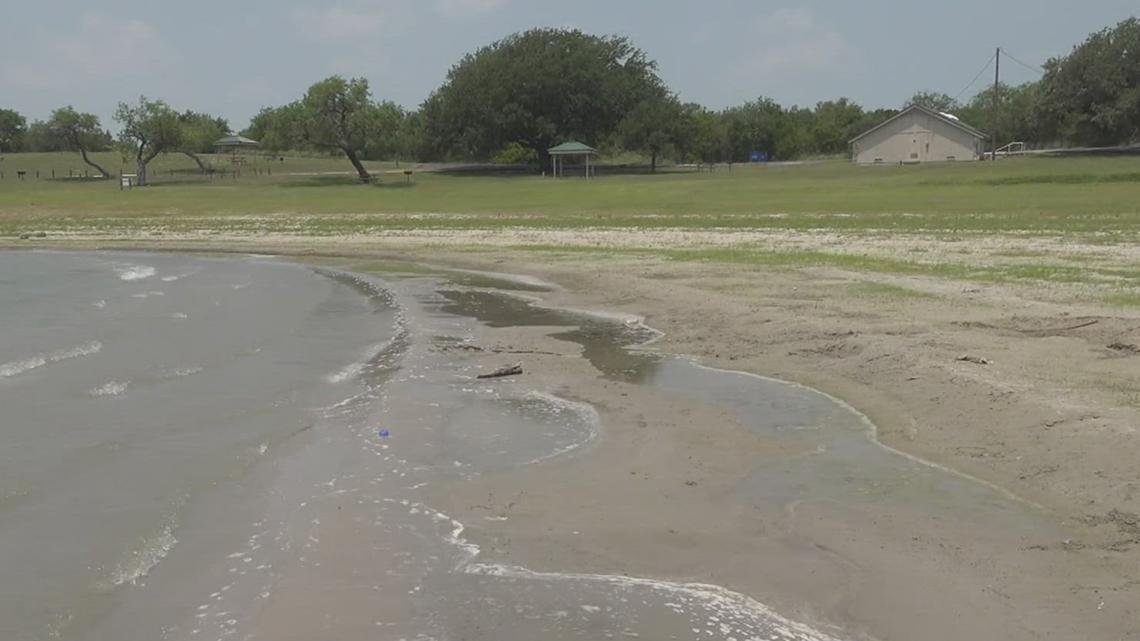
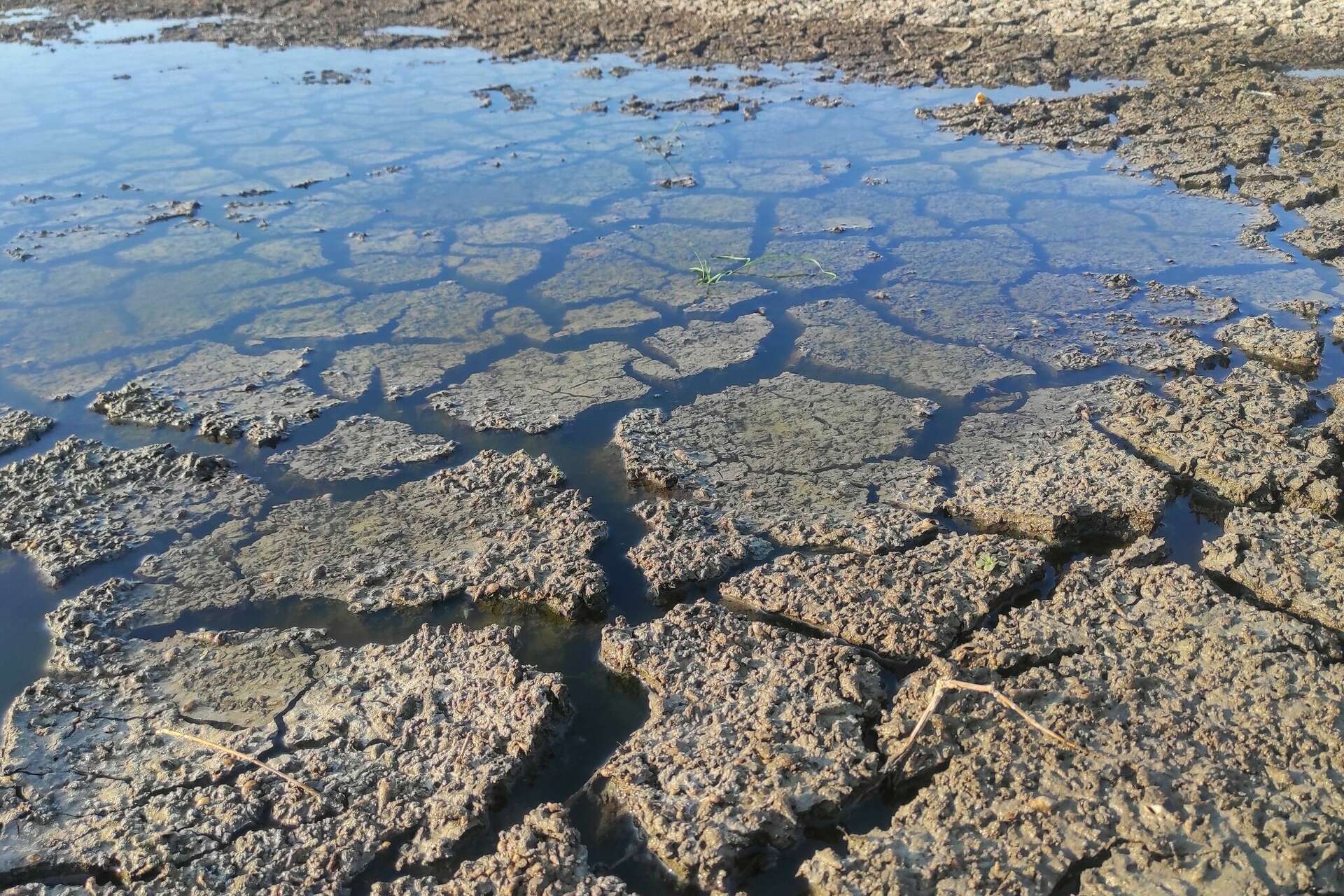
Boat ramps end in dry, cracked dirt.
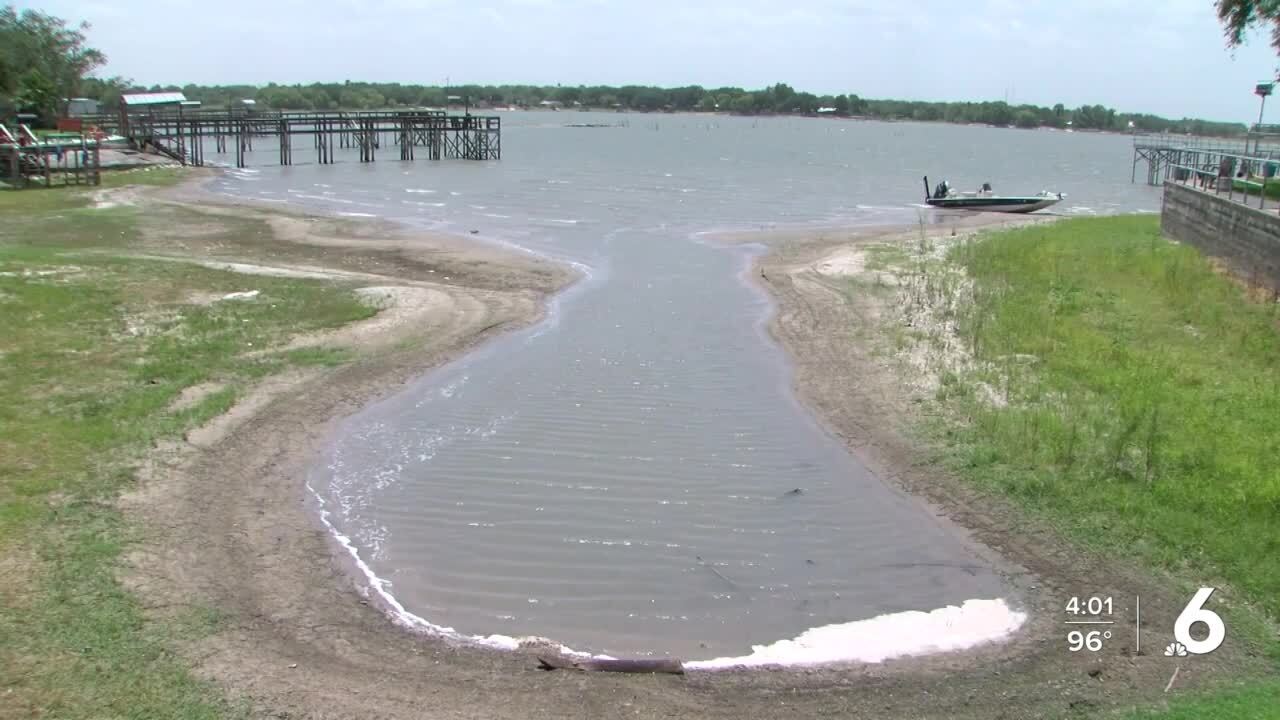
Docks stand on stilts above nothing.
The town is racing to drill emergency wells because their intake from the lake is no longer working.
Three Rivers, fewer than 2,000 people near Choke Canyon, hit an even harder wall.
The lake dropped so far below their pump intake that they could not pull water anymore.
Corpus Christi had to send water down the Frio River just to keep Three Rivers alive.
A city 60 miles away already cutting its own use.
Sending some of what little it has to keep a smaller town going.
Beeville sent leaders to the Texas capital in March 2025, warning of total water failure.
And as the lake pulled back, it showed the ghost buildings of a world that existed before the dam.
Car bridges from county roads that went underwater in the 50s.
A CCC boathouse from the Great Depression.
Structures that had been underwater for over 60 years, now baking in the South Texas sun.
James Dodson, the former head of the Corpus Christi Water Department, called it the very worst situation he has ever seen.
He said it is going to be an economic disaster, and he said people would be “crazy” not to be panicking.
The city has been under stage 3 water limits since December 2024.
All outdoor lawn watering is banned.
Car washing is limited to a 5-gallon bucket on set days.
Breaking the rules carries criminal charges.
A forced 15% citywide cut is in effect.
The next step is a level one water emergency which kicks in 180 days before supply fails to meet demand.
State lawmakers, representative Denise Via Lobos and Senator Adam Hinosa, warned it could come as early as May 2026.
Level one means a forced 25% cut across all users, including heavy industry.
Level two demands 50%.
And if no real rain falls, the western lakes go empty by June 2027.
Half a million people.
May 2026, two months from today, what started as a local drought story has become a threat to the national supply chain.
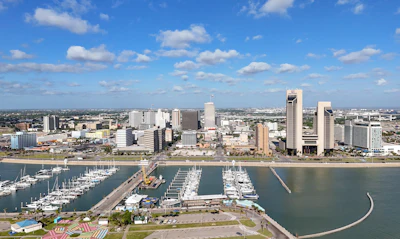
The port of Corpus Christi is the number one crude oil export port in the United States and the third-largest crude oil shipper on the planet.
Since 2010, $57 billion has poured into the industrial zone around it.
Plants run by Flint Hills Resources, Valero, and Citgo line the ship channel.
They supply jet fuel piped to Dallas and Austin airports and make a big share of the gas Texans pump every day.
Those plants need water.
25 million gallons per day are promised to an Exxon Mobil and Sabic Plastics plant.
6 million go to a Steel Dynamics steel mill.
The energy sector employs 12,000 workers with average pay above $120,000, three times the local middle income.
If water cuts hit, those sites face shutdowns.
The oil and gas sector makes up 38% of the Texas economy and brought in $27 billion in state tax money in 2024.
A breakdown here affects fuel supply chains, plastics plants, and shipping power at a national level.
Don Roach, a retired 20-year worker at the San Patricio Municipal Water District, predicted a controlled slowdown, mᴀss job loss, and total industrial shutdown if the lakes go dry.
In December 2025, Moody’s cut the city’s bond ratings from double A2 to A1.
Both Fitch and S&P Global put warning flags on the city’s debt.
Roughly $2 billion in bonds are affected.
Shaun Strawbridge, the former port CEO, warned that the impacts will be felt hugely throughout the state, if not around the world.
So, how did the eighth-largest city in Texas end up this exposed?
Why was there no backup plan?
There was one.
It just fell apart.
Starting around 2019, Corpus Christi began working on a seawater cleaning plant.
The city sits right on the Gulf of Mexico.
There is a nearly endless supply of salt water right there.
Build a plant that turns ocean water into drinking water.
Pipe it to the city’s main treatment site, and you have a drought-proof supply that does not depend on rain, rivers, or lakes.
The first price tag was $140 to $160 million.
Costly, but doable for a city this size.
The price did not hold.
Building problems, supply chain delays, and rising costs pushed the number upward year after year.
By 2024, it had climbed to $550 million, then $760 million.
By July 2025, $1.2 billion, eight times the first estimate.
People packed a 12-hour meeting in September 2025.
The reasons against the plant were not crazy on their face.
The cost had become mᴀssive.

Water bills would have spiked.
Some council members argued the city should go after cheaper options first, like underground wells and brackish water treatment.
After 12 hours, the council voted to kill the project for good.
A decade of planning.
Gone.
The only long-term drought-proof water source the city had been working toward wiped out in a single vote.
That choice looked shaky in September.
By March 2026, with the lakes below 10%, it looked like a disaster.
Strawbridge said their lack of experience, their lack of knowledge, and their lack of seeing the risks, and added simply, “Time is up.”
The city is now trying to build its way out with emergency projects.
In early 2026, the council approved over $400 million in backup water systems.
The biggest is a 175 million brackish water plant given to FCC Aqualia USA, linked by a 13-mile pipeline to an underground wellfield.
Phase 1 is supposed to send out first water within 11 months.
Full output would reach 21.3 million gallons per day, about a fifth of the city’s needs.
The second is the Evangeline groundwater project in San Patricio County.